
Share this @internewscast.com
Amid the bustling spring break travel season, airline passengers continued to endure extended waits at major U.S. airports, despite President Donald Trump’s recent executive order intended to expedite security processing. The order aims to ensure that Transportation Security Administration (TSA) officers are compensated promptly, in hopes of reducing long security lines.
Signed on Friday, Trump’s directive urged the Department of Homeland Security to prioritize immediate payment for TSA staff. However, it remains uncertain when travelers will begin to notice a smoother experience at security checkpoints.
This executive action coincided with a particularly busy travel period, as many schools and universities are on spring break, and the Passover and Easter holidays are fast approaching.
What’s the current situation on the ground?
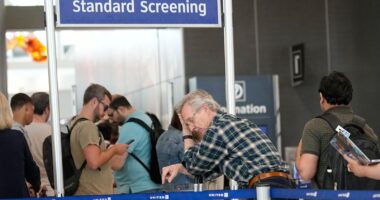
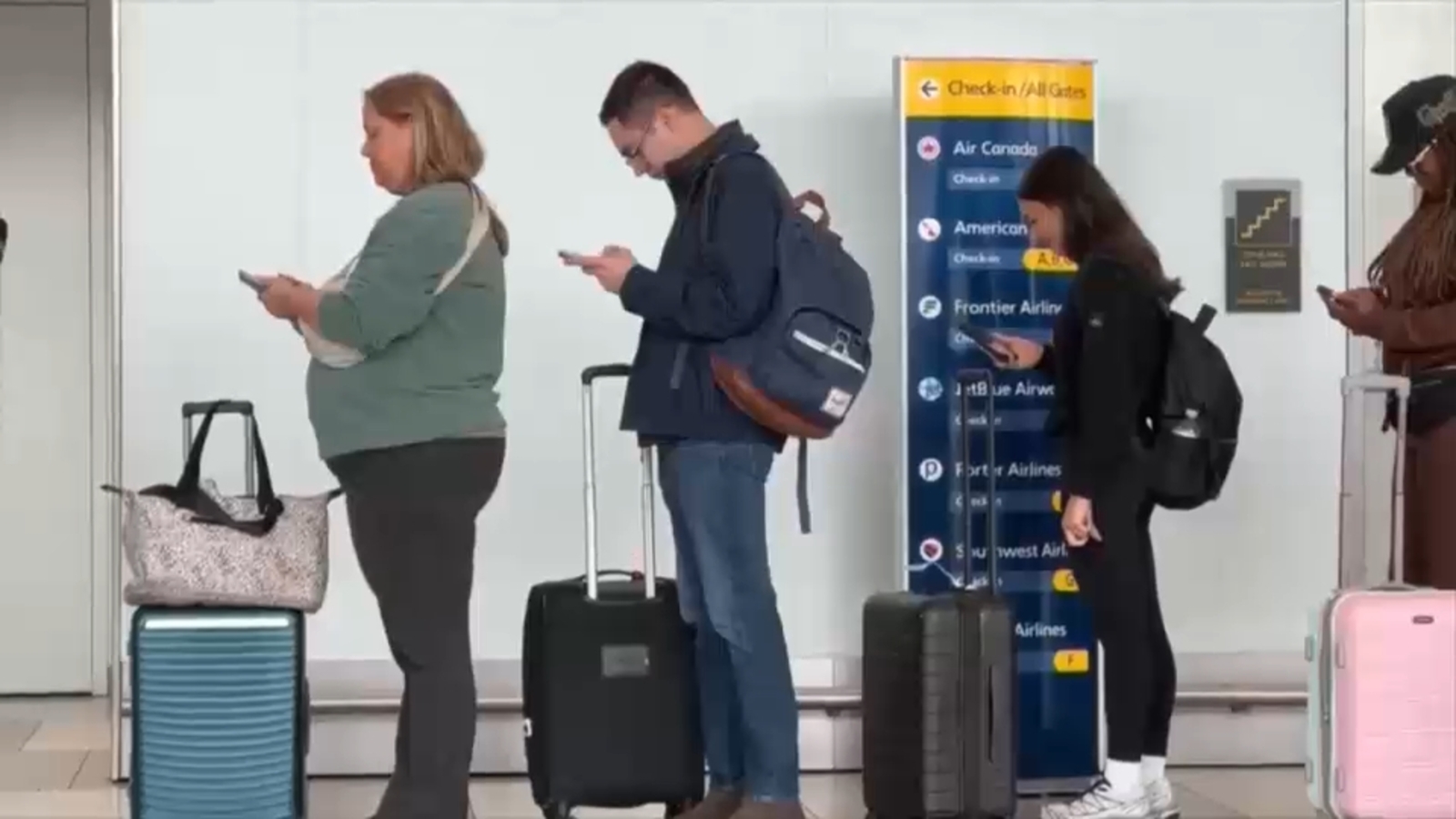
Major airports across the United States have continued advising travelers to arrive several hours before their flight times in order to accommodate lengthy security procedures.
At Baltimore-Washington International Airport, officials reported that while checkpoint wait times improved slightly from Saturday, they are still longer than usual. Passengers are encouraged to arrive well in advance of their flights, a recommendation echoed by Hartsfield-Jackson Atlanta International Airport in Georgia and LaGuardia Airport in New York City.
In response to the ongoing delays, Maryland Governor Wes Moore announced on social media that additional Immigration and Customs Enforcement agents have been dispatched to Baltimore-Washington International Airport. Their role is to assist at TSA checkpoints, aiming to expedite the security process for passengers, not to enforce immigration policies.
When will TSA employees be paid?
White House border czar Tom Homan told CNN’s “State of the Union” on Sunday that he hopes Transportation Security Administration agents will be paid by Monday or Tuesday, as a partial government shutdown continues to wreak havoc on the nation’s airports.
“It’s good news because these TSA officers are struggling,” Homan said. “They can’t feed their families or pay their rent. Your heart goes out to them because they’re sitting there right now, working very hard and not being paid by members of the Congress who are on vacation and getting paid. It’s ridiculous.”
Asked if the deployment of ICE agents at airports will end once TSA officers get paid, Homan said that depends upon how many TSA employees would be returning to work.
“God bless men and women of ICE,” Homan said. “They’re doing a job. They’re plugging those holes. They’re keeping the security of the airport at a high level.”
“Every place we send ICE officers, the lines have decreased,” Homan said.
Caleb Harmon-Marshall, a former TSA officer who runs a travel newsletter called Gate Access, said the staffing crisis won’t improve significantly until officers are confident that they won’t be subjected to more skipped paychecks.
“If it’s only for a pay period, that’s not enough to bring them back,” Harmon-Marshall said. “It has to be an extended pay for them to come back or want to stay there.”
He estimates longer lines could linger for another week or two.
How soon will this help with airport delays?
It’s hard to tell. Airports that had passengers standing in screening lines that clogged check-in areas or showing up far too early for their flights will need to decide whether to reopen checkpoints or expedite service lanes they closed or consolidated due to inadequate staffing.
A handful of airports experienced daily TSA officer call-out rates of 40%. Nationwide on Thursday, more than 11.8% of the TSA employees on the schedule missed work, the most so far, DHS said Friday.
Nearly 500 of the agency’s nearly 50,000 officers have quit since the shutdown started, according to DHS.
How do I monitor wait times before my flight?
Check airport conditions early and often, including official websites and social media accounts where airports share timely updates and guidance, according to experts.
Many airports on Saturday urged passengers to allow at least four hours for both domestic and international screenings.
“Wait times can change quickly based on passenger volume and TSA staffing,” according to an advisory posted Saturday morning on the website of John F. Kennedy International Airport in New York.
Wait times listed on the MyTSA mobile app may not be accurate because TSA isn’t actively managing its sites during the shutdown. On third-party websites that track TSA lines, estimated wait times could be outdated during the shutdown if they rely on publicly available data, experts say.
___
Sedensky reported from New York and Raby reported from Charleston, West Virginia.
Copyright © 2026 by The Associated Press. All Rights Reserved.