Share this @internewscast.com

In a dramatic escalation, Iran has accused the United States of undermining a two-week ceasefire agreement by supporting Israel’s largest offensive against Hezbollah, a group backed by Tehran, in Lebanon.
Mohsen Rezaee, a high-ranking official in Tehran, pointed fingers at Washington for the potential breakdown of the truce. In a strongly-worded statement on Wednesday, he condemned Israel, referring to it as the “Zionist enemy” in a series of incendiary posts on the platform X.
“The U.S. bears the responsibility for the ceasefire’s collapse, as it seems unable or unwilling to control its aggressive ally,” Rezaee, who previously led the Islamic Revolutionary Guard Corps, stated emphatically.
He further warned, “America’s violations of the ceasefire will not go unchallenged.”
Echoing these sentiments, Iran’s parliamentary speaker, Mohammad Bagher Ghalibaf, alleged that three key components of Tehran’s 10-point peace plan had been compromised.
Ghalibaf highlighted the Israeli military actions in Lebanon, an incursion by a drone into Iranian airspace, and restrictions imposed on Tehran’s uranium enrichment activities as breaches of the agreement.
“Now the very ‘workable basis on which to negotiate’ has been openly and clearly violated, even before the negotiations begin,” he wrote.
“In such [a] situation, a bilateral ceasefire or negotiations is unreasonable.”
Meanwhile, President Trump has threatened to unleash a “bigger, better, and stronger” assault if the clerical regime doesn’t uphold its side of the peace bargain.
“If for any reason it is not, which is highly unlikely, then the ‘Shootin’ Starts,’” Trump said.
But, whether or not the truce applies to Lebanon has proved to be a source of contention.
Israel claims Lebanon is excluded and continues to carry out its campaign rooting out Hezbollah proxies, with Trump siding with Prime Minister Benjamin Netanyahu.
“Because of Hezbollah. They were not included in the deal. That’ll get taken care of too. It’s alright,” Trump told PBS, explaining the reason.
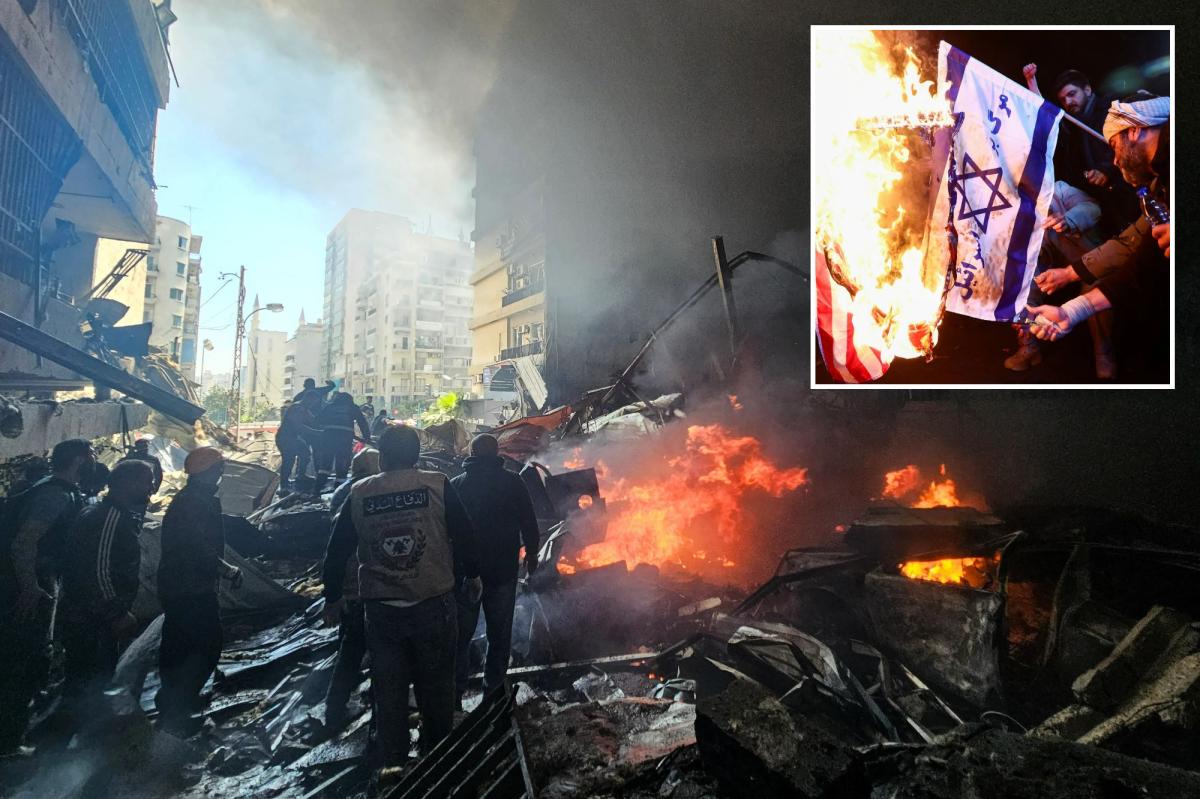
On Wednesday, the Israeli Defense Force launched its largest airstrikes on Hezbollah – striking more than 100 targets within 10 minutes in Beirut, southern Lebanon, and the eastern Bekaa Valley.
Haneed Sayed, Lebanon’s Minister of Social Affairs, said the barrage represented a “very dangerous turning point.”
“These hits are now at the heart of Beirut … Half of the sheltered are in Beirut in this area,” she said.
At least 182 people were killed in the attacks, branded “barbaric” by Lebanese President Joseph Aoun, and 890 were injured.
Concerns are now mounting that the Israeli strikes could be a death knell to the already fragile-looking ceasefire.
French President Emmanuel Macron warned the attacks “pose a direct threat to the sustainability of the ceasefire.”
Qatar branded the strikes “heinous” and United Nations Secretary General Antonio Guterres echoed Macron’s fears.
Hezbollah fired rockets in northern Israel Thursday in retaliation – its first since the ceasefire came into place.
With Post wires