
Share this @internewscast.com
Iran’s tight grip on the Strait of Hormuz has significantly disrupted tanker traffic through this crucial maritime corridor connecting the Persian Gulf with the global market.
DUBAI, United Arab Emirates — On Tuesday, Iran escalated its confrontations with Gulf Arab nations, intensifying regional tensions. Concurrently, an airstrike in northern Iraq resulted in the deaths of five militants aligned with Iran.
Early morning in Dubai and Bahrain was marked by the wail of incoming missile sirens, signaling heightened alert. Meanwhile, Saudi Arabia reported the successful destruction of two drones in its oil-abundant eastern region, while Kuwait’s National Guard announced it had downed six drones.
Iran’s aggressive tactics include launching missiles and drones targeting Israel and American military bases across the region. These actions, paired with its strategic control over the Strait of Hormuz, have significantly impacted energy infrastructure, causing oil prices to surge.
Brent crude, the global oil benchmark, soared to nearly $120 per barrel on Monday before slightly retreating. Nonetheless, prices remained around $90 on Tuesday, marking a nearly 24% increase since the conflict began on February 28.
U.S. President Donald Trump, addressing concerns about a prolonged conflict, attempted to reassure the public on Tuesday. Despite previously acknowledging that the war might last over a month, he dismissed fears of a sustained regional confrontation, describing it as merely “a short-term excursion.”
Trump sends contradictory messages
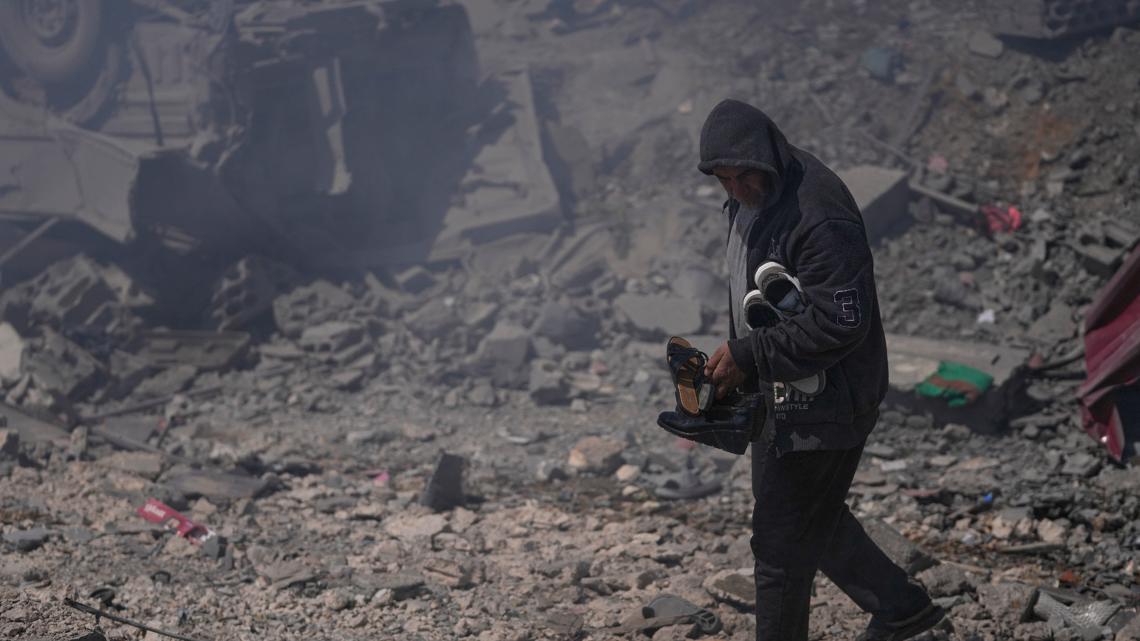
The conflict has choked off major supplies of oil and gas to world markets and sent fuel prices rising across the United State. The fighting has also led foreigners to flee from business hubs and prompted millions to seek shelter as bombs hit military bases, government buildings, oil and water installations, hotels and at least one school.
Iran has effectively stopped tankers from using the Strait of Hormuz, the shipping lane between the Persian Gulf and the Gulf of Oman — the gateway to the Indian Ocean — through which 20% of the world’s oil is carried. Attacks on merchant ships near the strait have killed at least seven sailors, according to the International Maritime Organization.
In a post on social media on Tuesday, Trump seemed not to acknowledge that, saying that “If Iran does anything that stops the flow of Oil within the Strait of Hormuz, they will be hit by the United States of America TWENTY TIMES HARDER than they have been hit thus far.”
In an apparent response to Trump’s remarks published in Iranian state media, a spokesperson for the paramilitary Revolutionary Guard, Ali Mohammad Naini, said “Iran will determine when the war ends.”
Kamal Kharazi, foreign policy adviser to the office of the supreme leader, told CNN on Monday that Iran is prepared for a long conflict. He said he sees no “room for diplomacy anymore” unless economic pressure prompts other countries to intervene and stop the “aggression of Americans and Israelis against Iran.”
Airstrike on Iran-linked militia in Iraq kills five
As the conflict has spread against the region, Israel has launched multiple attacks on Hezbollah in Lebanon and the Iranian-linked militia has responded by firing missiles into Israel.
Pro-Iran militias in Iraq have also launched attacks at U.S. bases in the country since the beginning of the conflict.
Early Tuesday, one of those militias, the 40th Brigade of the Popular Mobilization Forces in the city of Kirkuk, was hit with an airstrike that killed at least five militants and wounded four others, according to officials, who spoke on condition of anonymity because they weren’t authorized to brief reporters.
It was not immediately clear who was behind the strikes.
Since the war began, at least 1,230 people have been killed in Iran, at least 397 in Lebanon and 11 in Israel, according to officials.
A total of seven U.S. service members have been killed.
Financial markets, which swung wildly in recent days, opened the day Tuesday in Asia with early gains, building on late optimism in the United States.
Trump likes idea of another ‘internal’ candidate to lead
Iran
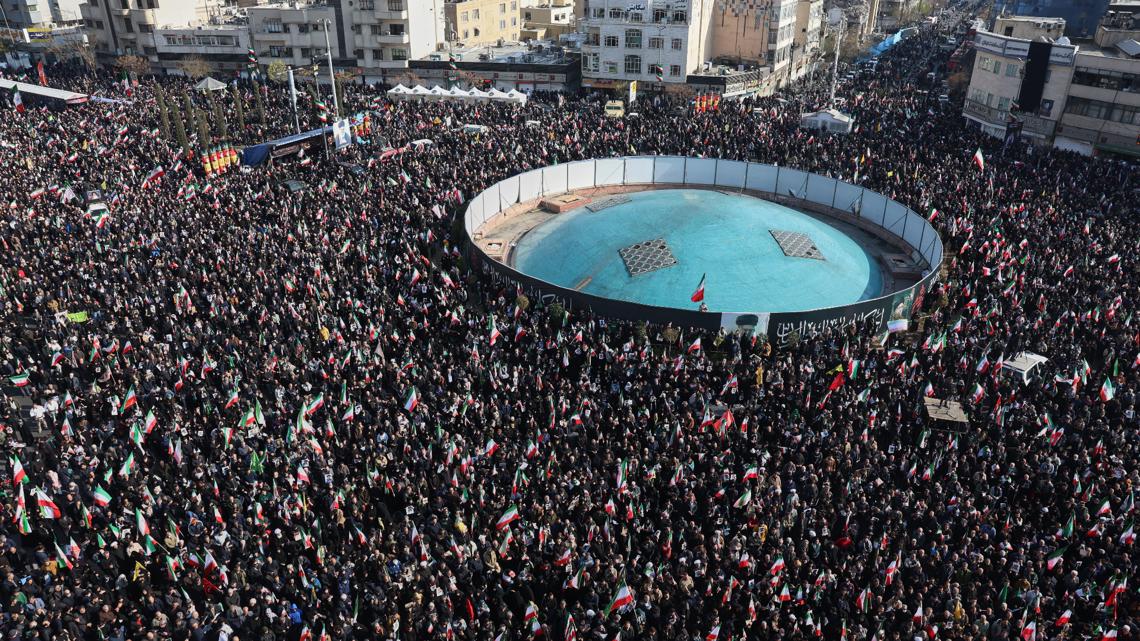
Thousands poured into a central square in the capital, Tehran, and other locations in a show of allegiance to the new supreme leader, Ayatollah Mojtaba Khamenei, waving flags and shouting phrases like “Death to America” and “Death to Israel.”
Khamenei, who has not been seen in public since the conflict started, was long considered a potential successor — even before the killing of his 86-year-old father.
Khamenei, a secretive 56-year-old cleric, is only the third supreme leader in the history of the Islamic Republic. He has close ties to the paramilitary Revolutionary Guard, which has been firing missiles and drones at Israel and Gulf Arab states since his father, Ayatollah Ali Khamenei, who had ruled since 1989, was killed during the conflict’s opening salvo.

Trump told reporters that he was “disappointed” that Mojtaba Khamenei was picked and that he liked “the idea” of a leader drawn from an “internal” group of candidates, saying that worked well with Venezuela.
The younger Khamenei is seen as even less compromising than his late father. As supreme leader, he has the final say on all major policies, including Tehran’s disputed nuclear program.
Though Iran’s key nuclear sites are in tatters after the U.S. bombed them during the 12-day Israel-Iran war in June, it still has highly enriched uranium that’s a technical step away from weapons-grade levels. Khamenei could choose to do what his father never did — build a nuclear bomb.
Trump told reporters the war with Iran started because that country was working on a new site for developing material for nuclear weapons to replace one bombed last year by the U.S.
Israel has already described Khamenei as a potential target. Trump said Monday it “would be inappropriate” to say whether he would be targeted.
Magdy reported from Cairo, and Weissert reported from Washington. Qassim Abdul-Zahra in Baghdad, Iraq, and David Rising in Bangkok contributed to this story.
Copyright 2025 Associated Press. All rights reserved. This material may not be published, broadcast, rewritten, or redistributed.