
Share this @internewscast.com

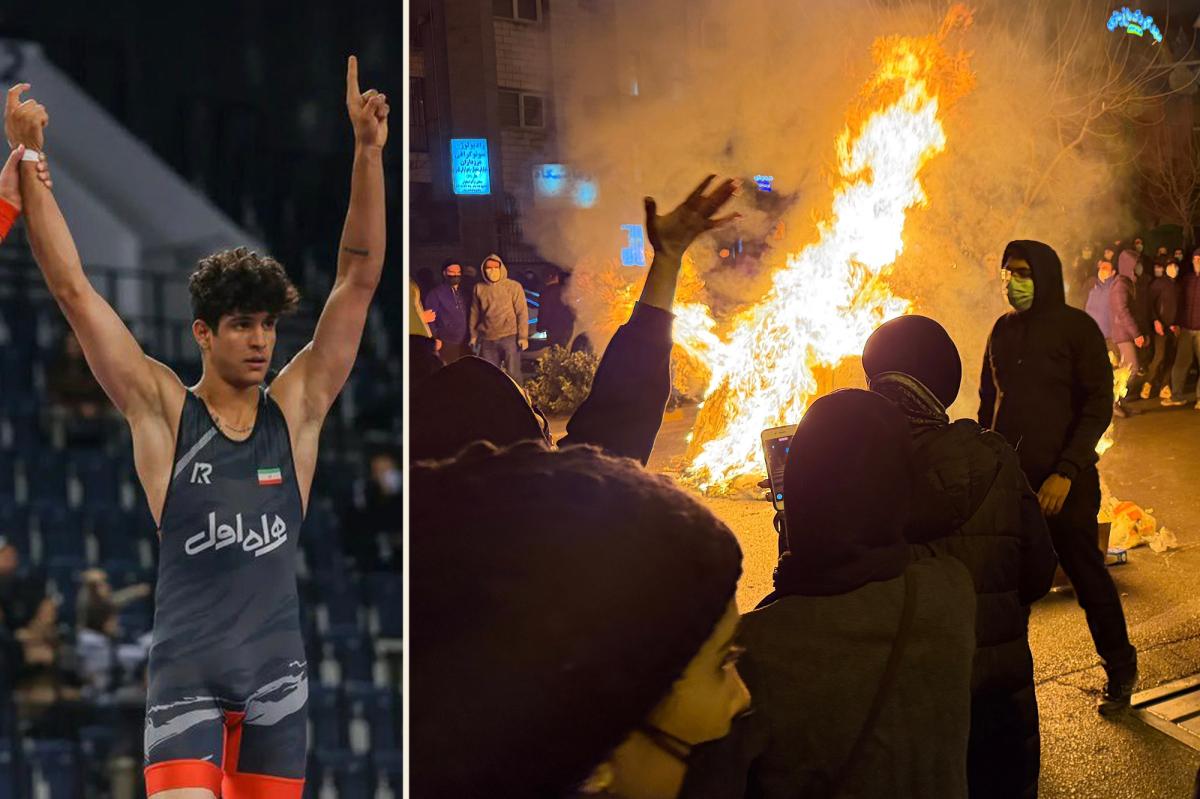
In a disturbing development, Iran carried out the public execution of a 19-year-old champion wrestler along with two other individuals on Thursday. These executions are part of the harsh response to the wave of anti-regime protests that erupted in January.
Saleh Mohammadi, a promising athlete from Qom, faced a grim fate. Human rights organizations claim he was subjected to torture to extract a confession for the grave charge of waging war against God. Disturbingly, they assert that Mohammadi was denied the fundamental right to a fair trial.
“This was nothing short of a political assassination,” stated Nima Far, a human rights advocate and Iranian combat athlete, in an interview with Fox News. Far highlighted a troubling pattern by the Islamic Republic, which appears to be targeting athletes to stifle dissent and instill fear in the population.
Alongside Mohammadi, fellow demonstrators Mehdi Ghasemi and Saeed Davoudi faced similar accusations. Iranian state media reported that the three were charged with killing two police officers using “knives and swords” during the January protests.
Despite international appeals, notably from the United States, the trio were convicted and executed in Tehran. Amnesty International sharply criticized the proceedings, citing that the men were deprived of “adequate defense and coerced into confessions.”
Amnesty International slammed the executions, alleging that the men were denied “adequate defence and forced to make ‘confessions.’”
The humanitarian group said the trio were pushed through “fast-tracked proceedings that bore no resemblance to a meaningful trial.”
Far said Thursday’s execution was a haunting repetition of the 2020 execution of champion wrestler Navid Afkari, who was convicted of killing an Iranian security guard during a 2018 protest.
Far called on the International Olympic Committee and United World Wrestling organizations to take action against Iran over its brutality against athletes.
“Iran must be banned from international competitions until it halts executions of protesters and athletes, releases those jailed in sham trials, and ends retaliation against competitors who speak out or defect,” Far said. Fears are high that Iran will roll out more executions following mass arrests during the Jan. 8 and 9 protests, which saw Tehran’s security forces kill more than 7,000 demonstrators, according to the US-based Human Rights Activists News Agency.