
Share this @internewscast.com
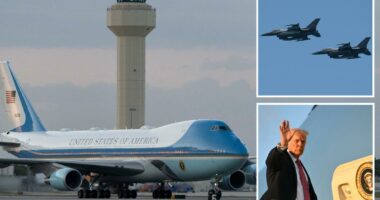
On Sunday, Iran took a defiant stance in response to news suggesting that the United States might be preparing to deploy ground forces as part of its strategy to dismantle Iran’s nuclear ambitions and exert control over the Strait of Hormuz.
Mohammad Baqer Qalibaf, the Iranian parliament’s speaker, declared, “As long as the U.S. aims to force Iran into submission, we will never bow to humiliation.”
He further warned that Iranian forces are poised to confront American troops should they arrive, pledging to retaliate against them and their regional allies decisively.
Qalibaf emphasized, “Our missile operations are ongoing. We are prepared, and our resolve has only strengthened.”
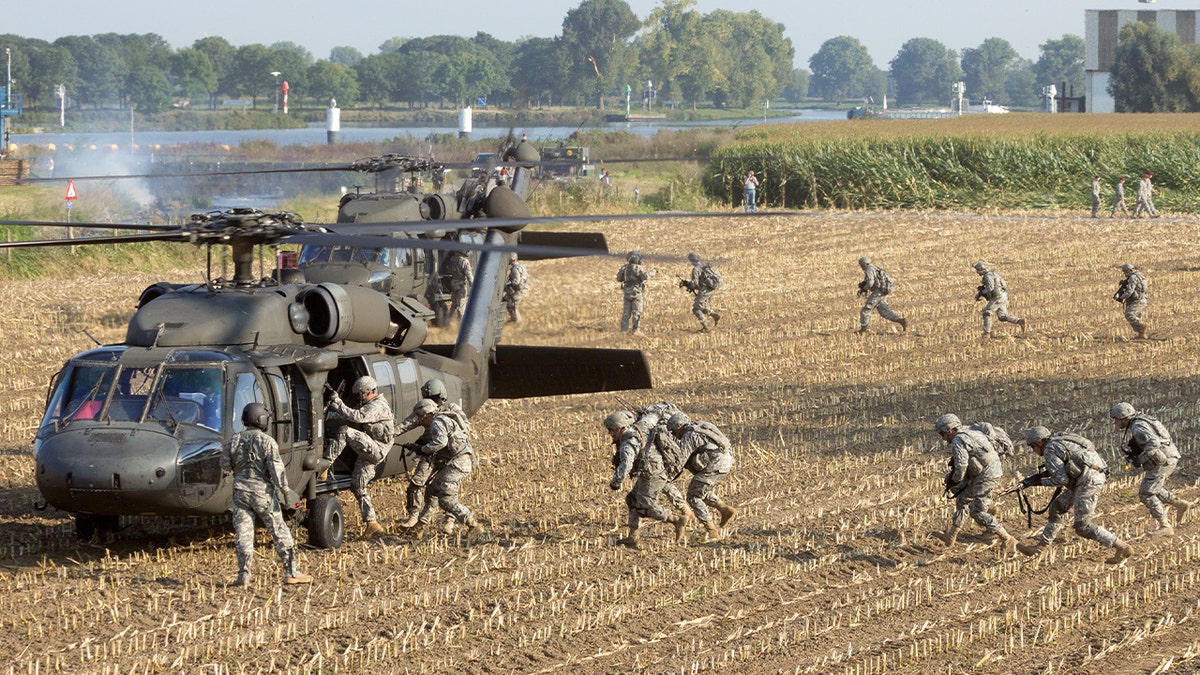
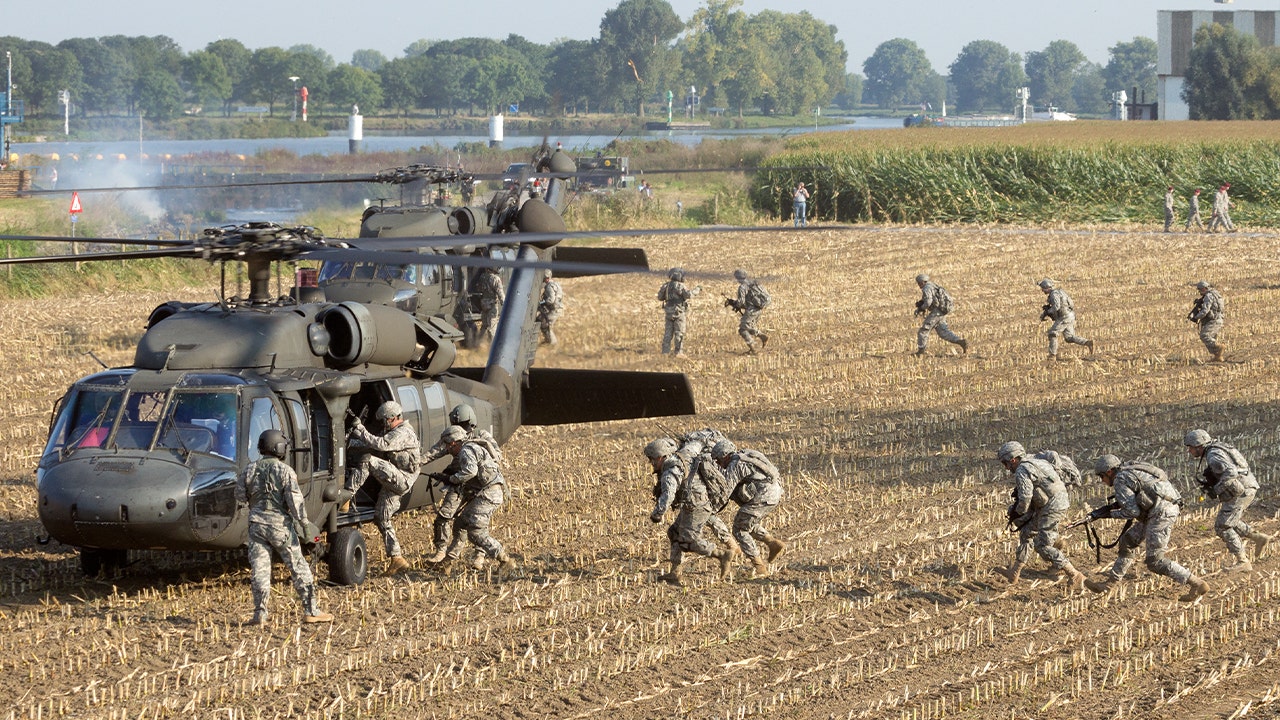
A report from The Washington Post recently indicated that the U.S. is contemplating a ground mission in Iran.
The speaker’s remarks followed this report, highlighting that the Trump administration, along with the War Department, is exploring options for President Trump to potentially deploy ground troops. Such actions could be aimed at dismantling elements of Iran’s nuclear program or countering Iranian activities to ensure unimpeded oil tanker passage through the Strait of Hormuz.
The Post reported Saturday, citing anonymous sources, that the Pentagon is preparing options for potential U.S. ground operations in Iran that could last weeks if Trump approves an escalation. The plans reportedly envision limited raids by Special Operations and conventional forces rather than a full-scale invasion, with possible targets including Kharg Island and coastal weapons sites near the Strait of Hormuz.
“It’s the job of the Pentagon to make preparations in order to give the commander in chief maximum optionality,” White House press secretary Karoline Leavitt told the Post in a statement, echoing remarks made during a press briefing this week. “It does not mean the president has made a decision.”
Fox News reached out to the Pentagon for comment Sunday morning.
Reuters separately reported that the administration has considered sending thousands of additional troops to the region and that Trump has weighed the use of ground forces to seize Kharg Island. Secretary of State Marco Rubio has said the United States is not currently postured for ground operations, which would give Trump “maximum” flexibility, but said objectives can be achieved without them.
The prospect of U.S. troops entering Iran remains politically divisive and militarily hazardous, with analysts warning that even a limited seizure of territory could expose American forces to sustained counterattacks and complicate efforts to end the war quickly.
Washington has dispatched thousands of Marines to the Middle East, with the first of two contingents arriving on Friday aboard an amphibious assault ship, the U.S. military has said.
The United States said last week it had offered a 15-point ceasefire plan to Iran, with a proposal to reopen the Strait of Hormuz and restrict Iran’s nuclear program, but Tehran has rejected the list and put forward proposals of its own.
With the Strait of Hormuz effectively closed, there is also concern about shipping lanes around the Arabian Peninsula and the Red Sea after Yemen’s Houthis entered the fray.
Trump has threatened to hit Iranian power stations and other energy infrastructure if Iran does not open the Strait of Hormuz, though he has extended a deadline by 10 days.
Iranian threats against ships have kept most oil tankers from attempting the waterway. Iran has agreed to let an additional 20 Pakistani-flagged vessels pass through the strait, with two ships permitted to transit daily.