
Share this @internewscast.com
On Tuesday, Iranians experienced a partial return of international phone call capabilities following a comprehensive communications blackout imposed by authorities amid a forceful crackdown on anti-government demonstrations.
In Tehran, locals reported that calls to foreign numbers briefly connected, but text messaging services were still inactive, and internet usage was restricted to state-approved domestic sites, keeping Iran largely isolated from global communication.
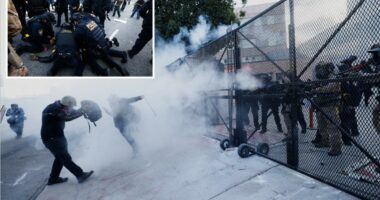
The limited communication restoration coincided with a significant security presence in central Tehran. Eyewitnesses noted the deployment of riot police, Revolutionary Guard units, and plainclothes officers at strategic points as the government aimed to suppress the protests.
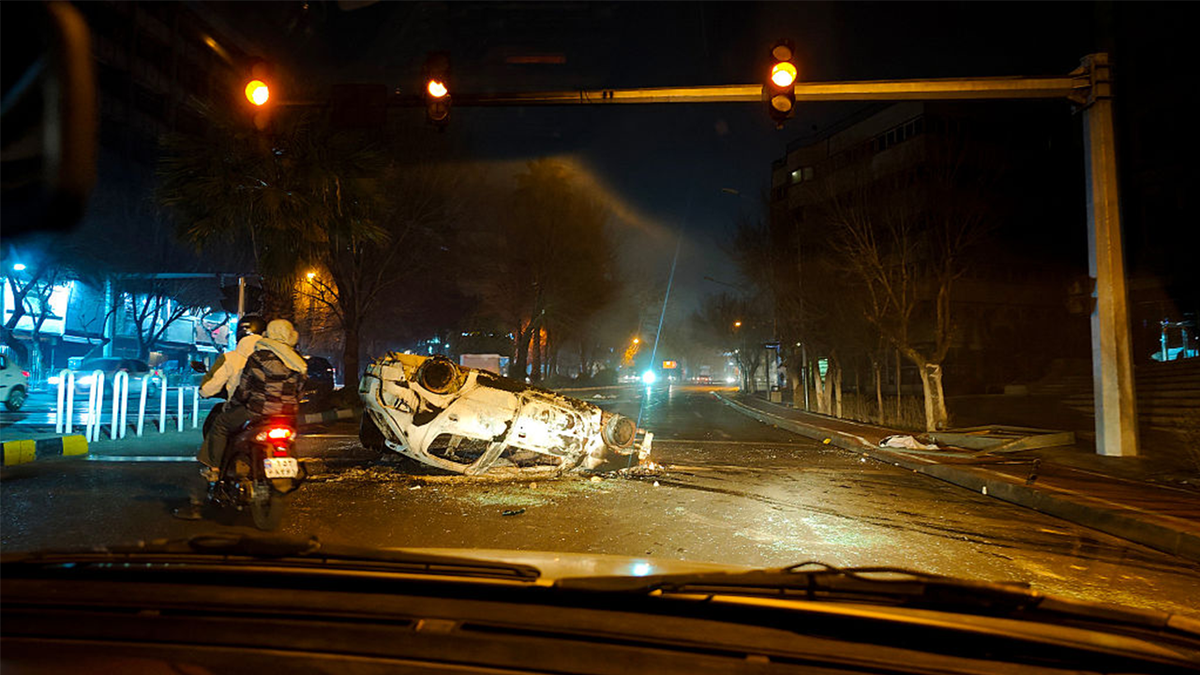
Amidst the turmoil, an overturned car was captured in an image taken on January 8, 2026, in Tehran, Iran. (Getty Images)
The protests, which have erupted in response to Iran’s worsening economic situation, have grown into calls for a change in leadership. Activist groups claim hundreds have died, though verifying these numbers is challenging due to the internet shutdown and strict state control over information.
According to locals, some government offices and banks suffered damage during the unrest. Meanwhile, shop owners have been instructed to resume operations despite the ongoing security measures, resulting in sparse pedestrian activity in numerous parts of the city.
The unrest has drawn heightened international attention as tensions grow between Tehran and Washington. U.S. President Donald Trump has said Iran wants to negotiate with his administration following his threat to bomb the country over its response to the protests.
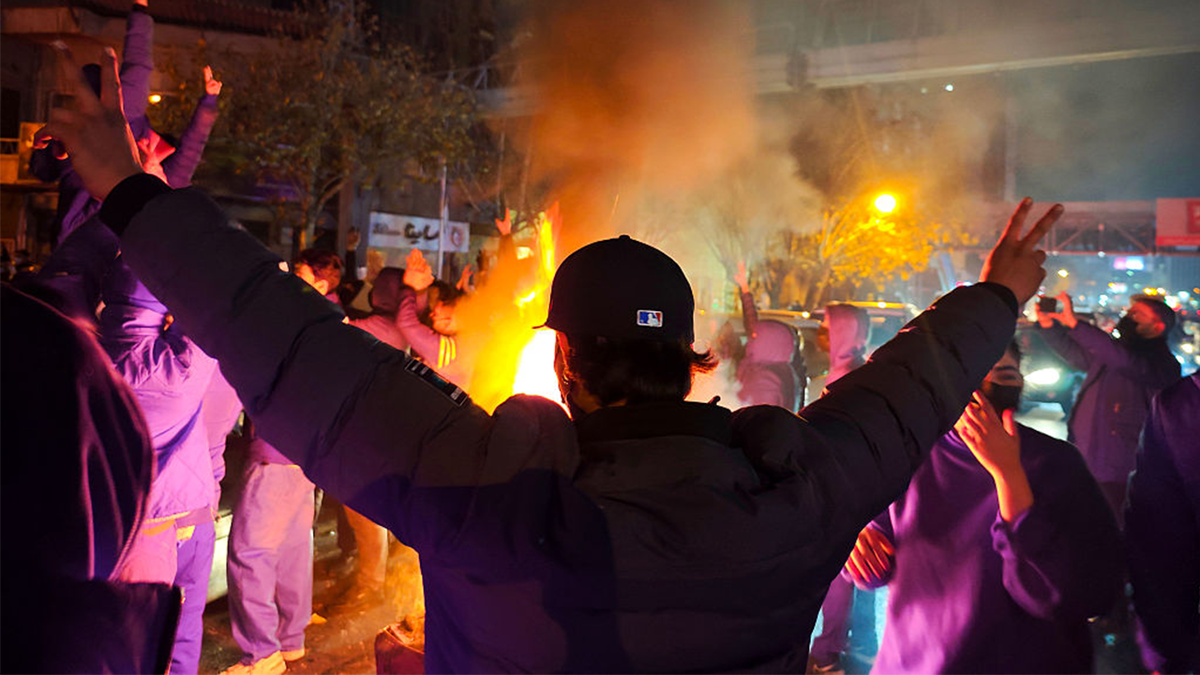
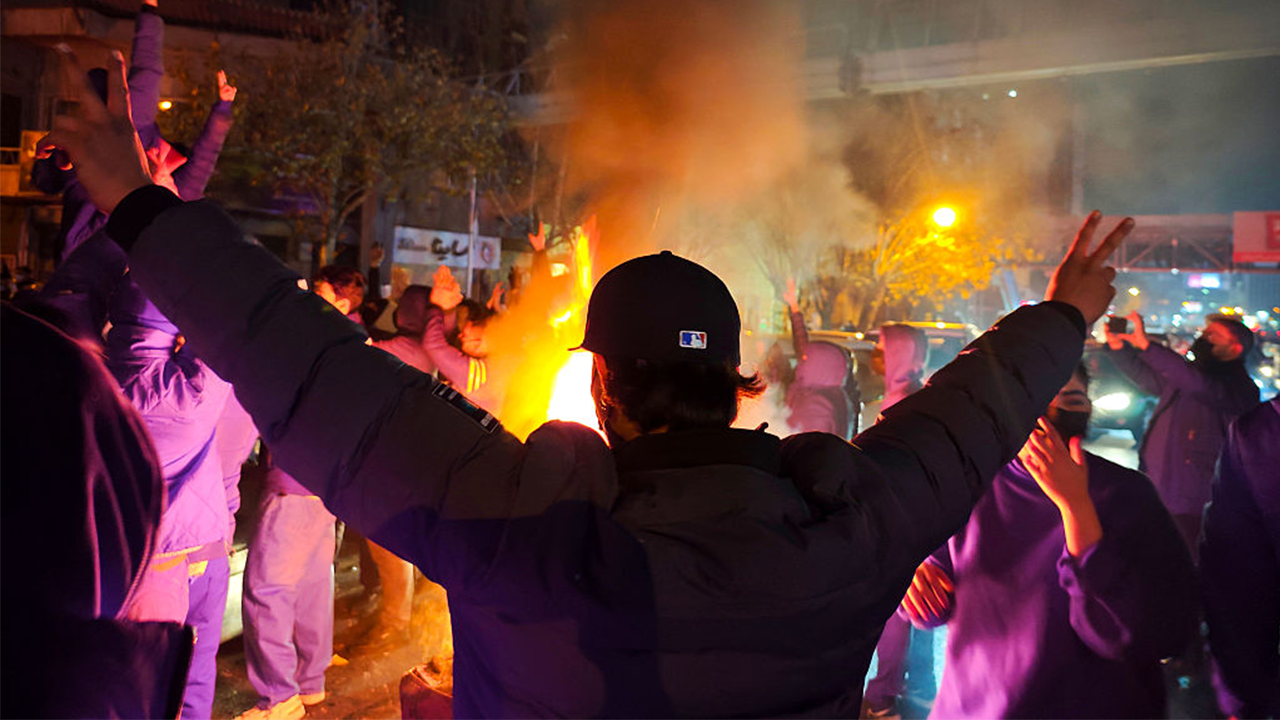
Fires are lit as protesters rally on January 8, 2026, in Tehran, Iran. (Getty Images)
Iran “better not start shooting, because we’ll start shooting, too,” Trump said on Friday.
Iranian Foreign Minister Abbas Araghchi told Al Jazeera in an interview aired Monday night that he continued to communicate with U.S. envoy Steve Witkoff.
The communications “continued before and after the protests and are still ongoing,” Araghchi said, adding that “Washington’s proposed ideas and threats against our country are incompatible.”
Araghchi also said that Tehran is “fully prepared for war” in the event that the U.S. attacks.
White House Press Secretary Karoline Leavitt told reporters that diplomacy remains Trump’s first option, but that the president “has shown he’s unafraid to use military options if and when he deems necessary, and nobody knows that better than Iran.”
“He certainly doesn’t want to see people being killed in the streets of Tehran. And unfortunately, that’s something we are seeing right now,” she added.
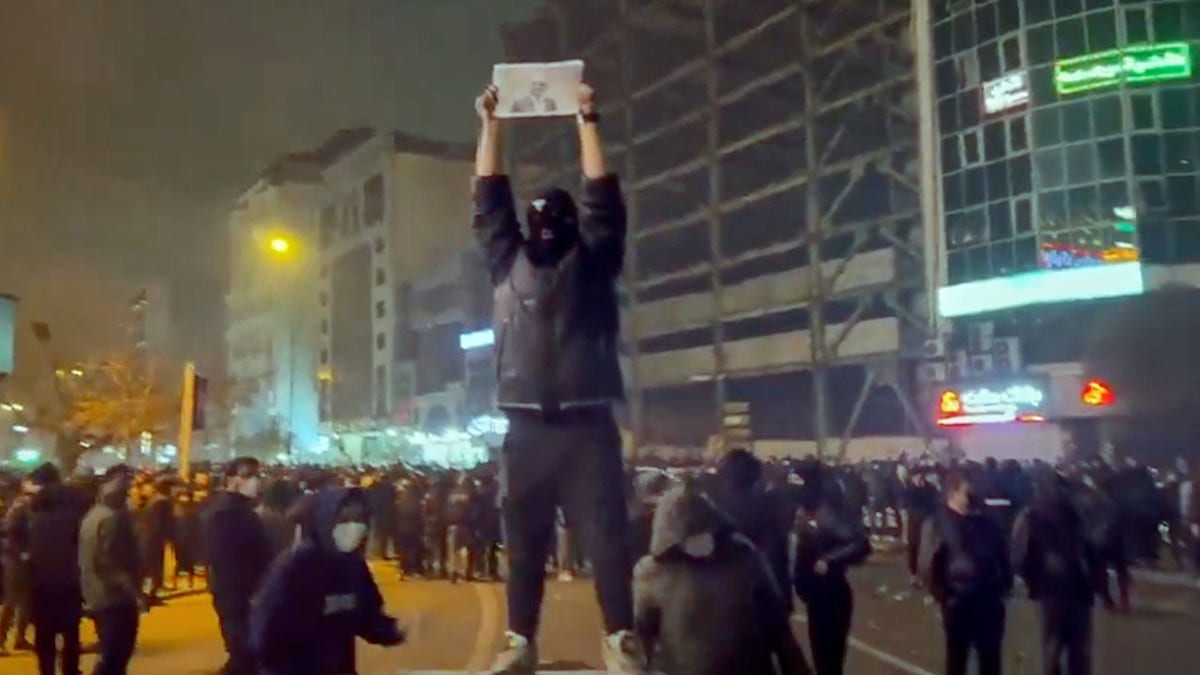
A masked demonstrator holds a picture of Iran’s Crown Prince Reza Pahlavi during a protest in Tehran, Iran, on Jan. 9, 2026. (UGC via AP)
Tens of thousands of pro-government demonstrators also took to the streets on Monday after days of protests challenging the rule of Supreme Leader Ayatollah Ali Khamenei. Iranian state television aired chants from the crowd, who shouted “Death to America!” and “Death to Israel!” as well as “Death to the enemies of God!”
Iran’s attorney general has warned that anyone participating in protests will be considered an “enemy of God,” a crime punishable by death.
Trump announced on Monday that countries engaging in business with Iran will face 25% tariffs that would be “effective immediately” in response to Tehran’s crackdown on protests.