Share this @internewscast.com
Recent reports from Human Rights Watch and Amnesty International reveal that Iran has intensified efforts to recruit children as young as 12 into military roles linked to the Islamic Revolutionary Guard Corps (IRGC). This alarming development highlights the growing involvement of minors in conflict-related activities.
As the conflict escalates with increasing U.S. and Israeli strikes, these reports suggest that Iran is facing manpower shortages, forcing reliance on paramilitary forces to maintain stability at home. This shift not only endangers young lives but also risks international legal consequences for Iran, potentially leading to war crimes charges.
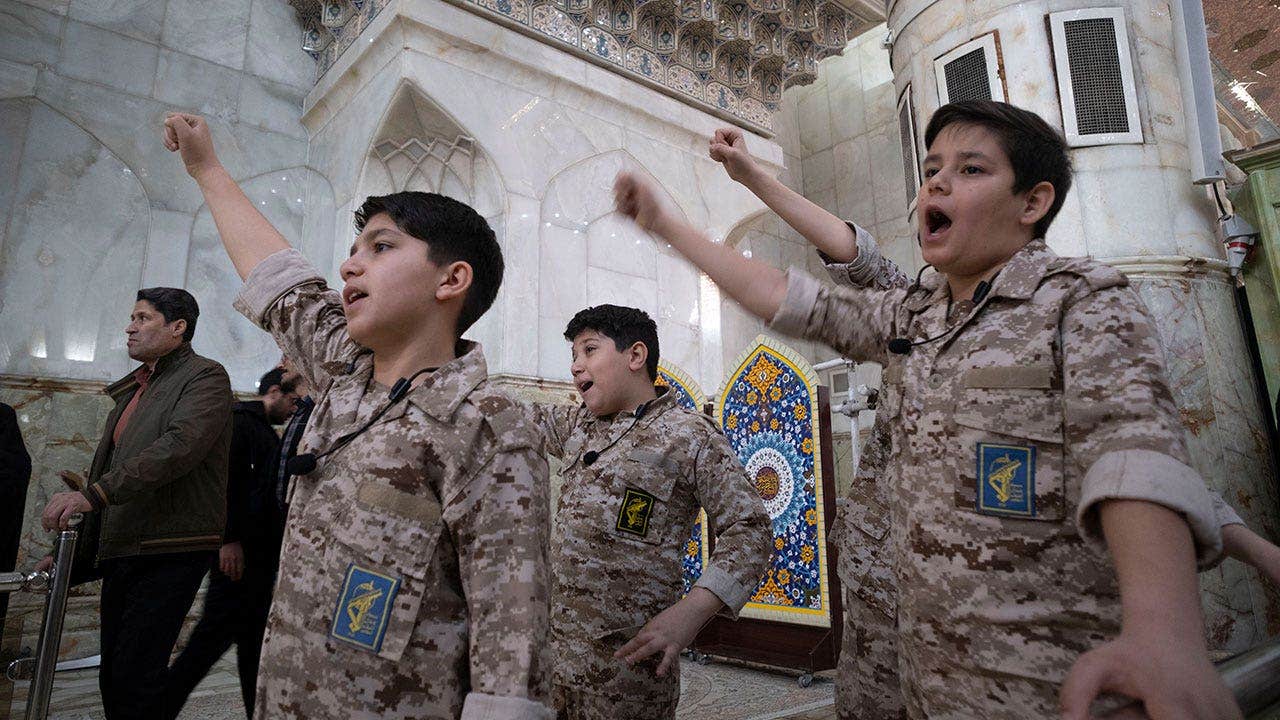
According to Human Rights Watch, the IRGC has launched a recruitment initiative named “Homeland Defending Combatants for Iran.” This campaign lowers the recruitment age to 12, actively encouraging young people to enlist through mosques and the Basij, a volunteer paramilitary organization affiliated with the IRGC.
The roles assigned to these children are not limited to auxiliary tasks. They include participating in “operational patrols,” manning checkpoints, and engaging in intelligence activities—positions that place them in direct danger amid intensifying conflict across Iran.
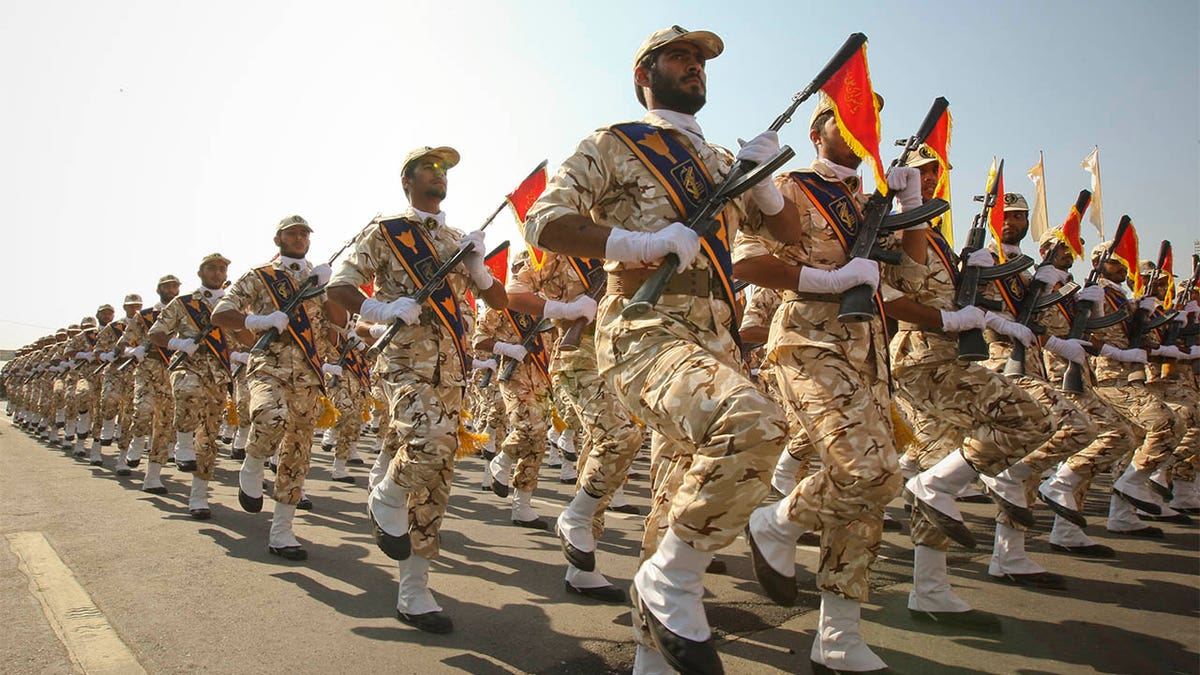
Images of Iranian Revolutionary Guard members marching during a parade underscore the military’s influence. The IRGC is recognized by the U.S. State Department as a foreign terrorist organization, with significant operations conducted beyond Iran’s borders.
Amnesty International has condemned the recruitment of children under 15, labeling it a “war crime.” Their findings are supported by verified visual evidence and testimonies from eyewitnesses, further substantiating the grave nature of these actions.
The organization analyzed 16 photos and videos published since Saturday, showing children carrying weapons, including AK-pattern rifles, and deployed alongside Islamic Revolutionary Guard Corps and Basij forces at checkpoints, on patrols and during state-organized rallies in Iranian cities including Tehran, Mashhad and Kermanshah.
Amnesty also documented the fatal consequences. On Sunday, 11-year-old Alireza Jafari was killed at a checkpoint in Iran while accompanying his father, a Basij member, the group said. Authorities said he was killed “while serving” following an Israeli drone strike.
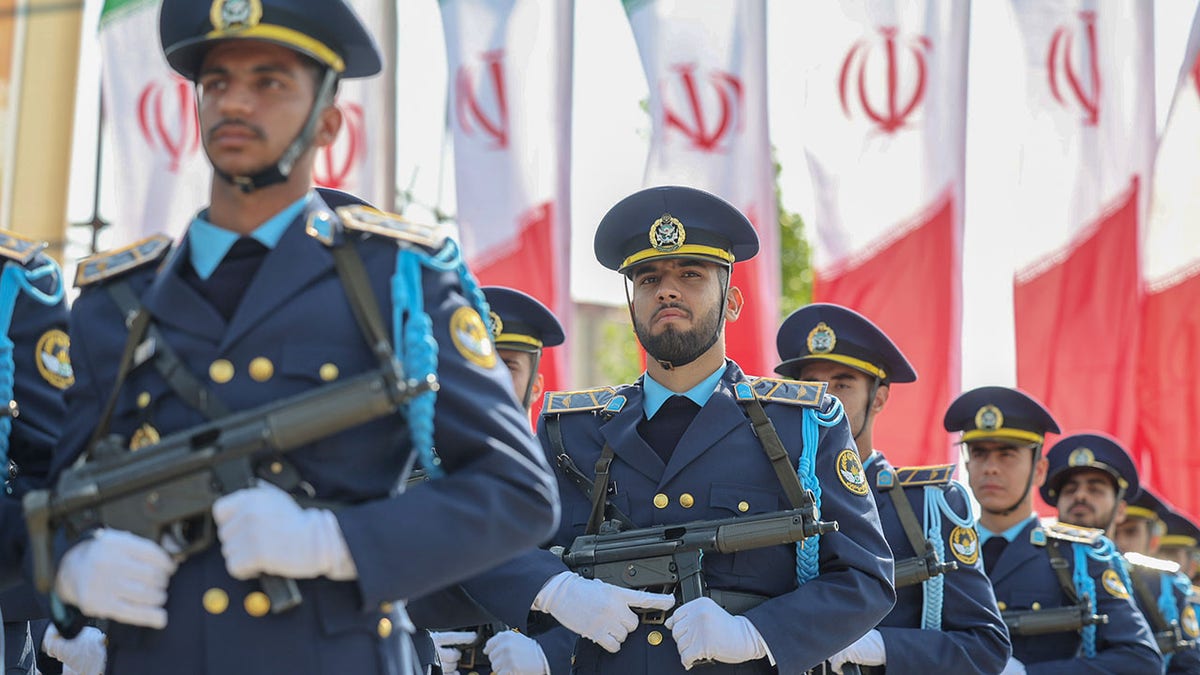
Iranian soldiers take part in a military parade during a ceremony marking the country’s annual army day on April 17, 2024, in Tehran, Iran. (Getty Images)
According to Amnesty, the boy’s mother told the Iranian newspaper Hamshahri that her husband had reported a shortage of personnel at checkpoints and took their two sons with him. She said he told their son he “must get prepared for the days ahead,” adding that children as young as 15 and 16 are commonly involved in checkpoint duties.
Eyewitness accounts reviewed by Amnesty describe children visibly struggling to handle weapons. One person in Tehran wrote: “I saw a child at a checkpoint near our house … I think he was about 15… It seemed like he was struggling to breathe from the effort of lifting the gun.”
Another witness in Karaj, Iran, reported seeing a child “holding a Kalashnikov rifle,” while a third in Rasht said some appeared to be “13 years old at most,” warning they could “fire randomly.”
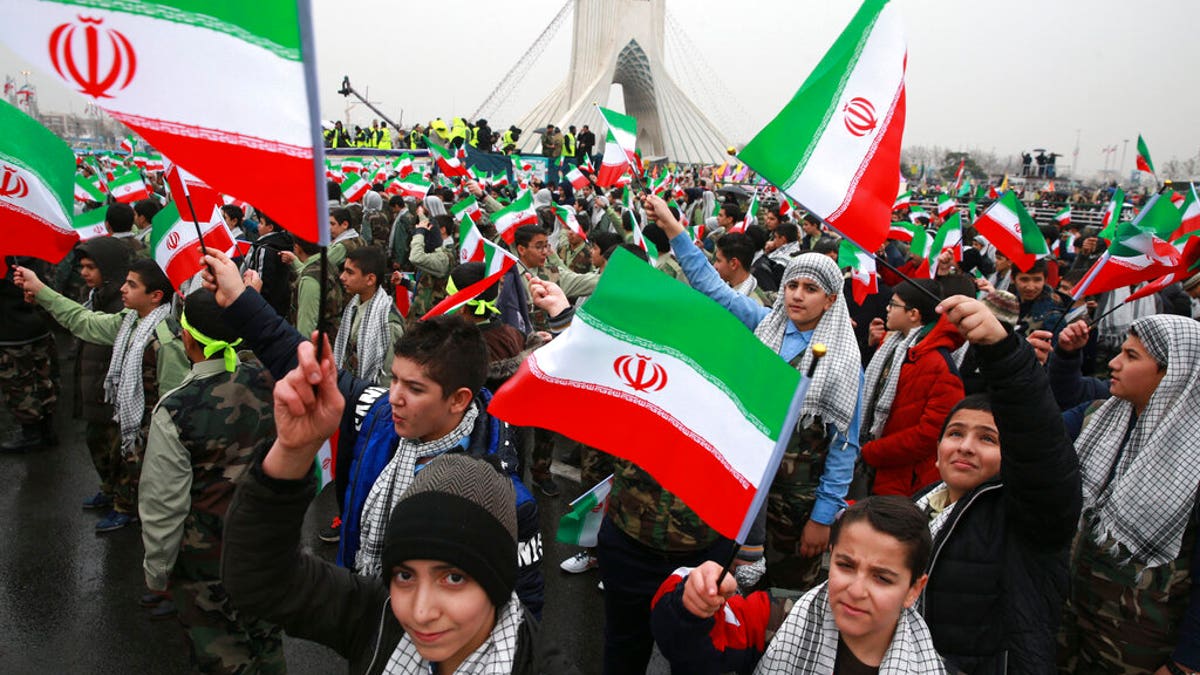
Children wave Iranian flags during a ceremony celebrating the 40th anniversary of the Islamic Revolution, at the Azadi, Freedom, Square in Tehran, Iran, Monday, Feb. 11, 2019.
In one video cited by Amnesty, filmed March 30 in Mashhad, Iran, two children wearing Basij uniforms and balaclavas were seen carrying assault rifles while positioned on a moving vehicle during a state-organized rally, elevated above a cheering crowd.
The recruitment campaign itself has been promoted through official channels, including posters depicting children alongside armed adults under the slogan “Basij with people, for people,” accompanied by a quote attributed to Iran’s Supreme Leader calling for Basij forces to remain central to the revolution.
Iranian officials have defended the policy by pointing to what they describe as strong demand among teenagers.
In a televised interview with Iranian state media, IRGC official Rahim Nadali said the minimum age was set at 12 because “teenagers and the youth repeatedly have come and said that they want to take part.”
“There is no excuse for a military recruitment drive that targets children to sign up, much less 12-year-olds,” Human Rights Watch’s Bill Van Esveld said.
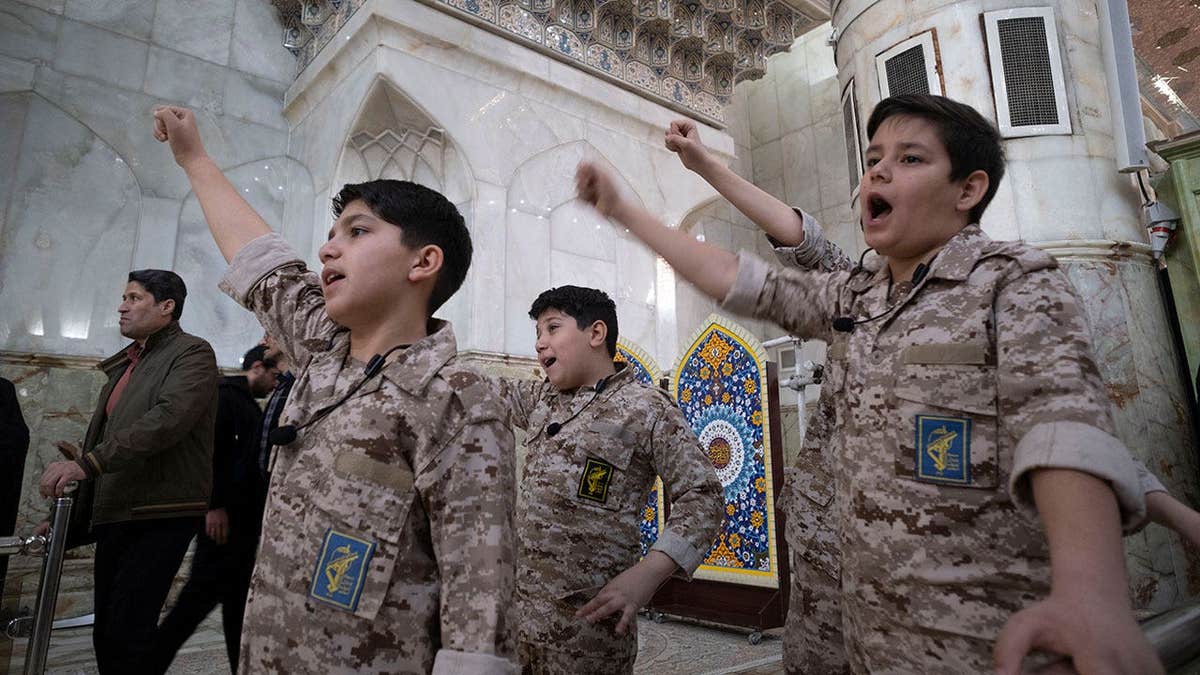
Iranian schoolboys wear Islamic Revolutionary Guard Corps (IRGC) military uniforms and shout anti-U.S. and anti-Israeli slogans during a ceremony marking the 47th anniversary of the victory of Iran’s Islamic Revolution at the shrine of Ayatollah Ruhollah Khomeini in the Behesht-e Zahra cemetery in southern Tehran, Iran, on Feb. 1, 2026. (Morteza Nikoubazl/NurPhoto via Getty Images)
The reports come as the United Nations classifies the recruitment of children in armed conflict as a “grave violation,” with international law prohibiting the enlistment of children under 15 and setting 18 as the standard for participation in hostilities.
Both organizations called on Iranian authorities to immediately halt the recruitment of minors and release those already serving.
Iran’s mission to the United Nations declined Fox News Digital’s comment request.