Share this @internewscast.com

Iranian authorities are reportedly intensifying their crackdown on potential protestors, resorting to arrests and issuing severe threats as part of their strategy to stifle an emerging uprising.
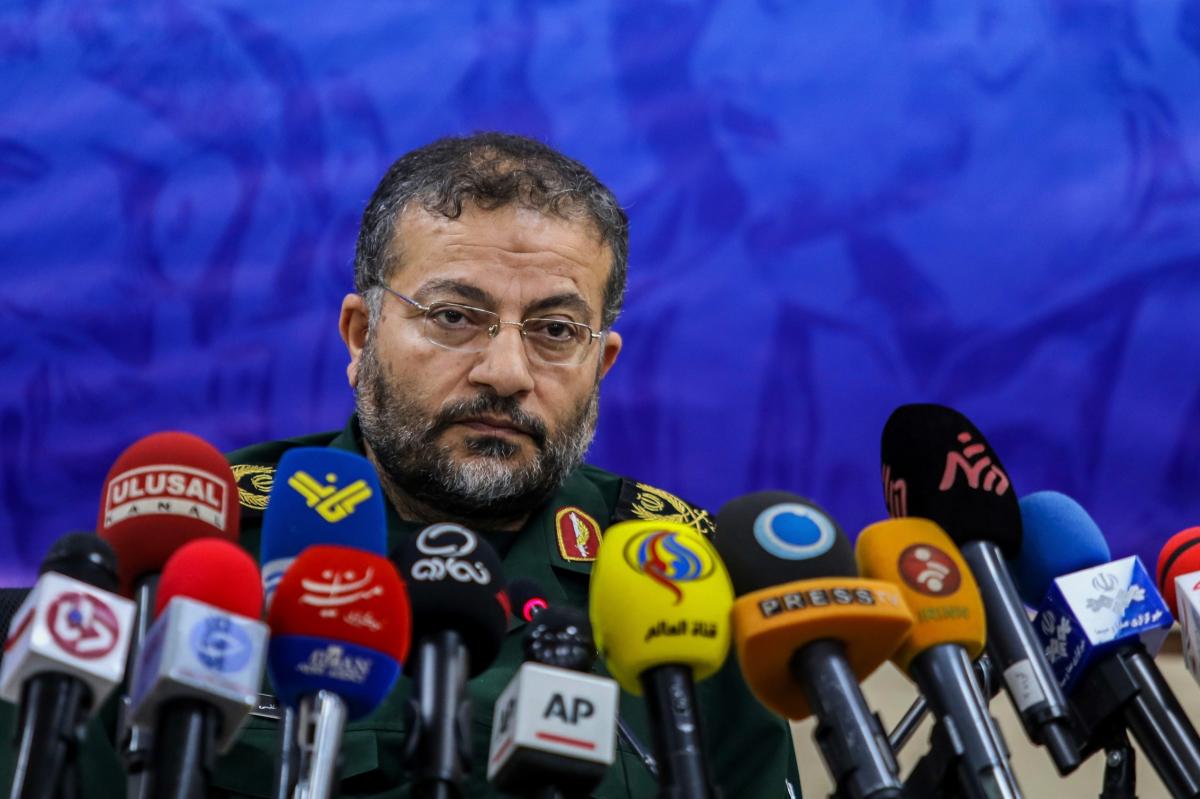
Although recent U.S. and Israeli military actions have undermined the Iranian police force, as well as the Islamic Revolutionary Guard Corps and the Basij militia, security forces continue to clamp down on internal opposition, as detailed by the Wall Street Journal. Notably, these actions include the killing of Gholamreza Soleimani, the Basij’s leader, by Israeli forces.
The streets of Tehran have become more perilous, with masked men in civilian clothes patrolling on motorcycles, brandishing weapons to instill fear among citizens. These groups have also established numerous security checkpoints to scrutinize vehicles, according to the report.
Since the onset of the conflict, authorities have detained over 500 individuals, accusing them of leaking information to the media or adversarial groups, according to a statement from Ahmad-Reza Radan, Iran’s police chief, as cited by the publication.
Among those arrested are individuals who merely captured images or footage of regional airstrikes. At least 11 people have been killed by the police, accused of supporting monarchist ideals or backing the exiled heir of Iran’s last monarch.
Security forces are employing fear tactics to deter dissenters, broadcasting ominous warnings on television and sending text messages that convey a chilling shoot-to-kill policy against protestors, the report indicates.
One text message reviewed by the Journal and sent by the Revolutionary Guard over the weekend warned that rioters could face a “stronger blow than January 8,” in reference to mass killings of protesters in the Islamic state before the war broke out.
A continued near-total internet blackout has complicated communication and mobilization of protests. Many residents of Tehran are terrified to leave their homes due to the heavy security presence and possible persecution, the outlet reported.
In a video statement, Israel’s Prime Minister Benjamin Netanyahu said that targeted strikes on terror operatives have taken place to “enable the brave people of Iran” to celebrate the “Festival of Fire,” which is a celebration on the eve of the last Wednesday before Nowruz, or the Persian New Year.
“I’m here with Israel’s Defense Minister, our Chief of Staff, the head of the Mossad, the Chief of Air Force, our senior commanders. In the past 24 hours, we knocked out two of the terrorist chieftains, the top terrorist chieftains of this tyranny,” Netanyahu said on Tuesday from the Air Force command center at the Kirya.
“Our aircraft are hitting the terror operatives on the grounds, in the crossroads, in the city squares. This is meant to enable the brave people of Iran to celebrate the Festival of Fire,” Netanyahu added.
“So celebrate and Happy Nowruz. We’re watching from above.”
Mike Nelson, a retired Special Forces lieutenant colonel, told NewsNation that Israel’s killing of Soleimani, Iran’s security chief responsible for suppressing protests, during airstrikes on Tuesday could signal the nation’s “intent to nudge an uprising.”
The removal of Soleimani could be “part of an overall leadership target list, but if the strikes start targeting Basij in a larger way, it could suggest the intent to nudge an uprising,” Nelson, who has experience at the US Central Command, continued.
“By targeting the militia that would put down domestic upheaval. They might be trying to make the conditions for an uprising more favorable.”