
Share this @internewscast.com
Recent assessments have revealed that Iran’s potentially most perilous nuclear facility is concealed beneath a granite mountain, buried as deep as 100 meters underground. This revelation has led nonproliferation experts to stress the urgency of addressing the site, with one expert asserting that it must be “neutralized” before any potential conclusion of U.S. hostilities with Iran.
Data released on Wednesday by the U.S. Central Command (CENTCOM) detailed that U.S. and Israeli forces initiated Operation Epic Fury in late February. Since then, they have targeted over 7,800 sites across Iran, marking the 18th day of ongoing conflict.
Andrea Stricker, the deputy director of the Nonproliferation Program at the Foundation for Defense of Democracies, emphasized in a policy briefing the critical steps that must be taken. “Before the United States and Israel conclude major combat operations against Iran, it is imperative to complete two urgent tasks,” she stated.
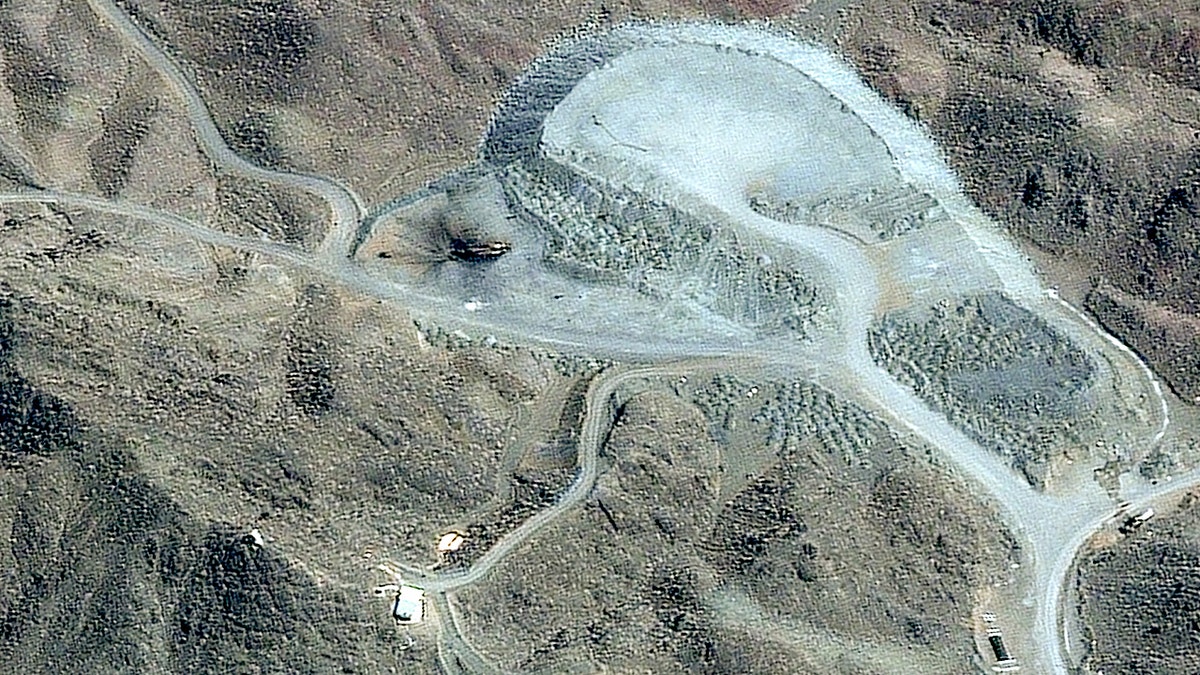
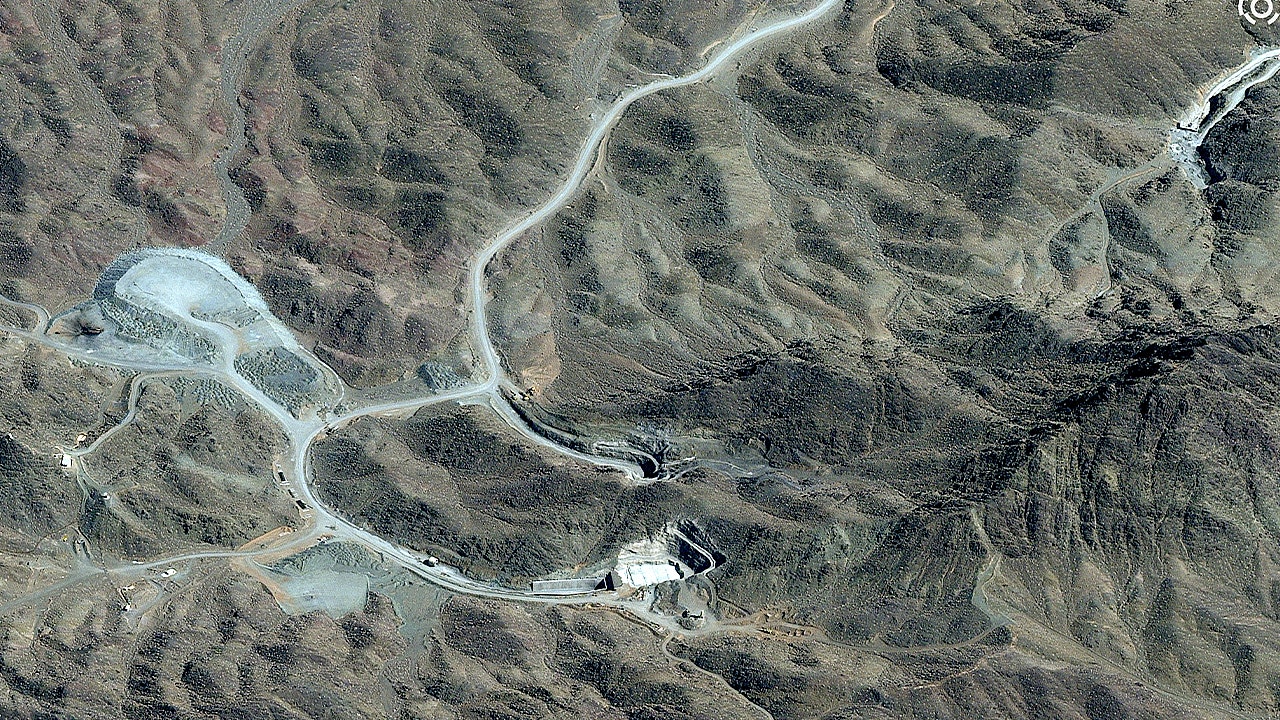
Satellite images have depicted efforts to fortify the site at Pickaxe Mountain. Former President Trump has alleged that Tehran is actively pursuing a nuclear weapon, further intensifying concerns over the facility. These images, provided by Vantor and distributed via Reuters, underscore the site’s increased defenses.
Stricker elaborated on the necessary actions: “Firstly, it is crucial to neutralize Pickaxe Mountain. Secondly, efforts must be made to recover or eliminate stocks of highly enriched uranium to prevent them from being acquired by remaining regime elements, other hostile states, or terrorist groups.”
In mid-February, high-resolution satellite imagery disclosed Iran’s accelerated endeavors to bolster the defenses of the facility at Kuh-e Kolang Gaz La, commonly referred to as “Pickaxe Mountain.” This information comes from the Institute for Science and International Security, highlighting the urgency of addressing this potential threat.
“At one of the eastern tunnel entrances, rock and soil can be seen pushed back and leveled on top of the tunnel portal,” the institute’s report said.
“Additionally, over the last month, a concrete-reinforced headworks for the tunnel entrance extension was added. This allows for additional overburden in the form of rock, soil or concrete.”
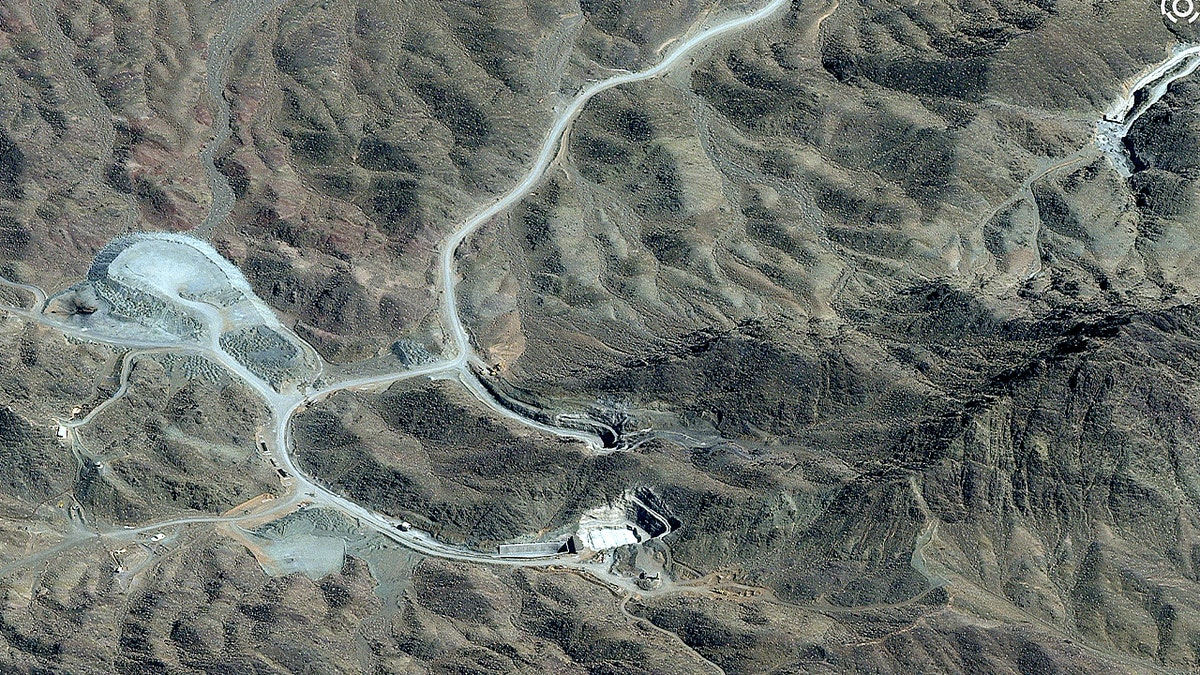
A satellite image shows an overview of the Pickaxe Mountain tunnel complex in Natanz. (Vantor/Handout via Reuters)
The report added that “these efforts strengthen the tunnel portals and provide additional protection against an airstrike,” noting visible piles of construction materials near the entrances.
Preventing Iran from having a nuclear weapon is one of President Donald Trump’s stated war aims.
In June 2025, U.S. forces carried out strikes against nuclear sites, including Fordow, Natanz and Isfahan.
Iran had roughly 441 kilograms of uranium enriched to 60% as of June 2025, enough material, if further enriched to weapons-grade levels, for multiple nuclear weapons, according to the International Atomic Energy Agency.
Rafael Grossi, its director general, also said March 9 that the U.N. watchdog believes roughly 200 kilograms of Iran’s highly enriched uranium stockpile are still stored in deep tunnels at a nuclear complex outside Isfahan.

President Donald Trump confirmed the U.S. launched strikes on Iran Feb. 28, 2026. (The White House via X Account/Anadolu via Getty Images)
Grossi added that additional quantities of highly enriched uranium are believed to be at another nuclear center in Natanz, where Iran has constructed a new fortified underground facility at Pickaxe Mountain.
On March 9, Trump pointed to Iran’s efforts to resume nuclear activity at a deeper site and said Tehran has continued pursuing a nuclear weapon “even after we obliterated their key nuclear sites.”
“They were starting work at another site, a different site … that was protected by granite. … They wanted to go a lot deeper, and they started the process,” Trump said, according to reports.
According to Stricker, the “different site” referenced by Trump is Pickaxe Mountain, where Iran has said it has been building a centrifuge assembly plant at the site since 2021. The site is a mile from its Natanz enrichment plant.
“The size of the facility, as well as the protection provided by the tall mountain, raised immediate concerns about whether additional sensitive activities are planned, such as uranium enrichment,” the Institute for Science and International Security also noted in its report.
At the beginning of March, a vehicle was struck outside the site, presumably by Israel, The Wall Street Journal reported, before suggesting that the vehicle strike was evidence the U.S. and Israel are watching the mountain carefully.