
Share this @internewscast.com
As discussions between the U.S. and Iran continue to center predominantly on Tehran’s nuclear ambitions, Israeli authorities are bringing attention to another pressing concern: Iran’s ballistic missile program. For Israel, this issue is a critical boundary that could influence decisions regarding independent military action.
Prime Minister Benjamin Netanyahu, prior to embarking on his journey to Washington, emphasized the importance of voicing Israel’s priorities during diplomatic exchanges. “I will present to the president our views regarding the principles of the negotiations — the important principles — and, in my view, they are important not only for Israel, but for anyone in the world who wants peace and security in the Middle East,” Netanyahu declared.
According to Israeli officials, these priorities involve more than just Iran’s nuclear activities; they also encompass Tehran’s missile capabilities. Recent reports from The Jerusalem Post indicate that Israeli defense personnel have expressed to their U.S. counterparts that Iran’s missile development poses a severe existential threat to Israel. The reports suggest that Israel is prepared to take unilateral action if required.
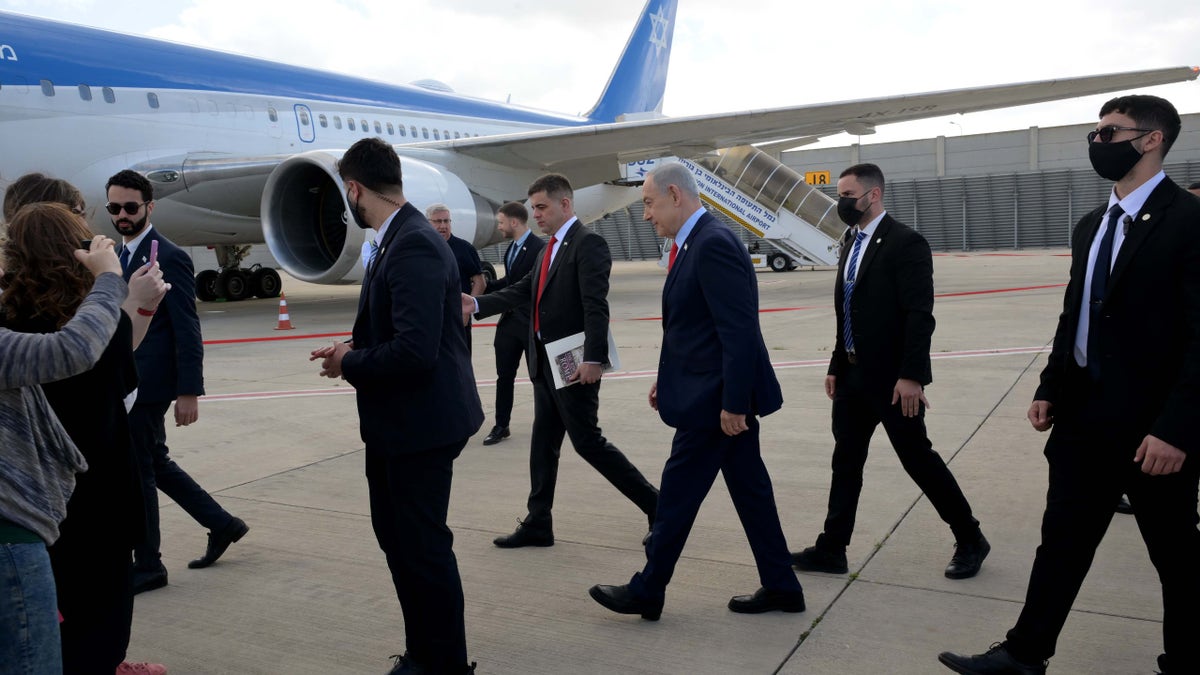
In a recent development, Israeli Prime Minister Benjamin Netanyahu was seen boarding his plane bound for Washington, D.C., for a meeting with President Trump on February 10, 2025. (Avi Ohayon/Government Press Office)
The Jerusalem Post further revealed that Israeli security officials, through a series of strategic conversations with Washington, have communicated their determination to neutralize Iran’s missile capabilities and production facilities. This plan includes detailed military strategies to target and incapacitate key sites involved in the missile program’s manufacturing and development.
When approached for a comment, a spokesperson for Israel’s defense minister opted not to provide any additional information on the matter.
Sima Shine, a former senior Israeli intelligence official and current senior researcher at the Institute for National Security Studies, told Fox News Digital that limiting talks to the nuclear issue risks missing what Israel considers the broader threat.
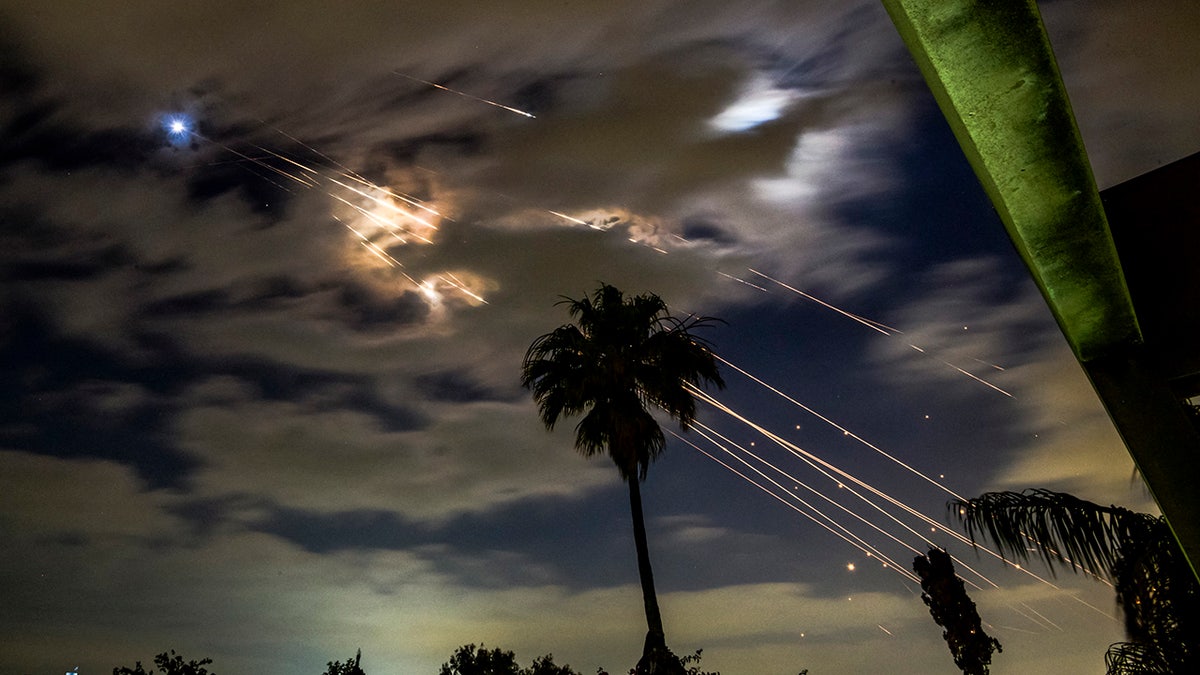
Israel’s air defense targets Iranian missiles in the sky over Tel Aviv, on June 16, 2025. (Matan Golan/Middle East Images/AFP via Getty Images)
“If negotiations deal only with the nuclear file and ignore the missiles, Israel will remain exposed,” Shine said. “Iran treats its ballistic missile program as its main deterrence and will not give it up.” She stressed that Tehran views them as a defensive and deterrent capability dictated by the supreme leader. Iranian Foreign Minister Abbas Araghchi said his country would not negotiate on its ballistic missile program, rejecting a core U.S. demand and further dimming prospects for a breakthrough deal. Shine described that stance as a fundamental red line for Israel.
She also warned that Tehran may be stalling diplomatically while assessing whether Washington will limit the talks to nuclear constraints alone.
“They have room to show flexibility on enrichment,” she said, noting that activity slowed after strikes on facilities, “but missiles are different. That they would not discuss.”
Israeli concerns extend beyond the negotiating table. A former intelligence official familiar with strategic planning said Israel retains the capability to strike independently if necessary.

Missiles launched from Iran are intercepted over Tel Aviv, Israel, June 15, 2025. (Tomer Neuberg/Reuters)
“Israel can act by itself if there is no choice,” the former official said, adding that missile expansion and regional threats would be key triggers.
Shine says the optics of Israeli pressure on Washington could complicate matters.
“If missiles become the central public demand, it may look as if Israel is pushing the U.S. toward military action,” she said. “If that fails, Israel could be blamed.”

Omani Foreign Minister Badr al-Busaidi, special envoy Steve Witkoff and Jared Kushner meet ahead of the U.S.-Iran talks, in Muscat, the capital of Oman, on Feb. 6, 2026. (Oman Foreign Ministry/Anadolu via Getty Images)
She added that Iran’s missile arsenal is not aimed solely at Israel but forms part of a broader deterrence strategy against the United States and regional adversaries.
For Israel, the implication is clear. A nuclear agreement that leaves Iran’s missile infrastructure untouched could be seen in Jerusalem as stabilizing the regime while leaving the most immediate threat in place. That calculation, Israeli analysts say, defines the red line.