
Share this @internewscast.com
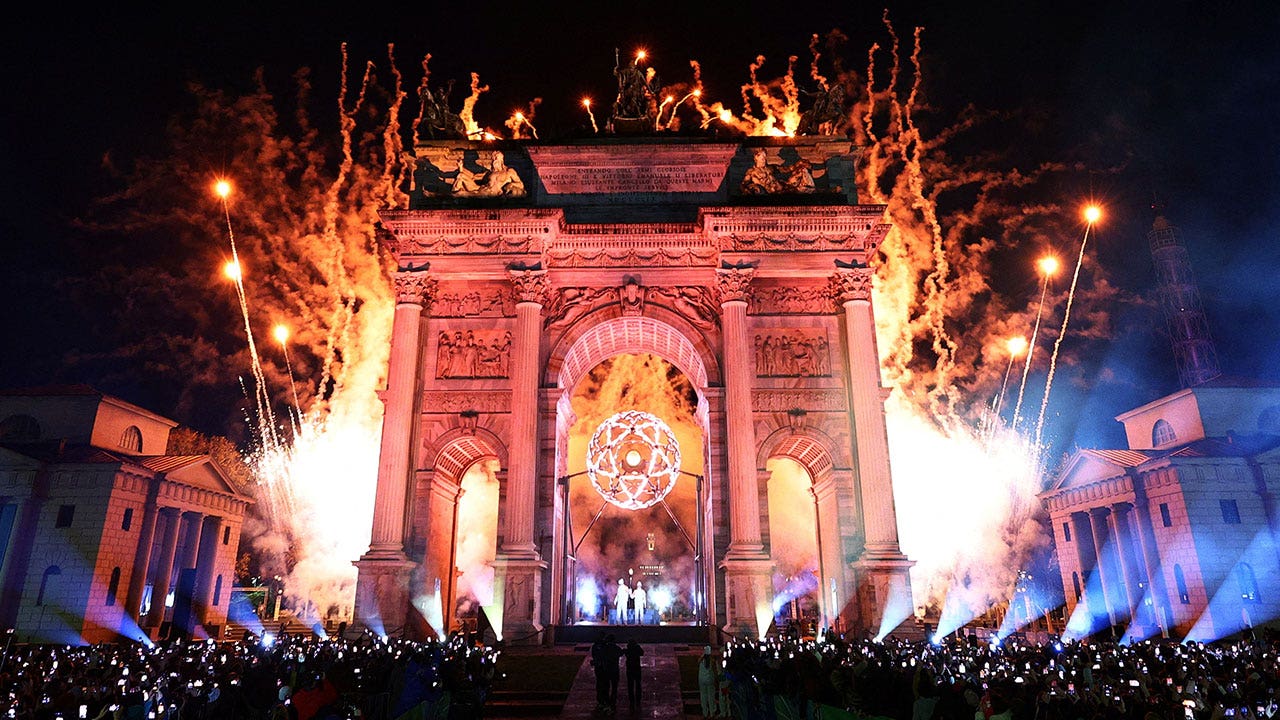
Paris and Milan-Cortina showcased two distinct Olympic opening ceremonies that reflected diverging approaches to cultural expression—one stirred cultural debates, while the other embraced traditional heritage. These contrasting spectacles are seen by some as reflective of the political trajectories of French President Emmanuel Macron and Italian Prime Minister Giorgia Meloni.
Olympic opening ceremonies are among the most-watched global cultural events, offering countries a platform to convey their self-image and aspirations. “Paris sought to redefine tradition, whereas Milan celebrated it,” remarked Hugh Dugan, an advocate for the Olympic Truce and a former U.S. diplomat, in an interview with Fox News Digital. He suggested that the differences in these ceremonies highlight a broader discussion on the interplay of culture, politics, and identity within the Olympic Games.
Dugan characterized the 2024 Paris ceremony as “intentionally disruptive and decentralized,” an urban display that was “visually striking but also polarizing.” It presented a narrative tapestry of contemporary France, showcasing diversity and a reimagining of history. According to Dugan, the choreography and costumes were laden with explicit social commentary, provoking debate over whether these elements were meant to provoke or were guided by ideological motives.
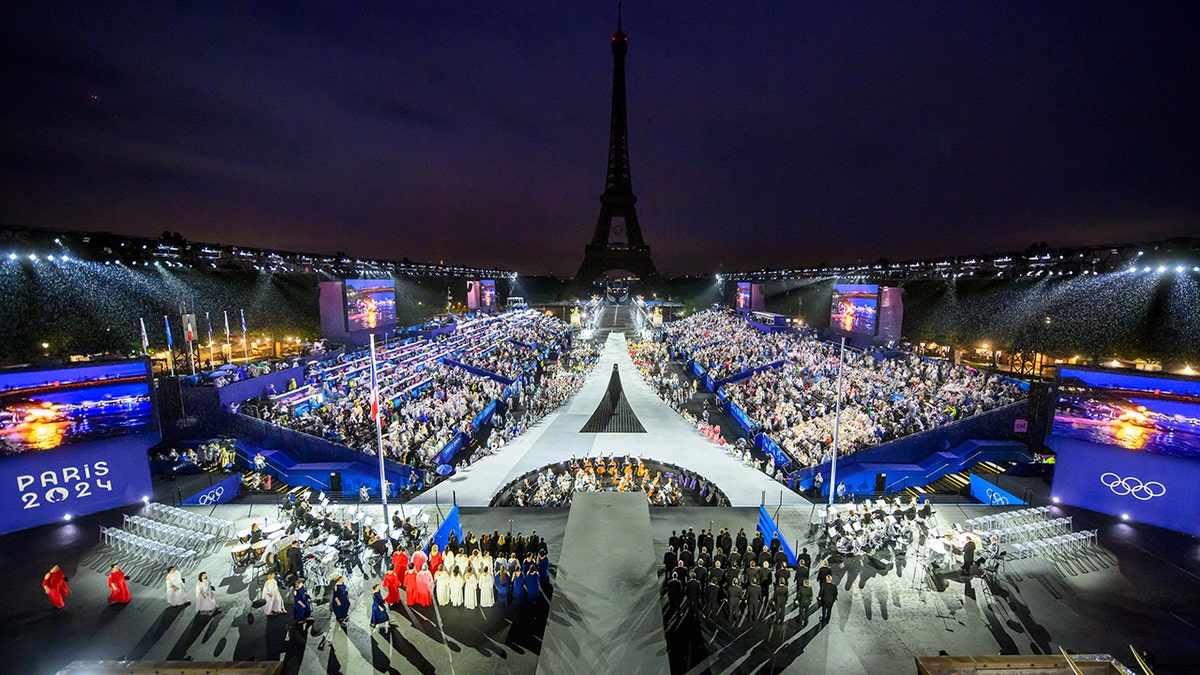
The Trocadero venue provided a backdrop as delegations made their entrance during the 2024 Summer Olympics opening ceremony in Paris on Friday, July 26, 2024. (Francois-Xavier Marit/Pool Photo via AP)
Staged along the Seine, the Paris 2024 opening ceremony became the center of controversy following a segment that many perceived as alluding to Leonardo da Vinci’s “Last Supper.” This drew criticism from Christian groups and conservative voices until organizers clarified their intentions and issued an apology for any perceived offense.
This incident ignited a larger debate within France about identity, religion, and the symbolism present in public events. The Conversation noted that the ceremony sparked a nationwide discussion on “woke ideology” and the cultural trajectory of France.
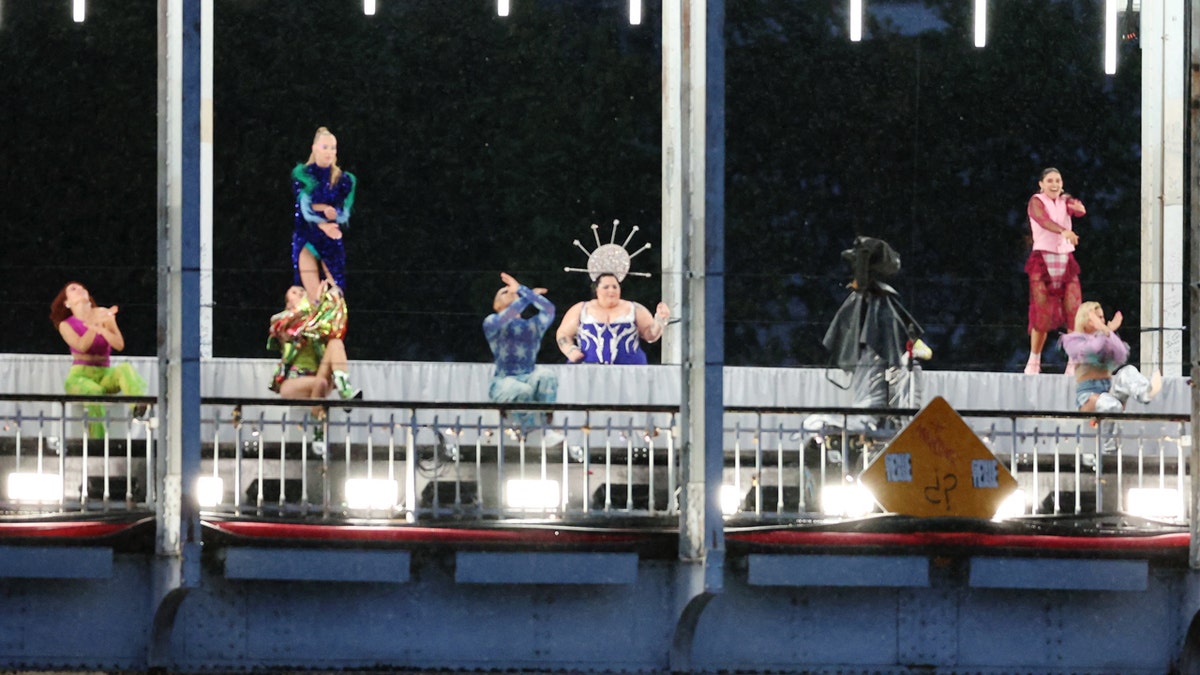
A glimpse of some of the performers who appeared in the Last Supper depiction in the 2024 Paris Olympics opening ceremony. (Tingshu Wang/Reuters)
Emma Schubart, a research fellow at the U.K.-based Henry Jackson Society, told Fox News Digital that, “The Olympics have become a stage for cultural politics as much as sport.”
She continued, “President Emmanuel Macron’s France leaned into progressive, ‘woke’ politics and post-national symbolism, while Prime Minister Giorgia Meloni’s Italy emphasized heritage, tradition and unapologetic national pride. These aesthetic choices reflect a widening divide over Europe’s cultural and political future.”
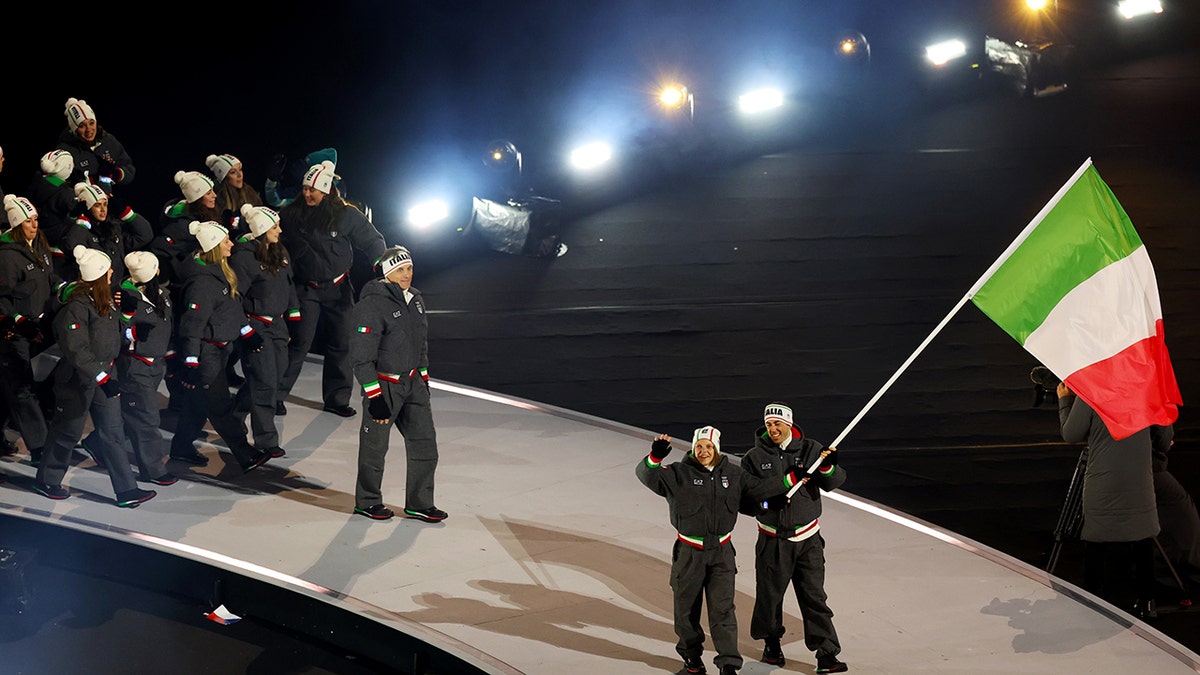
Flagbearers Arianna Fontana and Federico Pellegrino of Team Italy walk in the parade during the opening ceremony of the Milano Cortina 2026 Winter Olympics at San Siro Stadium on Feb. 6, 2026 in Milan, Italy. (Maja Hitij/Getty Images)
Dugan praised the Italian games. “The Milan-Cortina Winter Games ceremony highlighted “tradition, harmony, co-existence and the Olympic Truce,” emphasizing heritage, landscapes and the athlete procession over political messaging. He called the Italian approach “panoramic, heritage-driven, classical,” compared with Paris’ “maximalist, narrative-driven, experimental” style.”
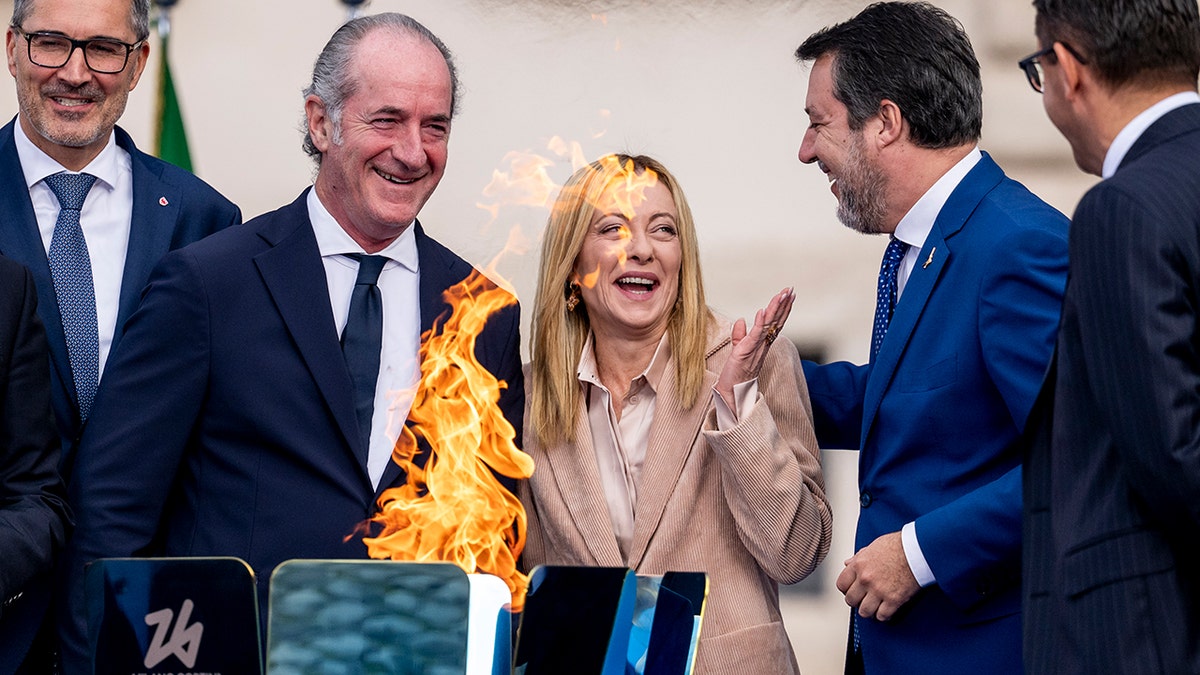
Italian Prime Minister Giorgia Meloni and Italian Minister of Infrastructure and Transport Matteo Salvini attend the Inauguration ceremony of the Olympic Torch Relay for the Milan-Cortina 2026 Winter Olympic Games at the Quirinale Palace, on Dec. 5, 2025 in Rome, Italy. (Antonio Masiello/Getty Images)
Reporting on the Milan ceremony described it as a unity-focused event celebrating Italian culture, design and scenery while pushing past pre-Games tensions and highlighting the Olympic ideal of connection and peace. Coverage emphasized tradition and spectacle rather than ideological symbolism, with performances rooted in classical imagery and national identity.
Dugan, who recently launched a Truce Compliance Index tracking how countries observe the tradition, argued the difference reflected two distinct philosophies about what Olympic ceremonies should represent.
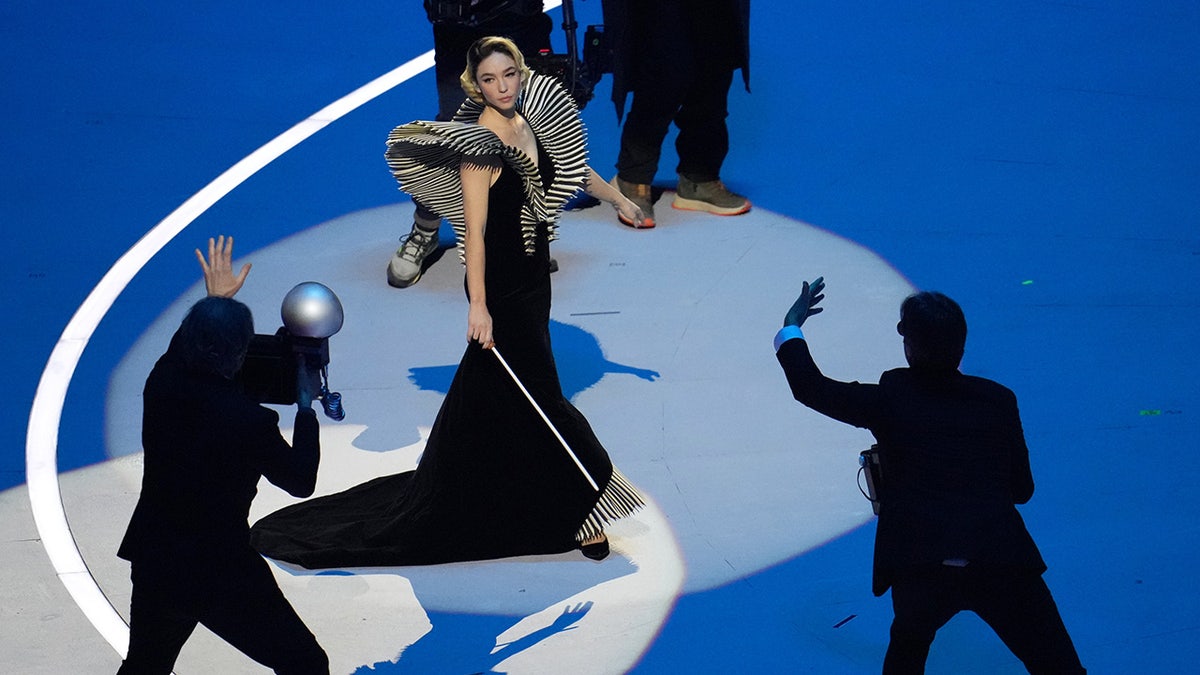
Italian actress Matilda De Angelis performs during the Olympic opening ceremony at the 2026 Winter Olympics, in Milan, Italy, Friday, Feb. 6, 2026. (AP Photo/Ben Curtis)
Paris leaned into modern identity and pluralism, he said, presenting an ambitious cultural narrative that some audiences found bold while others viewed as politically charged. Milan, by contrast, centered its message on timeless themes tied to heritage, human connection and the Olympic truce.
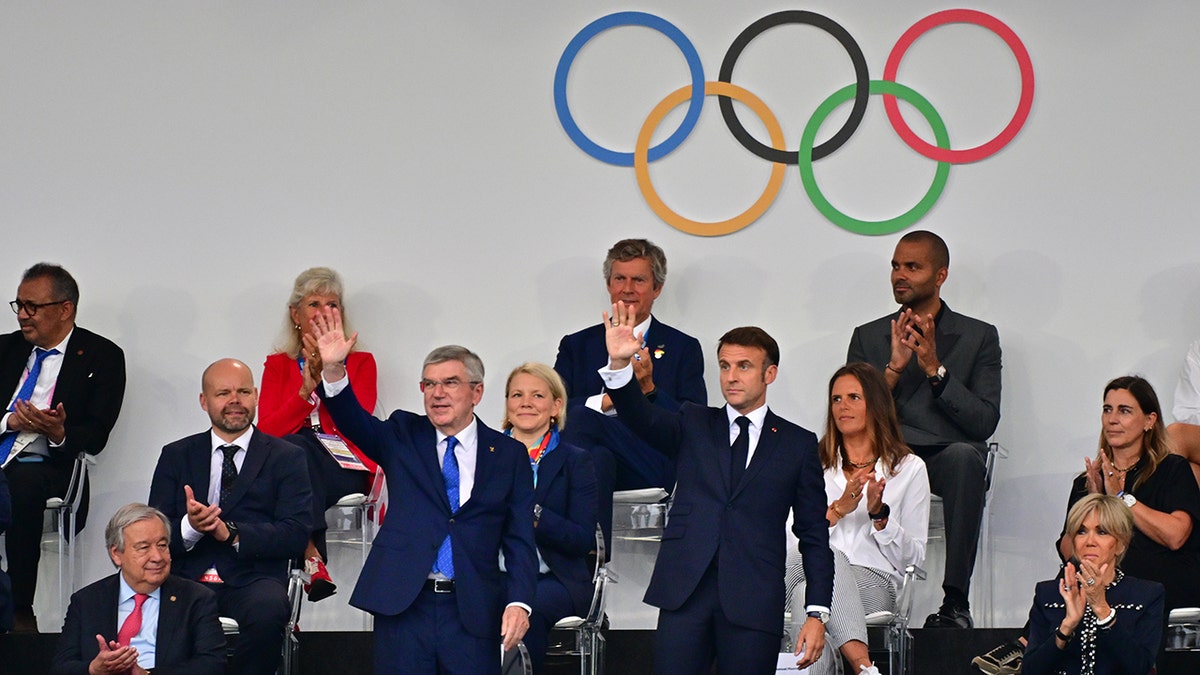
Tony Estanguet, President of Paris 2024, French President Emmanuel Macron and Thomas Bach, President of International Olympic Committee during the Opening Ceremony of the Olympic Games Paris 2024 on July 26, 2024, in Paris, France. (Christian Liewig-Corbis/Corbis via Getty Images)
The contrast between the ceremonies highlights a broader evolution of the Olympics themselves. Host nations increasingly use opening ceremonies to project national identity and values, whether through modern reinterpretation or traditional symbolism.