
Share this @internewscast.com
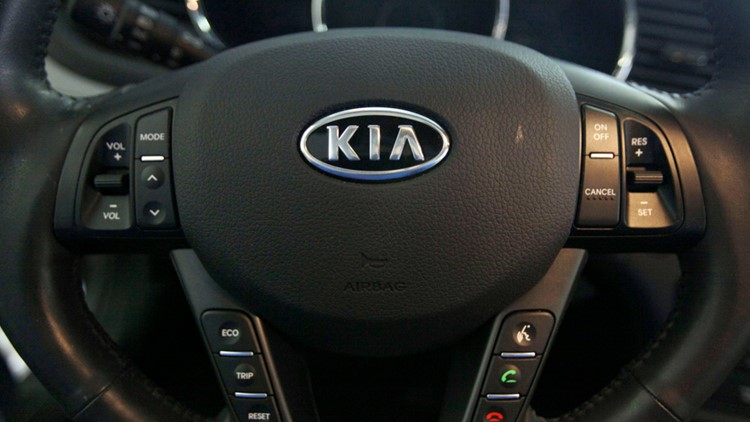
Footage demonstrating how to exploit the weak security of certain Kia and Hyundai models has spread across social media, resulting in a spike in vehicle thefts.
WASHINGTON — Hyundai and Kia have agreed to a settlement of up to $9 million following a multistate investigation, which found that the car manufacturers neglected to install essential anti-theft technology in millions of their vehicles, contributing to a national rise in auto thefts. This resolution, announced by several state attorneys general on Tuesday, mandates the companies to undertake extensive reforms.
A coalition of 36 attorneys general, representing both major political parties, collaborated to achieve this settlement. It includes up to $4.5 million to compensate affected consumers and an additional $4.5 million in fines distributed among the participating states.
“By neglecting to incorporate anti-theft systems, Hyundai and Kia have enabled a surge in car thefts with tragic outcomes,” stated New York Attorney General Letitia James. “This resolution guarantees Hyundai and Kia vehicle owners can secure their cars without incurring costs.”
The agreement targets security flaws in Hyundai and Kia models produced between 2011 and 2022. These cars were missing engine immobilizers, a common security feature designed to prevent car ignition without a specifically coded key.
Why did Hyundai and Kia settle?
The attorneys general highlighted that these vehicles’ ignition systems were easily compromised, enabling thieves to steal them swiftly. The rapid dissemination of instructional theft videos online exacerbated this issue.
According to the attorneys general, ignition systems in the vehicles could be easily bypassed, allowing thieves to steal cars in minutes. Videos demonstrating the theft method circulated widely online, accelerating the trend.
As thefts spiked, communities across New York and the nation saw sharp increases in stolen vehicles, officials said.
In New York City, thefts of Hyundai and Kia vehicles doubled from 2021 to 2022. During the first four months of 2023, the city recorded 977 such thefts, up from 148 during the same period a year earlier.
In Monroe County, in upstate New York, more than 1,400 Kias and Hyundais were stolen in the first half of 2023, while in Syracuse, the brands accounted for more than half of vehicle thefts over a seven-month span.
Authorities also linked stolen Hyundai and Kia vehicles to violent crimes and fatal crashes.
What does the settlement do?
Under the settlement, Hyundai and Kia must equip all future vehicles sold in the United States with engine immobilizers. The companies also are required to offer free zinc-reinforced ignition cylinder protectors to owners and lessees of eligible vehicles through authorized dealerships, including those previously eligible only for software updates.
The automakers must continue publicizing available anti-theft measures for at least five years.
The agreement follows criticism that Hyundai and Kia were slow to respond to the crisis. While the companies launched a software update campaign in 2023 and offered physical ignition protections for some vehicles, attorneys general allege the fixes were insufficient and, in some cases, easily bypassed.
Who is eligible for part of the settlement?
In addition to penalties the companies agreed to pay dozens of states, eligible consumers whose vehicles were stolen or damaged may seek compensation.
Owners can receive up to $4,500 for a total loss or up to $2,250 for a partial loss, according to settlement terms. Claims will be paid on a rolling basis until funds are exhausted, and the deadline to file a claim is March 31, 2027.
Attorneys general from 36 states were involved in the settlement, meaning residents in those states are eligible for the payouts: Arizona, California, Colorado, Connecticut, Delaware, Florida, Georgia, Hawaii, Illinois, Iowa, Kansas, Kentucky, Louisiana, Maine, Maryland, Massachusetts, Michigan, Minnesota, Mississippi, Nevada, New Hampshire, New Jersey, New Mexico, New York, North Carolina, North Dakota, Ohio, Oklahoma, Oregon, Pennsylvania, Rhode Island, South Dakota, Vermont, Washington, Wisconsin, and the District of Columbia.
Consumers seeking more information about eligibility, claims or scheduling free installations are encouraged to visit the settlement website or contact their local Hyundai or Kia dealership.