
Share this @internewscast.com
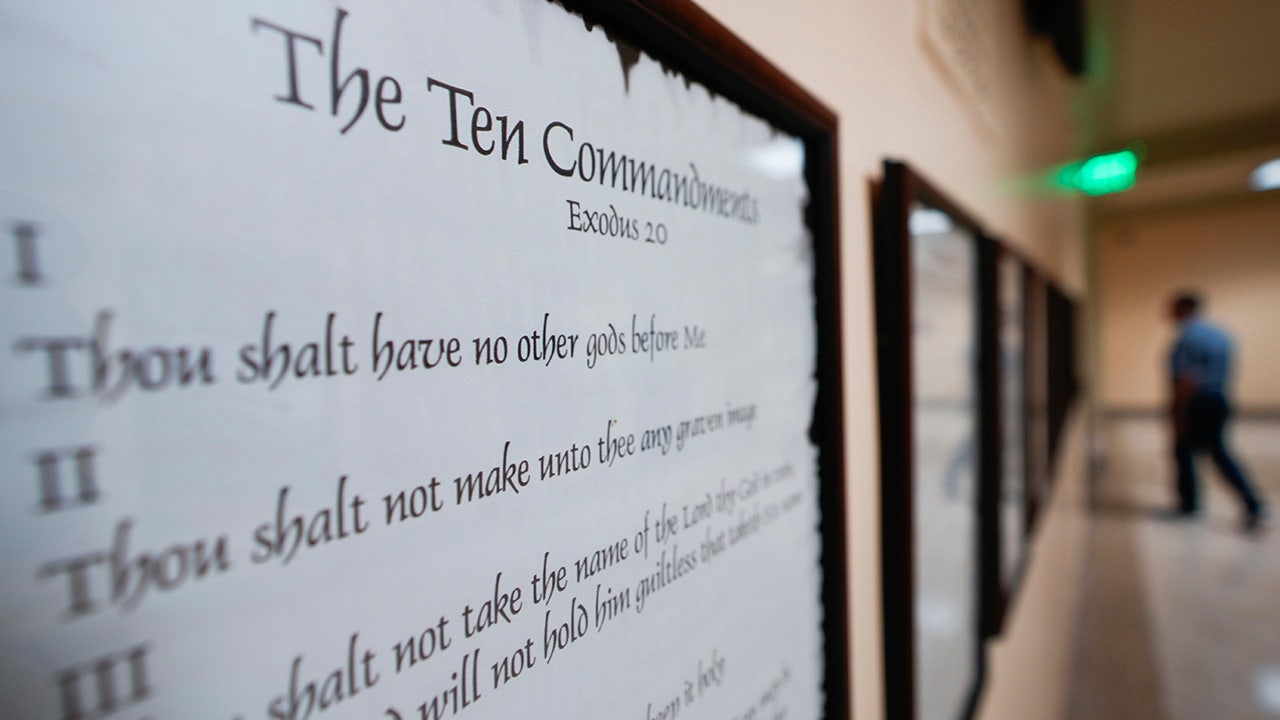
A federal appeals court has paved the way for a controversial Louisiana law mandating the display of the Ten Commandments in public school classrooms. The decision, delivered on Friday, overturns a previous block by a lower court and revives the ongoing debate over the role of religion in public education.
The 5th U.S. Circuit Court of Appeals, in a 12-6 decision, determined that it is premature to assess the law’s constitutionality. While opponents argue that the measure infringes on the principle of the separation of church and state, proponents assert that the Ten Commandments are integral to U.S. legal history and tradition.
The court’s majority opinion highlighted the uncertainty regarding how schools intend to present these poster-sized displays. The law allows for the inclusion of additional historical documents, such as the Mayflower Compact and the Declaration of Independence, alongside the Ten Commandments.
The judges expressed that there was insufficient information to make a definitive judicial ruling on potential First Amendment issues, suggesting that speculation should not replace factual judicial analysis.
In a concurring opinion, Circuit Judge James Ho, appointed by former President Donald Trump, argued that the law aligns with constitutional principles and reflects the traditions upon which the nation was founded.
In a concurring opinion, Circuit Judge James Ho, who was appointed by President Donald Trump, wrote that the law was constitutional and “consistent with our founding traditions.”
“It is fully consistent with the Constitution, and what’s more, it reinforces our Founders’ firm belief that the children of America should be educated about the religious foundations and traditions of our country,” Ho said, adding that the law “affirms our Nation’s highest and most noble traditions.”
Circuit Judge James L. Dennis, an appointee of former President Bill Clinton, wrote in a dissenting opinion that displaying the Ten Commandments in classrooms would amount to “exposing children to government‑endorsed religion in a setting of compulsory attendance.”
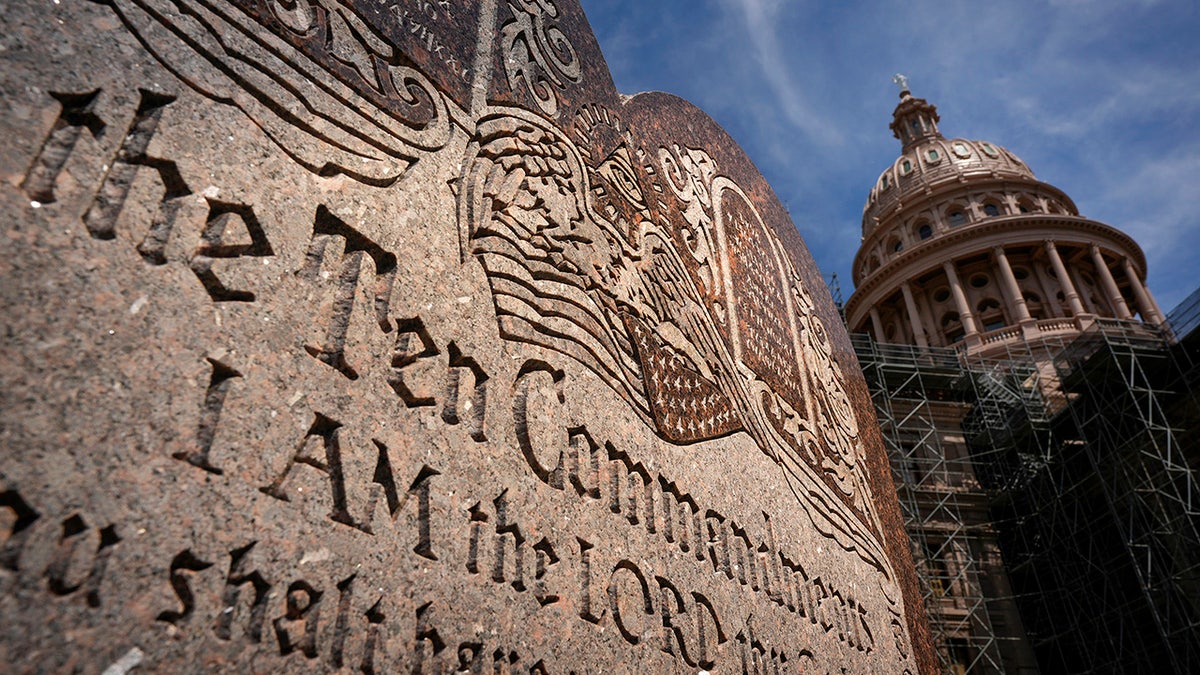
A federal appeals court ruling on Feb. 20 allows Louisiana’s Ten Commandments classroom mandate to proceed for now. (Jay Janner/Austin American-Statesman via Getty Images)
“That is precisely the kind of establishment the Framers anticipated and sought to prevent,” he added.
The ACLU of Louisiana and other groups representing the plaintiffs said they would pursue additional legal challenges to block the law.
“Today’s ruling is extremely disappointing and would unnecessarily force Louisiana’s public school families into a game of constitutional whack-a-mole in every school district,” the groups wrote in a joint-statement. “Longstanding judicial precedent makes clear that our clients need not submit to the very harms they are seeking to prevent before taking legal action to protect their rights.”

Louisiana Gov. Jeff Landry praised the appeals court decision on Feb. 20 allowing the Ten Commandments classroom law to move forward. (AP Photo/Mark Schiefelbein, file)
Republican Gov. Jeff Landry on Friday praised the court’s decision, writing on Facebook, “Common sense is making a comeback!”
Louisiana Attorney General Liz Murrill issued a statement following the ruling, saying schools “should follow the law.”
“Don’t kill or steal shouldn’t be controversial. My office has issued clear guidance to our public schools on how to comply with the law, and we have created multiple examples of posters demonstrating how it can be applied constitutionally,” she said.

Louisiana Attorney General Liz Murrill said schools should follow the Ten Commandments display law after a federal appeals court lifted a lower court block on Feb. 20. (Chris Graythen/Getty Images)
Joseph Davis, an attorney representing Louisiana in the case, celebrated the court’s decision.
“If the ACLU had its way, every trace of religion would be scrubbed from the fabric of our public life,” he said in a statement. “That position is at odds with our nation’s traditions and our Constitution. We’re glad the Fifth Circuit has allowed Louisiana to display the Ten Commandments in its public school classrooms.”
Friday’s ruling came after the full court agreed to reconsider the case, months after a three-judge panel ruled the Louisiana law unconstitutional.
A similar law in Arkansas faces a federal court challenge, while Texas implemented its own Ten Commandments classroom requirement last year.