
Share this @internewscast.com

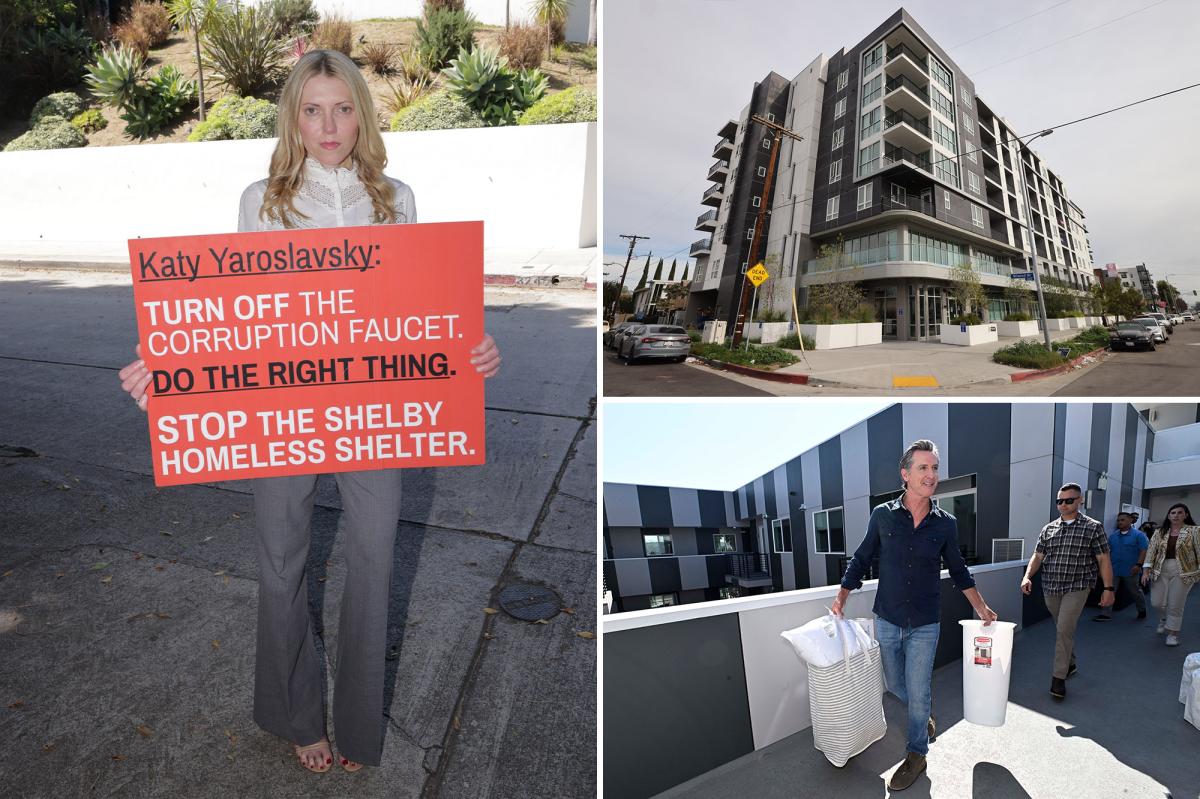
In an astonishing move, Los Angeles is housing its homeless population in spanking new apartments located in upscale neighborhoods, with costs soaring to a staggering $1.5 million per unit, as reported by the California Post.
Since 2020, an estimated $2.6 billion of public funds has been allocated to acquire and refurbish hotels, motels, and dormitories to accommodate the vast number of unhoused individuals across the city and county.
This initiative is largely fueled by $1.3 billion from Governor Gavin Newsom’s Homekey project, supplemented by an additional $1.3 billion from Los Angeles city and county coffers for renovations.
These upscale suites, scattered across areas like West Hollywood, Cheviot Hills, and Venice Beach, are equipped with luxurious amenities such as private balconies, in-unit laundry facilities, and secure parking.
As Los Angeles faces a housing crunch, restrictive building codes, and a budget shortfall, experts are calling for a thorough investigation into this extravagant expenditure.
Rick Caruso, a developer and former mayoral contender, criticized local and state officials for investing in “luxury solutions,” arguing that the city is squandering substantial resources on unsustainable projects instead of exploring more viable options.
The California Post reviewed 83 properties provided by the California Department of Housing and Community Development through a public records request, all slated for conversion into homeless housing.
The records show that In West Hollywood, the 20-room Holloway Motel was bought and overhauled for roughly $22 million, or about $1.05 million per unit.
The hotel sits opposite private member’s club Soho House’s swanky new location, in one of the most expensive neighborhoods in the city.
Another development in San Fernando, Fernandeno Tataviam Band of Mission Indians, cost $40.7 million to build just 27 units, or $1.5 million each.
A former Ramada Inn on Washington Avenue, Venice Beach was bought $8 million in 2020, but the project’s cost has ballooned to nearly $20 million project.
The soaring costs for the stalled 32-unit development mean each room for the homeless is now priced at roughly $625,000.
The City said several properties they bought required additional work to meet mandated disability access requirements, which is why they are so expensive.
Caruso, founder and executive chairman of one of the nation’s largest real estate giants, said the expenditure confirmed his long-held belief that LA spends about $1 million per homeless person.
He told the Post: “And even at that price, we’re not getting results — certainly not sustainable ones.” He said the city was pouring money into programs that were not working, while ignoring ones that are.
He continued: “We need to stop doing what’s failing and start following the models that actually work. There are nonprofit groups out there with 90 percent success rates. Ninety percent of people placed into housing.”
He pointed to organizations like the Downtown Women’s Center and The People Concern as examples the city should be replicating.
“There are ample examples of what’s working,” Caruso said. “We just don’t repeat them.”
City Hall documents reveal revealed the Housing Authority paid $37 million for 4065 Oakwood Avenue, East Hollywood.
It was a newly-built five-story complex with private balconies, in-unit washers and dryers, central air, gated parking and a rooftop deck overlooking the city, costing $539,000 each.
Another site at 5050 Pico Blvd boasts “brand new construction” with quartz countertops, covered gated parking and upscale finishes and is near Beverly Hills and The Grove.
The building cost $21 million to buy, with another $14 million spent to complete, meaning each room cost $450,336.
Yet another development at Temple and Alvarado cost $67 million for just 68 units, meaning the price per unit is just under $1 million each.
And in Gardena, the Weingart Willows development cost $42.7 million for 53 units, or roughly $807,000 each. Other projects across Los Angeles County land just below the million dollar mark.
Councilwoman Monica Rodriguez called on LA’s chief auditor Kenneth Mejia and Housing and Homelessness Committee chair Nithya Raman to investigate the scale of the funding.
She said: “We’re seeing per-unit costs that exceed what a single-family home sells for in the San Fernando Valley.”
Zach Sokoloff, who is running for L.A. controller, questioned why regular audits of the cost of homeless housing have stopped since leftwing activist Mejia took office in 2022.
He also called the spend ”unsustainable” and said it’s Angelenos are being asked ”to pick their poison: accept exorbitant costs or accept homelessness.”
He said: “We must entirely rethink our approach — one that houses people more cheaply while addressing the root causes of homelessness and putting individuals on a real path to long-term recovery.”
“If we keep throwing good money after bad, we won’t solve the crisis — and we won’t be able to fund other critical city services.”
When contacted by the Post, Newsom ignored questions about the soaring Homekey’s price tag, pointing instead to a 9% reduction in unsheltered homelessness last year.
His office focused on the $1.3 billion funding handed to LA for buying the properties, but left out any reference to the $1.33 billion it cost to construct and renovate the buildings.
Mayor Karen Bass defended the City’s approach, with street homeless down 17.5%, and over 30,000 affordable housing units have been approved to be fast-tracked.
“Mayor Bass is the first to acknowledge that challenges remain.
”Whether it’s Project Homekey or any other program, she’s focused on cutting through red tape to deliver results, and as she has emphasized repeatedly, her administration will not tolerate corruption in any form.”
However, half of the Homekey sites aren’t housing any homeless.
Several properties listed in project records remain under construction or leasing up with zero occupied units.
That includes the Venice location, the Shelby Drive project, the Temple and Alvarado scattered sites conversion and a hotel conversion near Hollywood.
Download The California Post App, follow us on social, and subscribe to our newsletters
California Post News: Facebook, Instagram, TikTok, X, YouTube, WhatsApp, LinkedIn
California Post Sports Facebook, Instagram, TikTok, YouTube, X
California Post Opinion
California Post Newsletters: Sign up here!
California Post App: Download here!
Home delivery: Sign up here!
Page Six Hollywood: Sign up here!