
Share this @internewscast.com
The new legislation mandates that individuals provide citizenship documentation and a photo ID both when registering to vote and before casting their ballot.
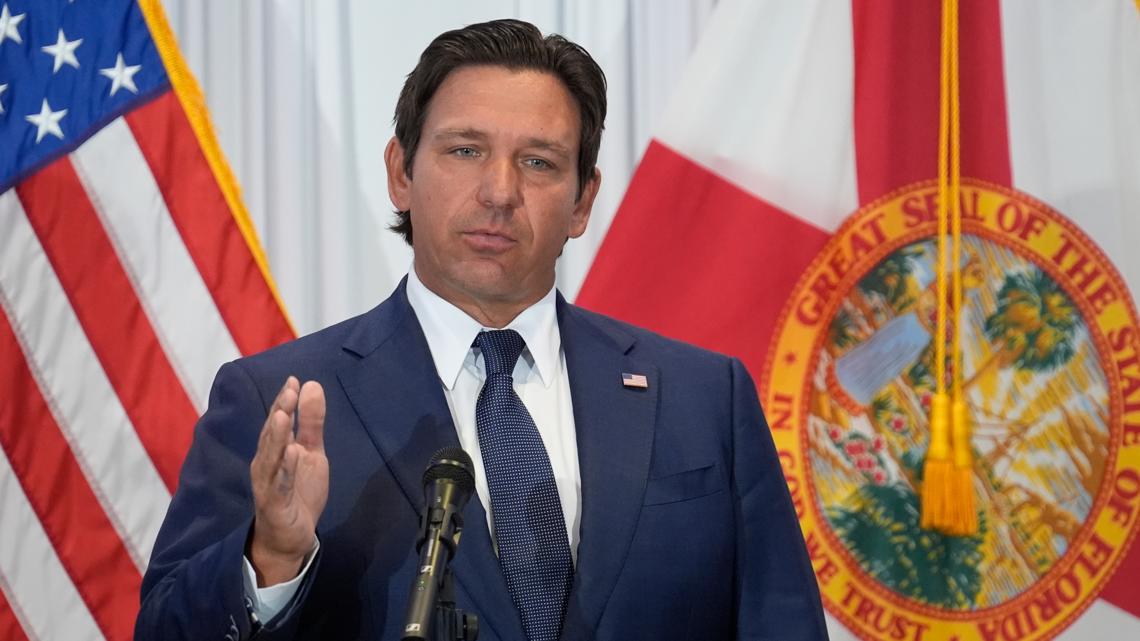
TALLAHASSEE, Fla. — In a significant move, Governor Ron DeSantis signed a bill on Wednesday that requires voters to verify their citizenship in upcoming elections. This new law has already sparked a legal battle as voting rights organizations swiftly filed a lawsuit challenging its provisions.
The legislation, known as HB 991, is set to partially take effect starting January 1, following the 2026 election cycle. It mirrors the proposed federal Safeguard American Voter Eligibility (SAVE) America Act, which has yet to pass.
Similar to the stalled federal initiative, Florida’s legislation mandates that voters present citizenship documentation and a valid photo ID, such as a Florida driver’s license, U.S. Passport, or concealed carry permit, during voter registration and at the polling station.
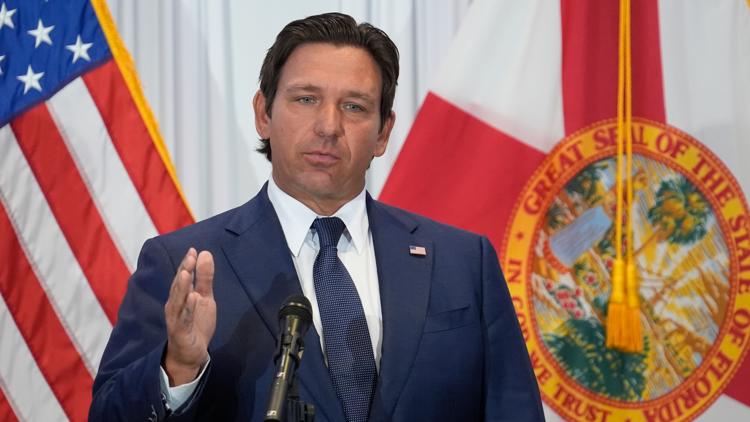
Governor DeSantis emphasized the importance of this measure, stating at the Eisenhower Recreation Center in The Villages, “This bill protects and expands the integrity of our voter registration process by requiring the verification of U.S. citizenship. Our constitution ensures that only American citizens can vote in our elections, and we must uphold that principle.”
Anticipating legal challenges, DeSantis dismissed opposition efforts as routine, describing them as a “song and dance” against the new law.
“They go to a liberal judge. The liberal judge sides with them. Then we appeal and we win,” DeSantis said.
The lawsuit by the League of Women Voters of Florida, Common Cause, Florida Rising, Florida Immigrant Coalition, Hispanic Federation, and UnidosUS was filed in the federal U.S. District Court for the Southern District of Florida.
It contends the latest election changes by Florida violate the First and Fourteenth Amendments of the U.S. Constitution, creating unnecessary barriers to voting by requiring prospective voters provide “evidence of citizenship.”
The suit asks the court to strike down the law and block Florida officials from enforcing the proof-of-citizenship requirement.
The bill requires an individual to provide identification such as a passport or birth certificate to register or remain on the voter rolls.
“Many eligible voters do not have these documents and cannot obtain them for a variety of reasons—including because they were born without a birth certificate in the segregated South, because their documents were destroyed in a hurricane, or because they cannot afford the hundreds of dollars it costs to replace them,” the lawsuit states. “At the same time, the law directs election officials to verify registered voters’ citizenship against government databases that were never designed for that purpose and that routinely misidentify citizens as noncitizens.”
The suit contends the documentation requirement will make it harder to vote for naturalized citizens, low-income voters, married women who’ve changed their name, nonwhite voters, students, voters with disabilities, transgender people, and seniors who may not have easy access to the needed documents.
“If this law stands, thousands of U.S. citizens will be removed from Florida’s voter rolls, blocking them from voting in the next Presidential election if they can’t afford specific documents,” forecast Common Cause Florida Executive Director Amy Keith in a release.
The American Civil Liberties Union, ACLU of Florida, LatinoJustice PRLDEF, and Advancement Project are providing legal counsel in the suit.
The bill signing also comes a day after President Donald Trump signed an executive order that directs Homeland Security and the U.S. Social Security Administration to compile lists of confirmed U.S. citizens who will be of legal age to vote in the upcoming federal election.
The executive order also directs the U.S. Postmaster General to initiate rulemaking that would limit the U.S. Postal Service to transmit ballots only to individuals enrolled on a state-specific mail-in and absentee participation list.
Mail-in ballots are not addressed in the state measure. But the state bill does remove the use of a student or retirement community ID to vote, which has been allowed in Florida since 2006.
The legislation specifically excluded identification cards issued by an educational institution when noting that approved photo IDs include any identification card issued by any federal, state or local government agency.
Sen. Erin Grall, a Vero Beach Republican who sponsored the bill, called the changes “common sense” and the latest effort to distance Florida from the disaster of the 2000 election.
“We have real IDs that there is credibility and fidelity in, and we should be able to count on those,” Grall said during the bill signing event.
The Republican-controlled Legislature approved the state changes in votes of 27-12 in the Senate and 77-28 in the House.
Another provision of the bill requires candidates to disclose whether they are dual citizens of another country and directs the state’s Office of Election Crimes and Security to provide any violations or irregularities relating to the involvement of foreign nationals in state elections in its annual report.
Candidates for federal offices will also be required to disclose whether they intend to trade stocks while in office.
Editor’s note: This story was first published by our news partners, The News Service of Florida.