
Share this @internewscast.com
For those who guessed “man strolling through New Orleans’ iconic street with a live alligator” as part of their Mardi Gras bingo, consider yourself a winner.
Early Friday morning, Louisiana wildlife officers apprehended a man they found carrying a live alligator in the French Quarter amid their Mardi Gras patrol duties.
This wasn’t a carnival float embellishment. It wasn’t a cute stuffed toy. Nor was it a rubber trinket from a gift shop.
It was a genuine, living alligator.
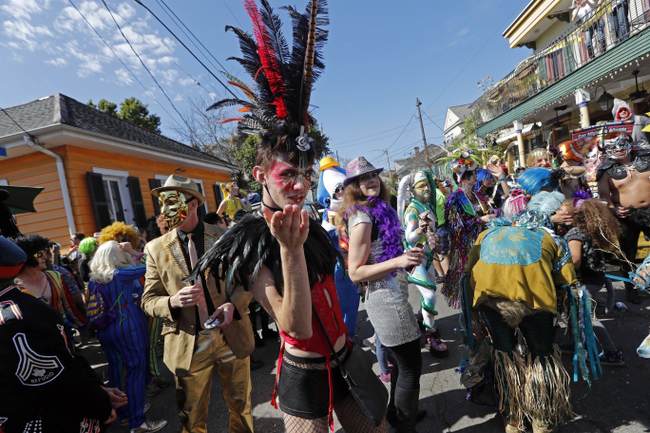
Reports indicate that agents from the Louisiana Department of Wildlife and Fisheries were aiding in security efforts when they noticed the man navigating one of the busiest celebratory streets in the nation, all while accompanied by a reptile. During Mardi Gras, Bourbon Street is anything but subtle. It’s jam-packed with people shoulder to shoulder—tourists clad in sequins and Saints jerseys, sipping on hurricanes from oversized plastic cups. Beads cascade from balconies above, while brass bands vie with nightclub speakers, all amid an atmosphere thick with humidity and spur-of-the-moment decisions.
And now, it seems, even apex predators have joined the revelry.
Public Service Announcement: No, you can’t bring an alligator to Bourbon Street. 🐊 pic.twitter.com/igvgAAV48L
— Attorney General Liz Murrill (@AGLizMurrill) February 14, 2026
Apparently, this required clarification.
Florida Man would like the record to show this did not happen in Florida.
For decades, the Sunshine State has carried the national brand of reptile chaos. If there is a headline involving a python in a drive-thru, a gator in a swimming pool, or a shirtless gentleman negotiating with wildlife, the odds tend to favor Florida. It has been a near monopoly on reptile-based absurdity.
Louisiana has now entered evidence into the record.
Local coverage reported:
Wildlife agents seized a live alligator from a man on Bourbon Street during Mardi Gras patrol. The alligator was turned over to an on-call wildlife biologist.
This was not a staged stunt for social media. Mardi Gras security operations involve layered coordination between local police, state agencies, and wildlife authorities. Crowd density alone makes routine enforcement more complex. Officers are managing pedestrian flow, responding to medical incidents, monitoring alcohol-related issues, and keeping an eye on anything that could escalate in tight quarters.
Introducing a live reptile into that environment is not just quirky. It is unpredictable.
The report further noted:
The man was also arrested on unrelated charges.
Unrelated charges feels like narrative overachievement, as if the alligator was somehow not enough.
Louisiana is no stranger to alligators. They are part of the ecosystem, the culture, and the tourism imagery. But wildlife possession is regulated for a reason. Transporting or displaying certain animals without authorization can violate state law, particularly in public spaces where safety risks multiply quickly.
While Bourbon Street has many unofficial uses during Mardi Gras, it is not recognized under Louisiana law as a reptile transport corridor.
Authorities reported no injuries, and the alligator was safely transferred to wildlife officials. Presumably somewhere far quieter than a neon-lit party corridor filled with beads and brass bands.
Mardi Gras embraces spectacle. It thrives on excess. It celebrates the unusual.
But even Louisiana has limits.
Editor’s Note: Do you enjoy RedState’s conservative reporting that takes on the radical left and woke media? Support our work so that we can continue to bring you the truth.