
Share this @internewscast.com
The dramatic capture of Venezuelan leader Nicolás Maduro and his wife this past Saturday has reignited memories of a similar high-stakes operation: the 1989 arrest of Panamanian dictator Manuel Noriega. Both events share a significant connection, as Maduro’s capture falls exactly 36 years after Noriega’s dramatic takedown on January 3, 1989.
Under the leadership of then-President George H.W. Bush, U.S. military forces launched a sudden invasion of Panama on December 20, 1989. The operation was driven by accusations against Noriega, who was alleged to have collaborated with drug traffickers to funnel cocaine into the United States.
Noriega was also accused of manipulating Panama’s 1989 presidential election, which added to the international pressure for his removal.
The U.S. Army’s website details the operation, stating, “The goal was to restore the democratically elected government of Guillermo Endara and arrest Noriega on drug trafficking charges. At the time, Operation Just Cause was the largest and most complex combat operation since the Vietnam War.”
The recent operation involving Maduro mirrors the Panama invasion in one key aspect: it proceeded without explicit Congressional approval, as reported by Axios.
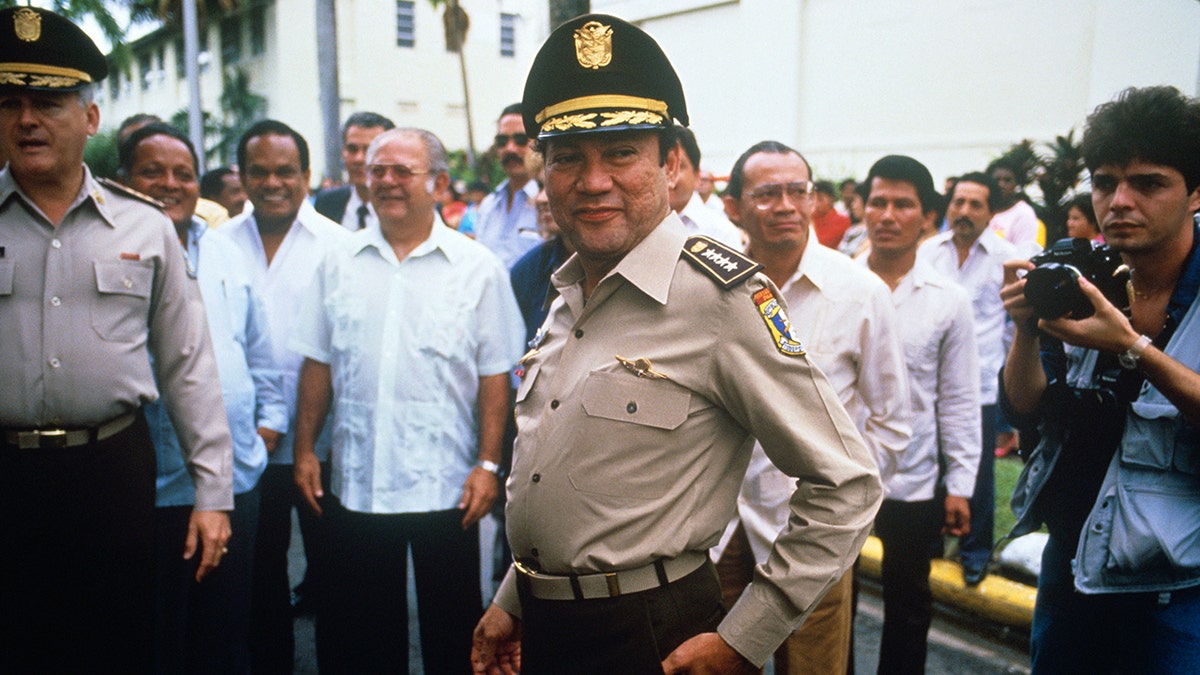
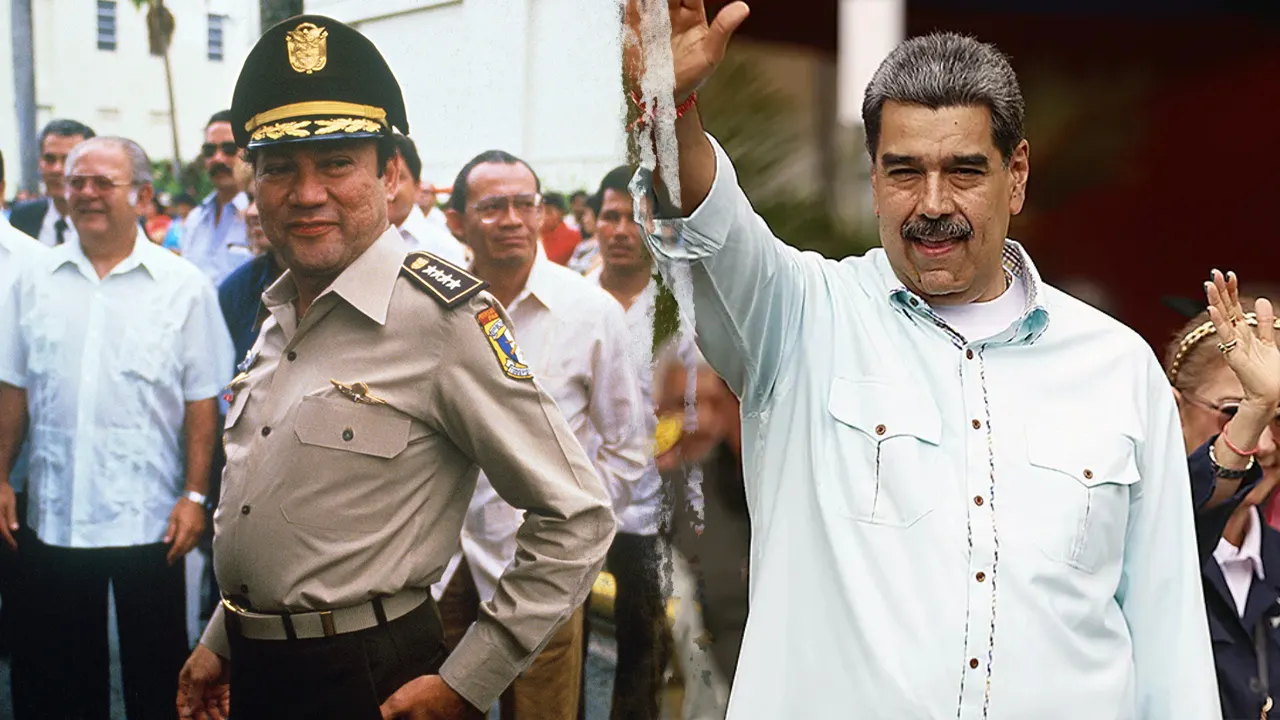
In a photograph, Panamanian dictator Manuel Noriega is seen at a ceremony commemorating national hero Omar Torrijos in Panama City. (Bill Gentile/CORBIS/Corbis via Getty Images)
Noriega’s capture, however, unfolded over several weeks as he evaded arrest by taking refuge inside the Vatican’s embassy in Panama City.
U.S. troops used psychological warfare to force Noriega out of hiding.
In a tactic known as Operation Nifty Package, military vehicles with loudspeakers blasted non-stop rock music with a playlist that included songs by The Clash, Van Halen and U2, BBC News reported.
Noriega surrendered to U.S. forces Jan. 3, 1990, 36 years to the day before the U.S. capture of Maduro, and was flown to America to stand trial, Axios reported.
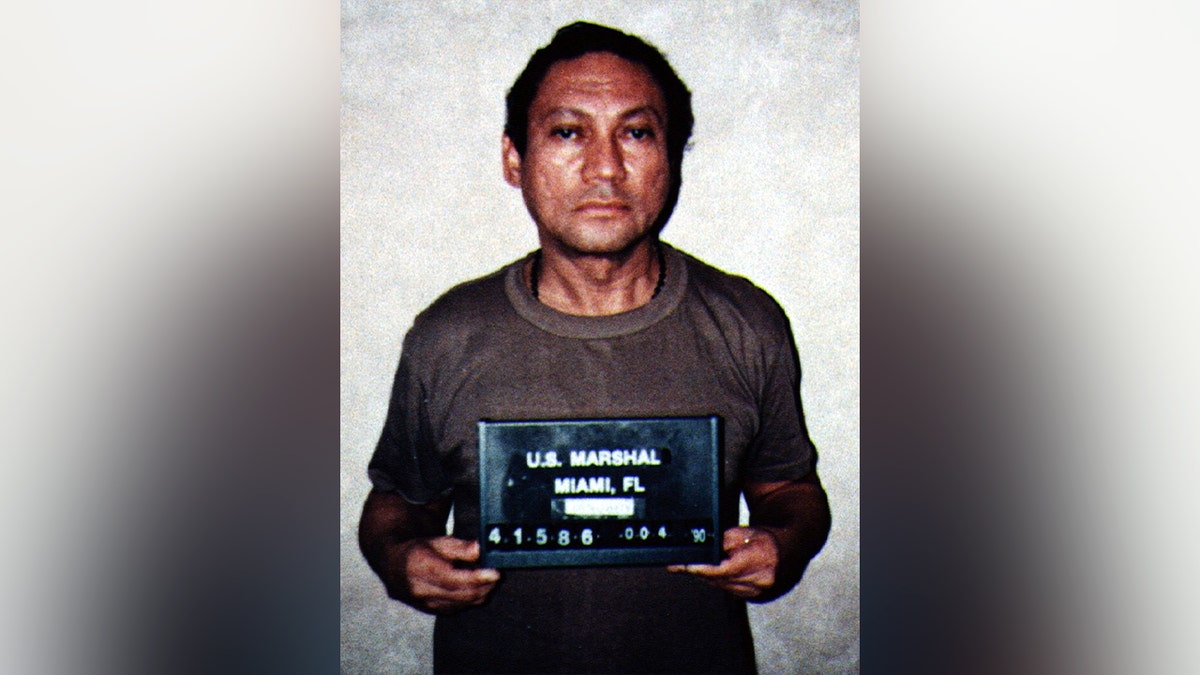
Former Panamanian strongman Manuel Noriega is pictured in this Jan. 4, 1990, file photo. (Reuters/HO JDP)
The operation resulted in the deaths of 23 U.S. service members and left 320 others wounded. The Pentagon estimated that roughly 200 Panamanian civilians and 314 Panamanian military personnel were killed, according to The Associated Press.
In 1992, Noriega was convicted on drug trafficking charges in a Miami federal court and received a 40-year prison sentence.
He was granted prisoner-of-war status, housed in a separate bungalow away from other inmates and was allowed to wear his Panamanian military uniform and insignia in court, the AP reported.

Venezuelan President Nicolás Maduro addresses supporters during a rally marking the anniversary of the 19th-century Battle of Santa Ines in Caracas, Venezuela, Dec. 10. (Pedro Rances Mattey/Anadolu via Getty Images)
After serving 17 years in a U.S. prison, he was extradited to France and later Panama. He died in 2017.
President Donald Trump announced Saturday that Maduro and his wife had been captured and flown out of the country as part of Operation Absolute Resolve.
In recent months, the U.S. military has carried out a series of strikes on suspected drug vessels allegedly liked to the Venezuelan regime in the Caribbean Sea and Eastern Pacific.
Until a permanent leader can be found, the U.S. government will “run” Venezuela, Trump said, “until such time as we can do a safe, proper and judicious transition.”