Share this @internewscast.com
Within a mere week, Canadian Prime Minister Mark Carney’s stance on the escalating tensions between the U.S., Israel, and Iran has undergone a dramatic shift. Initially backing the U.S. actions against Iran, Carney soon highlighted concerns over the lack of United Nations engagement and allied consultation, including with Canada. By Wednesday, he suggested that Canadian military involvement in the conflict could not be entirely ruled out.
Nader Hashemi, an associate professor specializing in Middle East politics at Georgetown University and native of Canada, commented on Carney’s fluctuating position to Fox News Digital. “His approach has been inconsistent,” Hashemi remarked. “This inconsistency doesn’t reflect well on him or the Canadian government.”
Hashemi further analyzed Carney’s actions, suggesting that public opinion and Canada’s national interests, particularly the relationship with the U.S., have shaped his responses. “His initial statement was supportive of the American-Israeli attack,” Hashemi noted. “However, after facing backlash for not upholding Canada’s commitment to international law and the United Nations, he retracted his stance.”
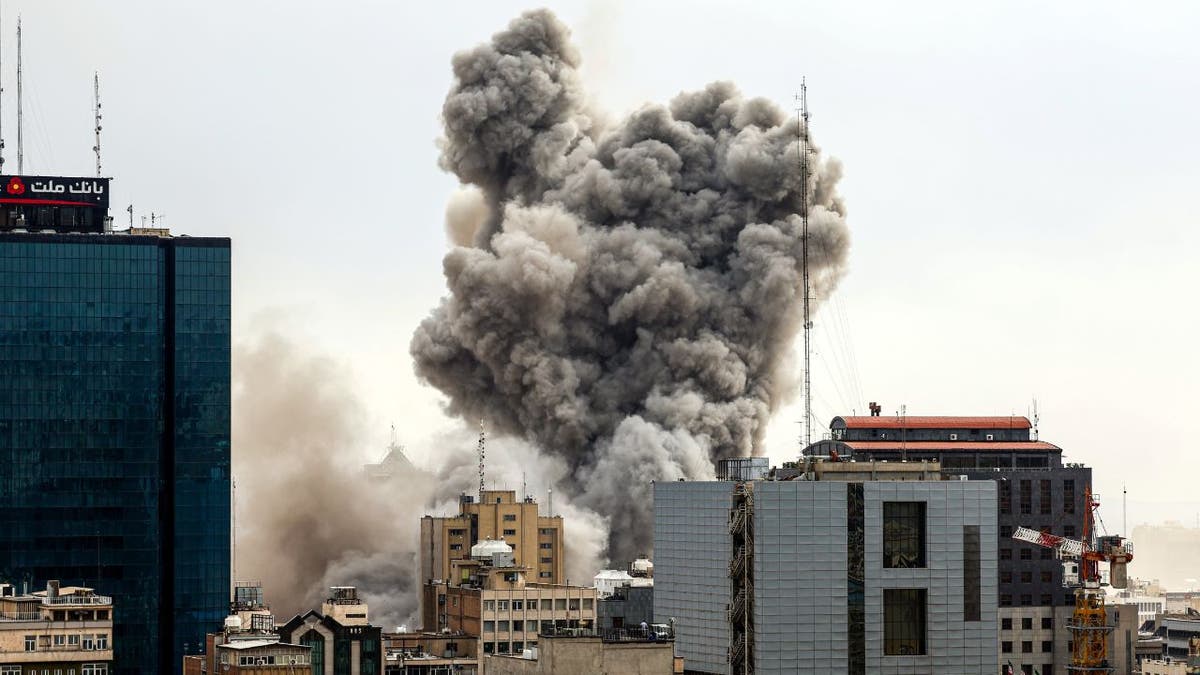
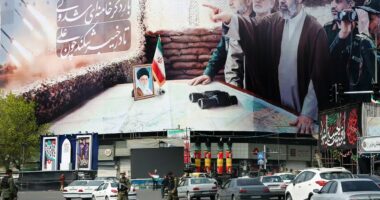
In a dramatic backdrop, smoke was seen rising over Tehran, Iran, on March 2, 2026, following explosions from the joint U.S.-Israel operation against Iran, as captured by Getty Images.
During a visit to Australia on Wednesday, Carney addressed reporters, acknowledging that while Canadian participation in the conflict could never be completely dismissed, any involvement would be contingent on strategic alignment with allies. “We will stand by our allies when it makes sense,” he stated.
Despite this, David Fraser, a retired Canadian major-general and former NATO commander, shared his perspective with CTV News Channel, deeming it “unlikely” that Canada would become embroiled in the U.S.-Israeli conflict with Iran. He noted that Canadian involvement would likely occur only if a NATO member, such as Turkey, invoked Article 5 of the North Atlantic Treaty, calling for assistance.
Carney’s latest comments signal the Canadian prime minister’s desire to ensure that “it doesn’t create a deeper rupture with the United States than already exists,” said Hashemi.
Melissa Lantsman, deputy leader of the Canadian Conservative Party, summarized the prime minister’s changing position on the U.S.-Israeli attacks on Iran with a post on X: “We support it, we’re upset about it, we think it’s bad, but also, we might join in.”
Her colleague, Michael Chong, the Conservative shadow minister for foreign affairs, told Canadian broadcaster CTV that “supporting the airstrikes and at the same time calling for a secession of those strikes” is “an inherent contradiction.”
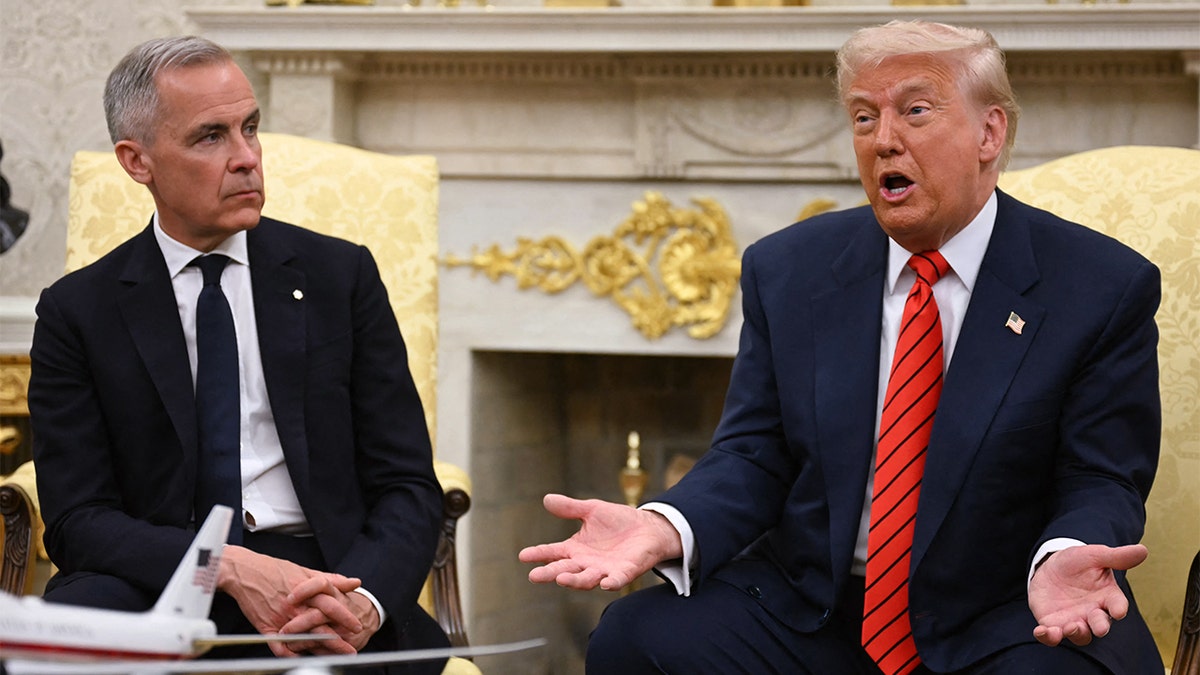
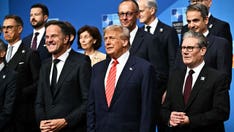
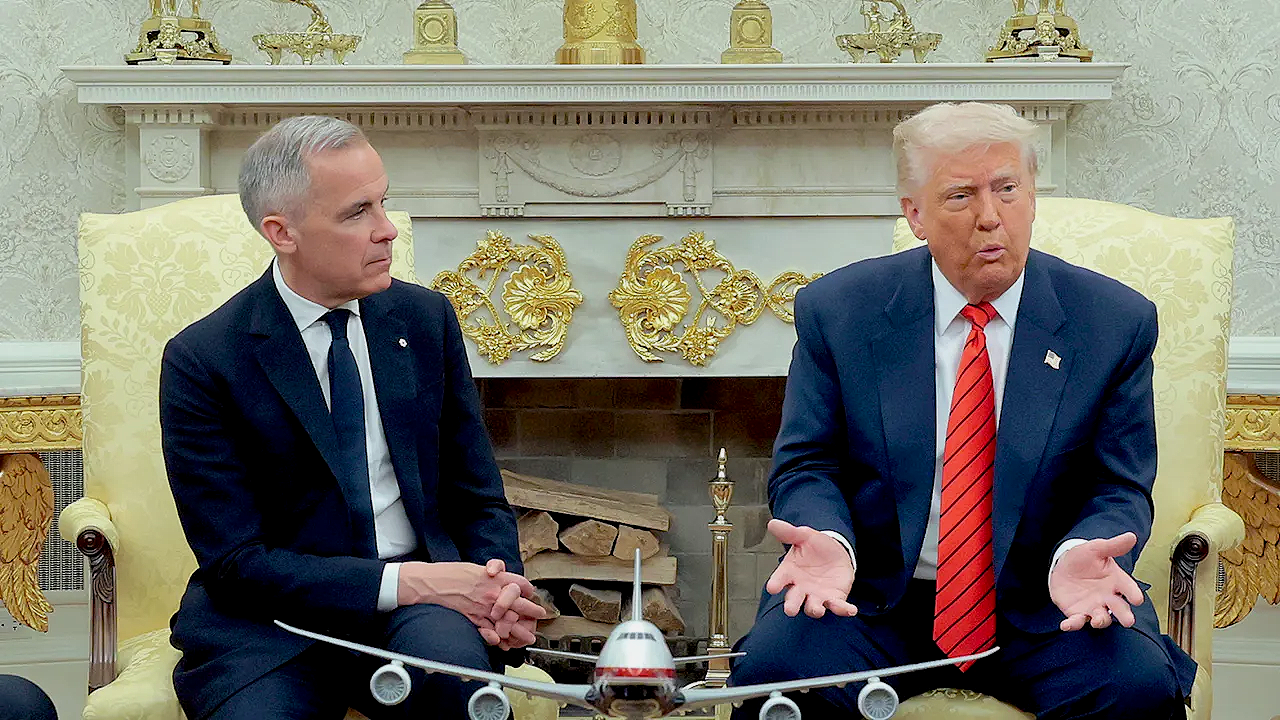
US President Donald Trump meets with Canadian Prime Minister Mark Carney in the Oval Office of the White House in Washington, DC, on May 6, 2025. (Jim Watson / AFP)
Carney has also had pushback from the political left.
After the airstrikes against Iran began, Alexandre Boulerice, foreign affairs critic for the New Democratic Party of Canada, said in a statement that his party “strongly condemns the American and Israeli bombings of Iran” and “deplores the Carney government’s decision to blindly support this dangerous venture by Israel and Donald Trump’s administration. We want Canada to be a voice for diplomacy, peace and international law.”
During his Australian tour this week, the prime minister said that “hegemons are increasingly acting without constraint or respect for international norms or laws while others bear the consequences.”
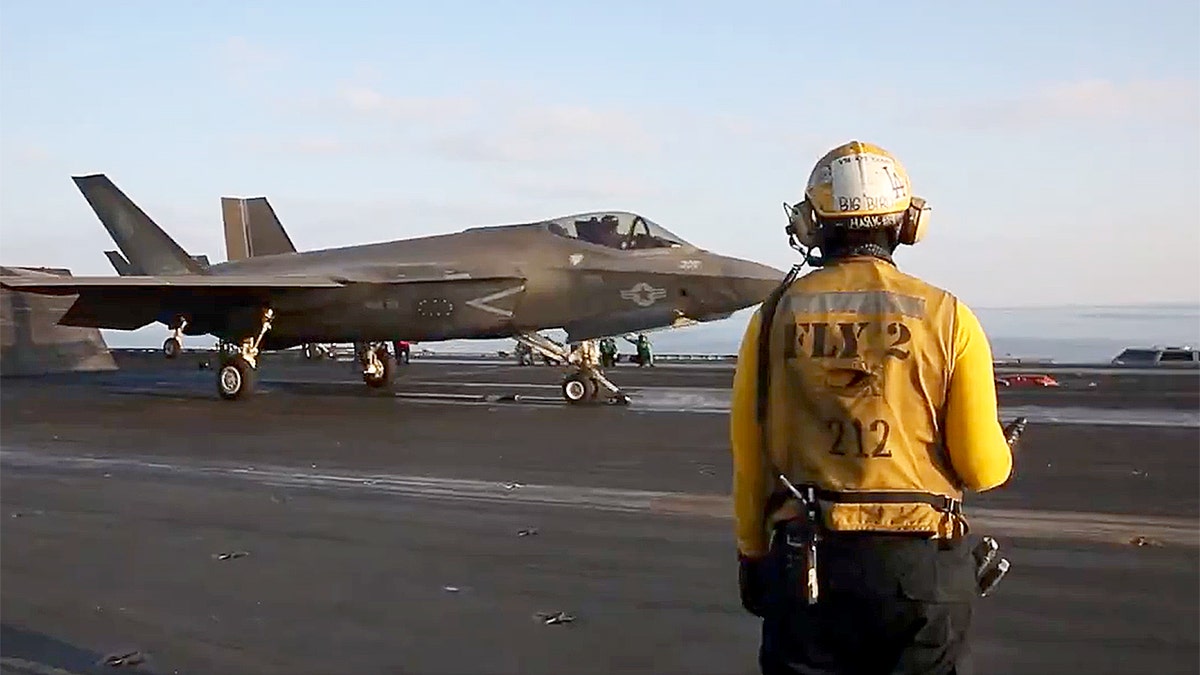
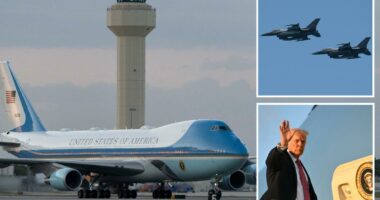
U.S. Central Command released a video on Thursday, March 5, 2026, showing American aircraft taking off during Operation Epic Fury against Iran. (CENTCOM)
He also said Canada supports “efforts to prevent Iran from obtaining a nuclear weapon and to prevent its regime from further threatening international peace and security,” but noted that Canada “take[s] this position with regret because the current conflict is another example of the failure of the international order.”
Carney said that “Canada calls for a rapid de-escalation of hostilities and is prepared to assist in achieving this goal.”
At a security and defense conference in Ottawa, also this week, Foreign Affairs Minister Anita Anand said that Canada calls “on all sides to respect the rules of international engagement” and that “international law binds all parties” in the Middle East conflict.
The results of an Angus Reid Institute poll, involving 1,619 respondents and released on Tuesday, showed that 49% of Canadians opposed the U.S.-Israeli airstrikes against Iran, while 34% were supportive.
Related Article