
Share this @internewscast.com
Cuba was thrust into an extraordinary blackout as its entire power network unexpectedly failed on Monday, momentarily plunging about 10 million people into darkness.
“At 1:54 p.m. local time, the national electrical grid experienced a disconnection, resulting in a comprehensive power failure throughout Cuba, including the Havana metropolitan area,” the U.S. Embassy in Cuba reported.
This island-wide outage follows just two days after a frustrated group of demonstrators, exasperated by ongoing energy issues, was recorded attacking a local Communist Party office in Cuba, looting the premises, and attempting arson.
Restoration efforts are currently in progress throughout the island, with some regions reportedly beginning to regain electricity.
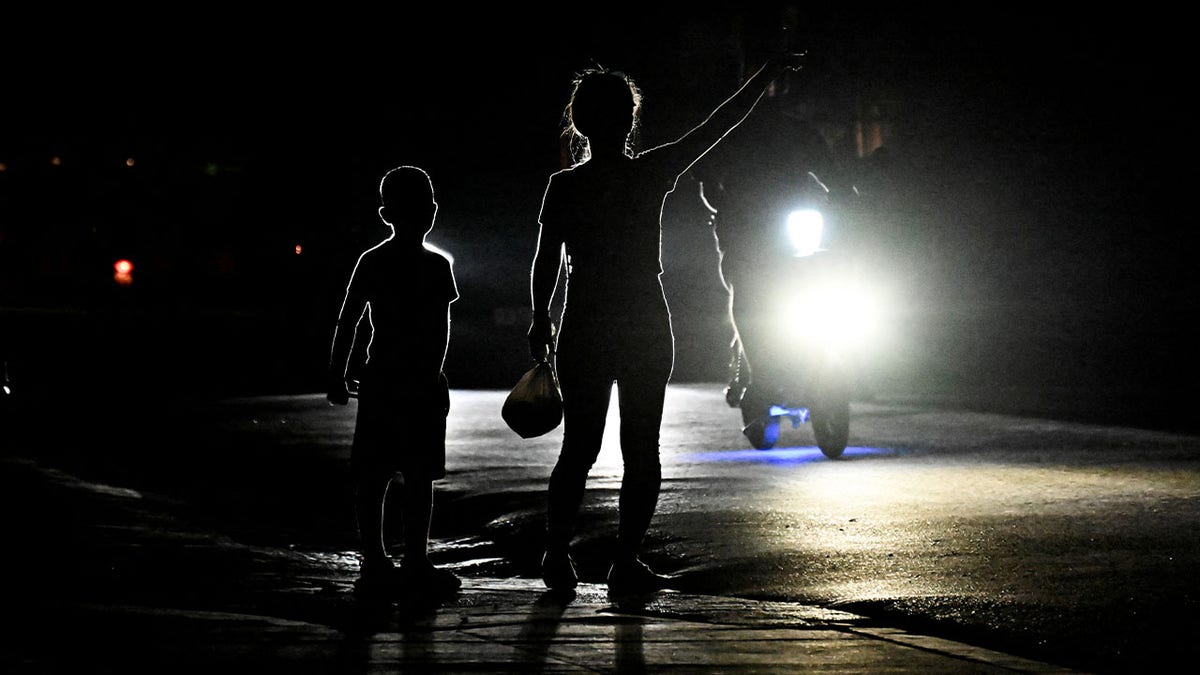
A woman and her son gesture to a vehicle on a dim street during a blackout in the Bauta municipality, Artemisa province, Cuba, on March 18, 2024. (Yamil Lage/AFP via Getty Images)
“The causes are under investigation, and restoration protocols are being activated,” stated the Ministry of Energy and Mines of Cuba on Monday afternoon, addressing the interrupted state of the island’s National Electrical System.
Cuba’s electrical grid has grown increasingly unstable over the years due to aging infrastructure, fuel shortages, and economic restrictions that have limited the country’s access to energy resources – including Washington’s long‑standing oil embargo and recent U.S. actions that disrupted Venezuelan fuel shipments, a key source of the nation’s energy.
Power outages have become a frequent occurrence across the country, disrupting water supply, refrigeration and communications.
“Officials in the US gov must be feeling very happy by the harm caused to every Cuban family,” Cuban Deputy Minister for Foreign Affairs Carlos F. de Cossio said in response to Monday’s blackout.

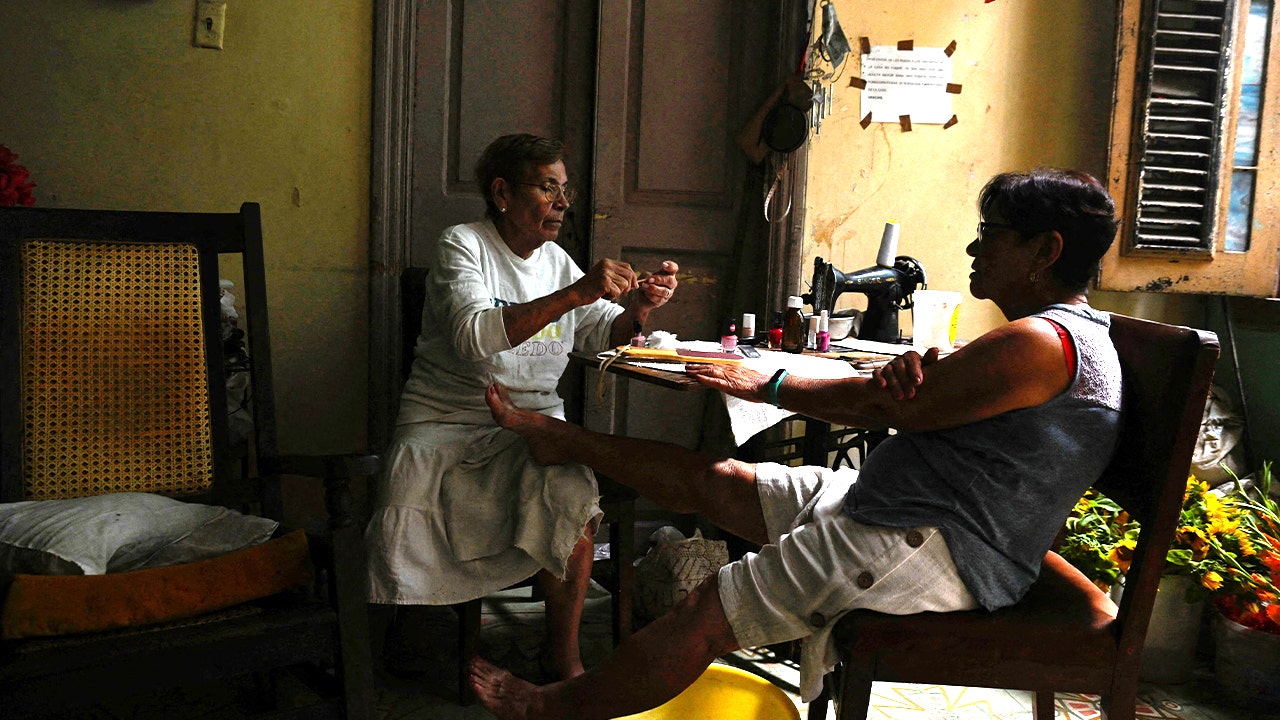
Neya Perez, 86, paints the nails of her neighbor Reyna Maria Rodriguez, 77, during a mass blackout across most of the country, in Havana, March 4, 2026. (Norlys Perez/Reuters)
Cuban President Miguel Díaz-Canel said Friday that no fuel has entered the country for the past three months. Since then, electricity generation has relied heavily on a “considerable contribution from renewable energy sources.”
The total collapse of the power grid came just as officials announced updates to their solar panel project in Villa Clara, describing it as a “national security necessity” amid ongoing restrictions on fossil fuel imports under the Trump administration.
“Amid a context of severe energy constraints and a recurring economic lockdown, #Cuba takes another firm step towards electric sovereignty,” the Villa Clara Electric Company said Monday morning.
“This connection comes at a critical time: Washington maintains severe restrictions on our country’s access to fossil fuels, funding and technology. Betting on renewables isn’t just environmental — it’s a national security necessity.”
As the island continues to face rolling power outages, residents have been urged to brace for significant disruption and unplug all nonessential equipment, “leaving only essential devices powered on until service stability is restored,” the Villa Clara Electric Company said.
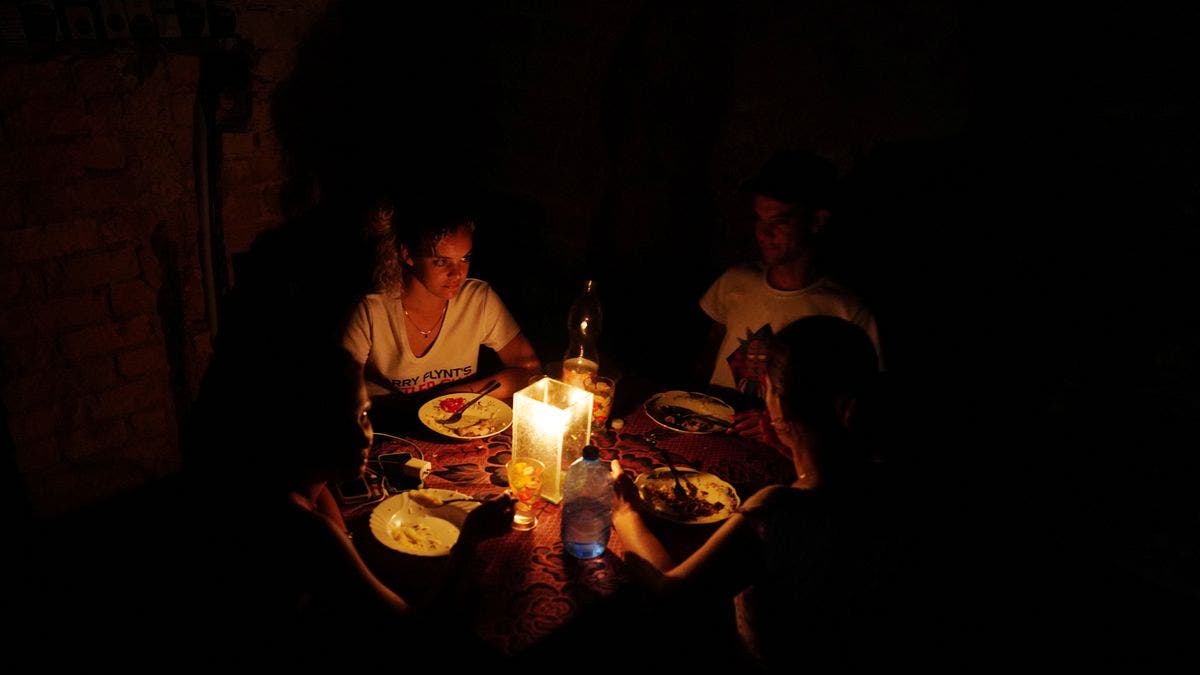
A family has dinner during a blackout in the aftermath of Hurricane Ian in Havana on Sept. 28, 2022. (Alexandre Meneghini/Reuters)
Last Saturday, in a rare display of public dissent driven by frustration over widespread blackouts, anti-government protesters in Cuba reportedly targeted a Communist Party office by hurling rocks, shouting “liberty” and igniting large fires at the scene.
The rally, caught on video, began peacefully in the city of Morón late Friday but escalated into violence within hours, Reuters reported, citing local sources.
Fox News Digital reached out to the White House for comment.