
Share this @internewscast.com

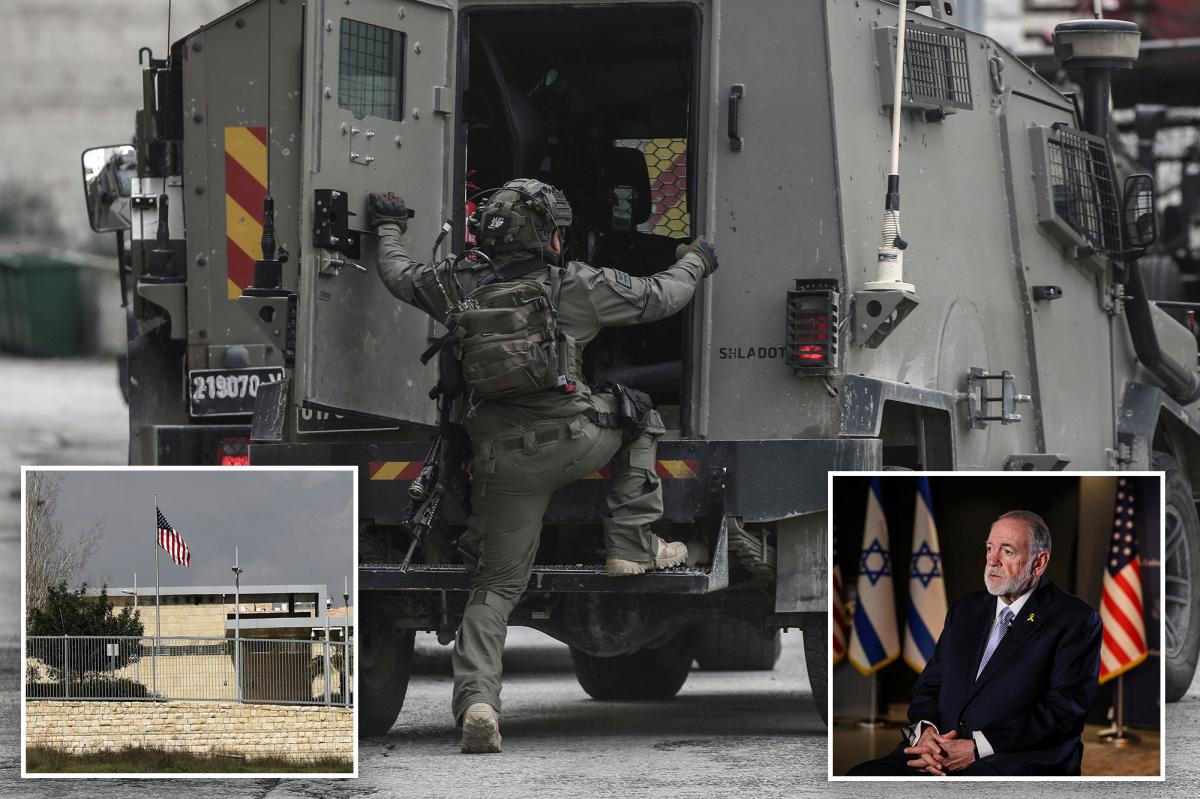
In a decisive move, the State Department has granted permission for non-essential staff and the families of diplomats stationed at the US embassy in Israel to exit the country. This decision comes amid escalating concerns of a potential conflict with Iran.
The directive was communicated in an urgent email sent to personnel at the Jerusalem mission by US Ambassador to Israel, Mike Huckabee, on Friday morning. Ambassador Huckabee emphasized the urgency of the situation, advising those wishing to leave Israel to make arrangements “TODAY.” His guidance was clear: prioritize securing a flight to any destination from which onward travel to Washington, DC, would be possible.
Huckabee, a former governor of Arkansas, sought to alleviate concerns by stating the measure was taken “out of an abundance of caution.” He reassured staff by saying, “There is no need to panic,” and encouraged those considering departure to plan their exit “sooner rather than later.”
The email came in the wake of unproductive indirect negotiations between the United States and Iran held in Geneva, Switzerland, on Thursday. The discussions focused on Iran’s nuclear ambitions, and although they did not yield results, further talks are scheduled for the following week in Vienna, Austria.
“There is no need to panic,” he went on, “but for those desiring to leave, it’s important to make plans to depart sooner rather than later.”
Friday’s email follows unsuccessful indirect talks between the US and Iran in Geneva, Switzerland Thursday over Tehran’s nuclear program, though additional discussions were set to take place next week in Vienna, Austria.
Iran is likely to launch ballistic missile attacks against Israel in retaliation for any US strike.
This past June, 33 Israelis were killed and more than 3,200 injured in missile and drone attacks during the 12-day war with Iran.
As Thursday’s discussions concluded, Iranian state TV reported that Tehran was determined to continue enriching uranium, rejected proposals to transfer it abroad and sought the immediate lifting of international sanctions, rejecting three demands from US representatives Steve Witkoff and Jared Kushner.
The theocratic regime has also refused to broaden the discussions to cover Iran’s stockpile of ballistic missiles or its support for terror groups like Hamas and Hezbollah.
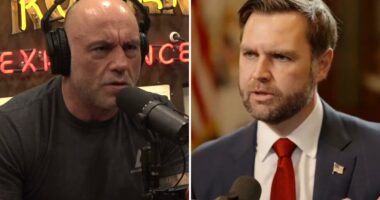
While the White House had no official comment on the Geneva talks, Vice President JD Vance told the Washington Post “there is no chance” that any US strike on Iran would result in a years-long Middle Eastern war.
“I think we all prefer the diplomatic option,” the VP added. “But it really depends on what the Iranians do and what they say.”
Multiple reports indicate that President Trump is mulling different possibilities for an Iran operation, including targeted strikes on military and nuclear strikes as well as so-called “decapitation” attacks meant to take out Ayatollah Ali Khamenei and other high-ranking officials to lay the groundwork for regime change.