
Share this @internewscast.com
An advocacy group supported by Native Americans, which is pushing for better representation in educational institutions such as Massapequa High School, declared last Wednesday that it is ready to escalate its legal battle to the Supreme Court. This announcement follows a dismissal by a lower court last November.
The Native American Guardian’s Association (NAGA) contends that the 2023 policy enacted by the New York Board of Regents, which prohibits public schools from using Native American names or imagery, is both discriminatory and breaches the 14th Amendment’s promise of equal protection under the law.
“Today marks our next step towards the United States Supreme Court, the logical conclusion for our efforts,” remarked NAGA attorney Chap Petersen in a statement. “These ‘Native Name Ban’ laws are not only offensive but also blatantly unconstitutional. Their presence is a disservice to all Americans and the Native community alike.”
NAGA has also expressed its intention to challenge similar bans across the country, aiming to reinstate names such as the “Fighting Sioux” in North Dakota.
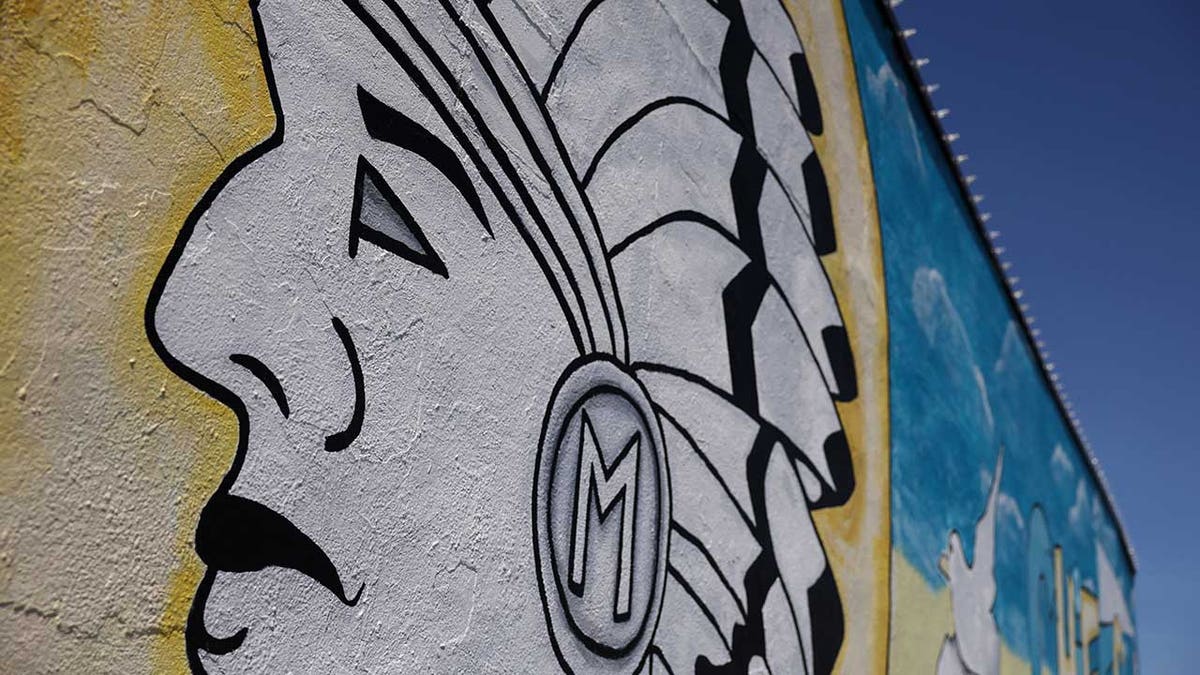
A mural depicting the Massapequa Chiefs sports teams is visible on a building adjacent to the high school in Massapequa, New York, as of May 1, 2025. (REUTERS/Shannon Stapleton)
“Securing a victory in this case should result in the nullification of ‘Name Ban’ laws nationwide, including the revival of the ‘Fighting Sioux’ name and emblem in North Dakota,” stated NAGA President Clayton Anderson, a member of the Hidatsa Tribe, in a statement.
After the United States District Court dismissed its case on Nov. 14, the organization said it would appeal to the Second Circuit Court of Appeals, viewing it as a step toward taking the case to the Supreme Court.
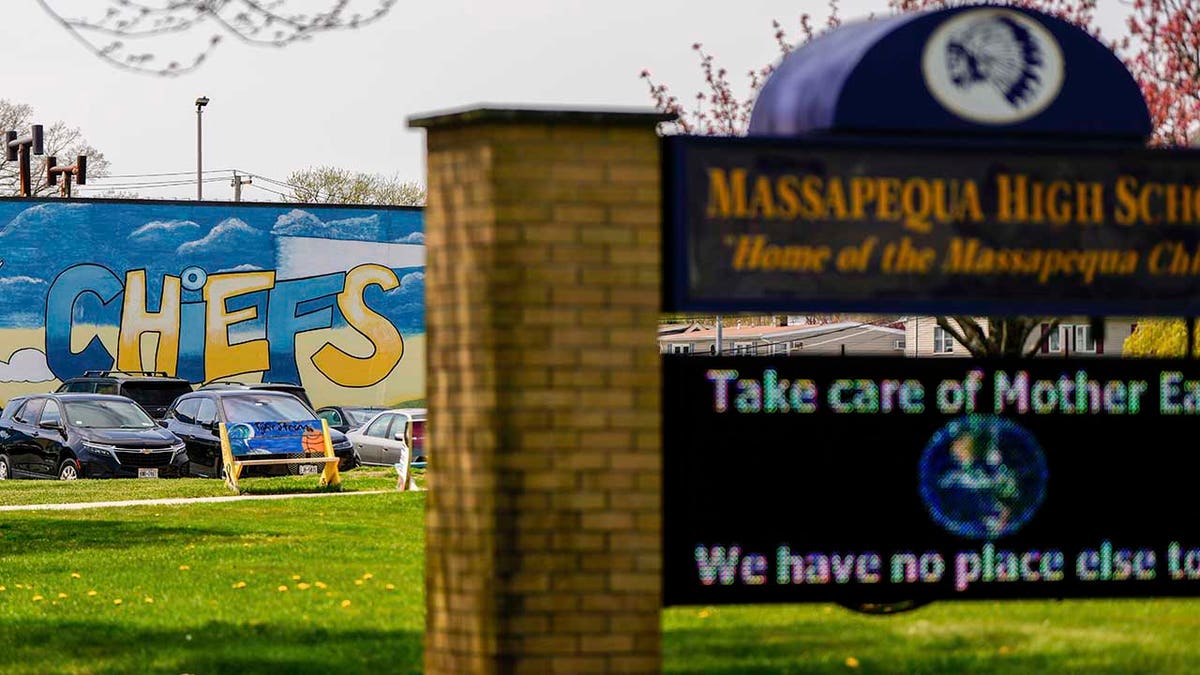
A marquee outside the Massapequa High School is backdropped by a “Chiefs” mascot mural, in Massapequa, N.Y., Friday, April 25, 2025. (AP Photo/Julia Demaree Nikhinson)
In the announcement, NAGA said the New York ban is “misleadingly titled” the “mascot ban,” arguing that it unfairly targets Native Americans while no similar prohibition exists for other ethnic names such as the “Vikings,” “Patriots” and “Yankees,” which are commonly used for team names and symbols.
“It had nothing to do with mascots, it was literally trying to eradicate any image of a Native American from a New York school and Massapequa,” NAGA attorney Chap Petersen said in a post.
The association described the ban as a race-based classification and argues that the ban should be subject to “strict scrutiny,” requiring the government to justify the law under strict legal standards.

The University of North Dakota’s Fighting Sioux logo at Ralph Engelstad Arena in 2010. (AP Photo/Dave Kolpack, File)
“They’re only targeting one group, one ethnicity, to say you can’t be recognized, you can’t be celebrated by the teams,” Peterson added. “That’s a violation of the 14th amendment, which prohibits racial discrimination and gives all people equal protection under the law regardless of race or ethnicity.”
In November, a judge dismissed NAGA’s case, citing “lack of standing,” meaning the court determined that NAGA did not have the legal right to challenge the rule. NAGA, however, argues that the judge used this to sidestep the ruling on whether the law was fair.