
Share this @internewscast.com
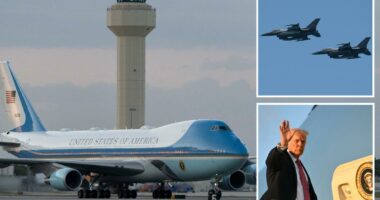
THE HAGUE, Netherlands — U.S. President Donald Trump, along with other NATO leaders, is set to convene on Tuesday for a summit that might see the world’s most significant security alliance come together over a new defense spending initiative or expose further rifts among the 32 member nations.
Just a week prior, the outlook appeared promising. NATO Secretary-General Mark Rutte was hopeful that European countries and Canada would agree to mirror the United States by dedicating a comparable portion of their economic growth to defense spending for the first time.
However, Spain later dismissed the proposed NATO objective that each nation allocates 5% of its gross domestic product to defense, labeling it as “unreasonable.” President Trump remains firm on this expectation. The alliance functions on a consensus basis, needing approval from all 32 member countries.
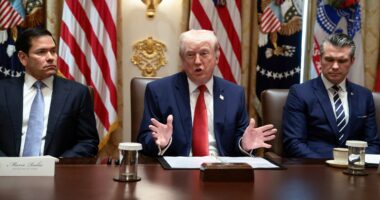
The following day, Trump said the U.S. should not have to respect the goal.
“I don’t think we should, but I think they should,” he said. Trump lashed out at Prime Minister Pedro Sánchez’s government, saying: “NATO is going to have to deal with Spain. Spain’s been a very low payer.” He also criticized Canada as “a low payer.”
Spain was the lowest spender in the alliance last year, directing less than 2% of its GDP on defense expenditure, while Canada was spending 1.45%, according to NATO figures.
Then Trump ordered the bombing of nuclear installations in Iran. In 2003, the U.S.-led war on Iraq deeply divided NATO, as France and Germany led opposition to the attack, while Britain and Spain joined the coalition.
European allies and Canada also want Ukraine to be at the top of the summit agenda, but they are wary that Trump might not want President Volodymyr Zelenskyy to steal the limelight.
A short summit, decades of mutual security
The two-day summit in The Hague involves an informal dinner Tuesday and one working session Wednesday morning. A very short summit statement has been drafted to ensure the meeting is not derailed by fights over details and wording.
Indeed, much about this NATO summit is brief, even though ripples could be felt for years.
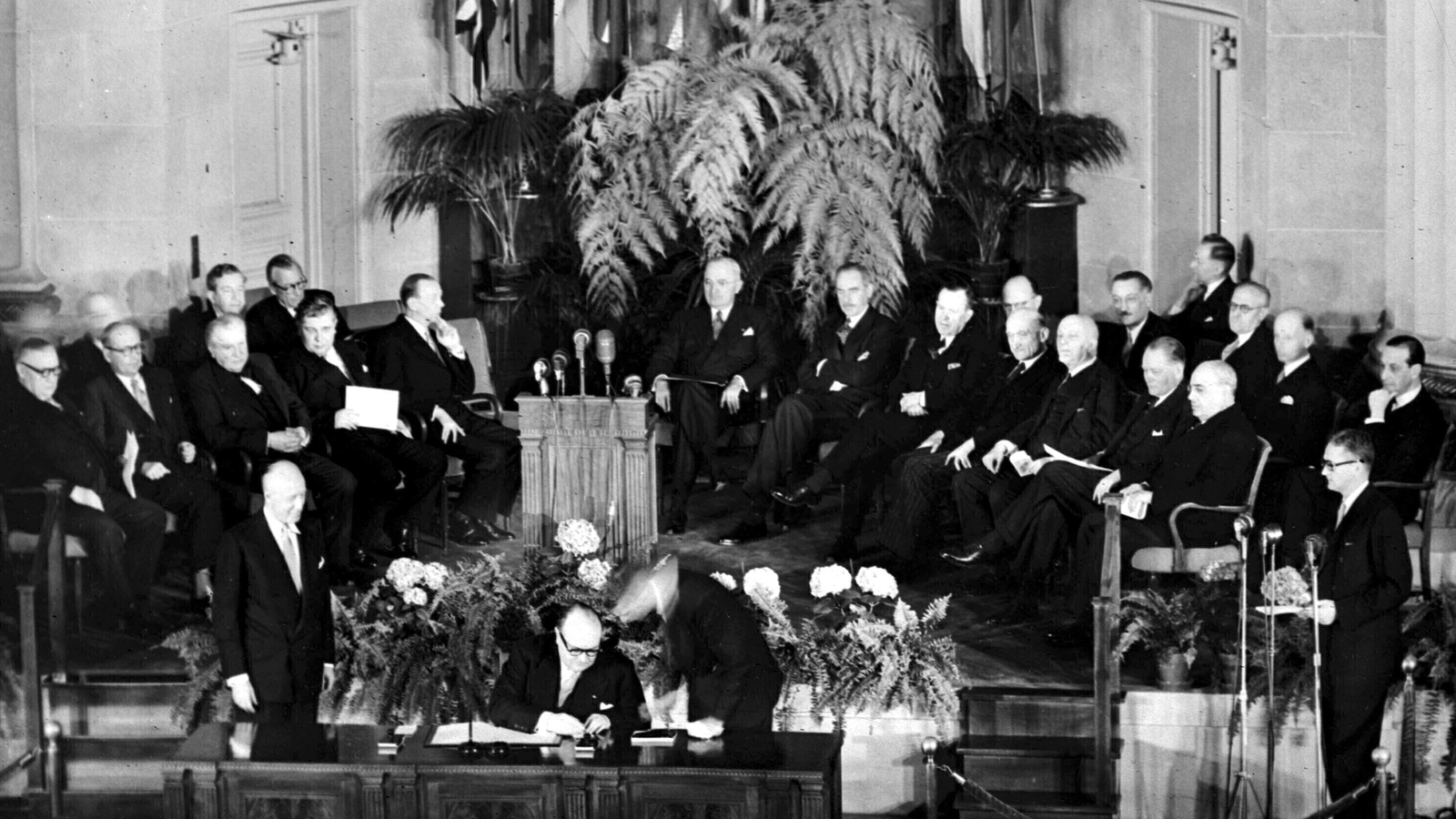
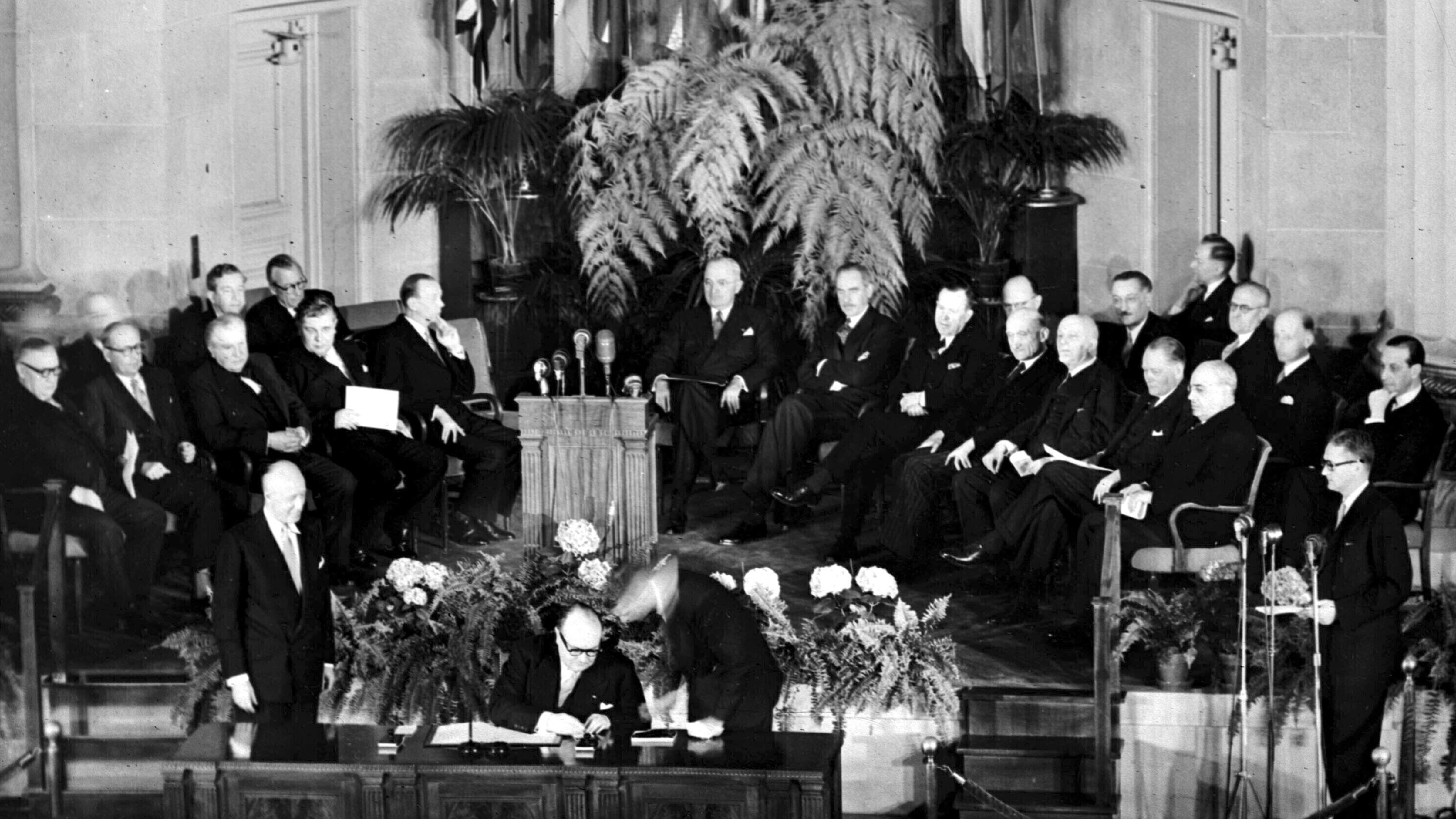
Founded in 1949, the North Atlantic Treaty Organization was formed by 12 nations to counter the threat to security in Europe posed by the Soviet Union during the Cold War, notably via a strong U.S. presence on the continent.
Dealing with Moscow is in its DNA. Keeping the peace outside the Euro-Atlantic area is not.
NATO’s ranks have grown to 32 countries since the Washington Treaty was signed 75 years ago. Sweden joined last year, worried by an increasingly aggressive Russia.
NATO’s collective security guarantee – Article 5 of the treaty – underpins its credibility.
It’s a political commitment by all countries to come to the aid of any member whose sovereignty or territory might be under attack. Trump has suggested he is committed to that pledge, but he has also sowed doubt about his intentions. He has said the U.S. intends to remain a member of the alliance.
A civilian runs NATO, but the U.S. and its military hold power
The United States is NATO’s most powerful member. It spends much more on defense than any other ally and far outweighs its partners in terms of military muscle. Washington has traditionally driven the agenda but has stepped back under Trump.
The U.S. nuclear arsenal provides strategic deterrence against would-be adversaries.
NATO’s day-to-day work is led by Rutte, a former Dutch prime minister.
As its top civilian official, he chairs almost weekly meetings of ambassadors in the North Atlantic Council at its Brussels headquarters. He chairs other “NACs” at ministerial and leader levels. Rutte runs NATO headquarters, trying to foster consensus and to speak on behalf of all members.
NATO’s military headquarters is based nearby in Mons, Belgium. It is always run by a top U.S. officer.
Ukraine’s role at the summit is unclear
With Trump demanding greater defense spending, it’s unclear what role Ukraine will play at the summit. Zelenskyy has been invited, but it’s unclear whether he will have a seat at NATO’s table, although he may take part in Tuesday’s dinner. Russia’s war in Ukraine usually dominates such meetings.
More broadly, NATO itself is not arming Ukraine. As an organization, it possesses no weapons of any kind. Collectively, it provides only non-lethal support – fuel, combat rations, medical supplies, body armor, and equipment to counter drones or mines.
But individually, members do send arms. European allies provided 60% of the military support that Ukraine received in 2024. NATO coordinates those weapons deliveries via a hub on the Polish border and helps organize training for Ukrainian troops.
NATO’s troop plans
A key part of the commitment for allies to defend one another is to deter Russia, or any other adversary, from attacking in the first place. Finland and Sweden joined NATO recently because of this concern.
Under NATO’s new military plans, 300,000 military personnel would be deployed within 30 days to counter any attack, whether it be on land, at sea, by air or in cyberspace. But experts doubt whether the allies could muster the troop numbers.
It’s not just about troop and equipment numbers. An adversary would be less likely to challenge NATO if it thought the allies would use the forces it controls. Trump’s threats against U.S. allies – including imposing tariffs on them – has weakened that deterrence.
The U.S. is carrying the biggest military burden
Due to high U.S. defense spending over many years, the American armed forces have more personnel and superior weapons but also significant transportation and logistics assets.
Other allies are starting to spend more, though. After years of cuts, NATO members committed to ramp up their national defense budgets in 2014 when Russia illegally annexed Ukraine’s Crimean Peninsula.
After Russia’s full-scale invasion of Ukraine in 2022, the NATO allies agreed to make 2% of GDP the minimum spending level. Last year, 22 countries were expected to hit that target, up from only three a decade ago.
In The Hague, the allies were expected to up the ante to 3.5%, plus a further 1.5% for things like improving roads, bridges, ports and airfields or preparing societies to deal with future conflicts. Whether they will now remains an open question.
Copyright © 2025 by The Associated Press. All Rights Reserved.