
Share this @internewscast.com
An impartial analysis suggests that a new law in Florida could lead to more incarcerations by introducing additional penalties, including potential jail sentences.
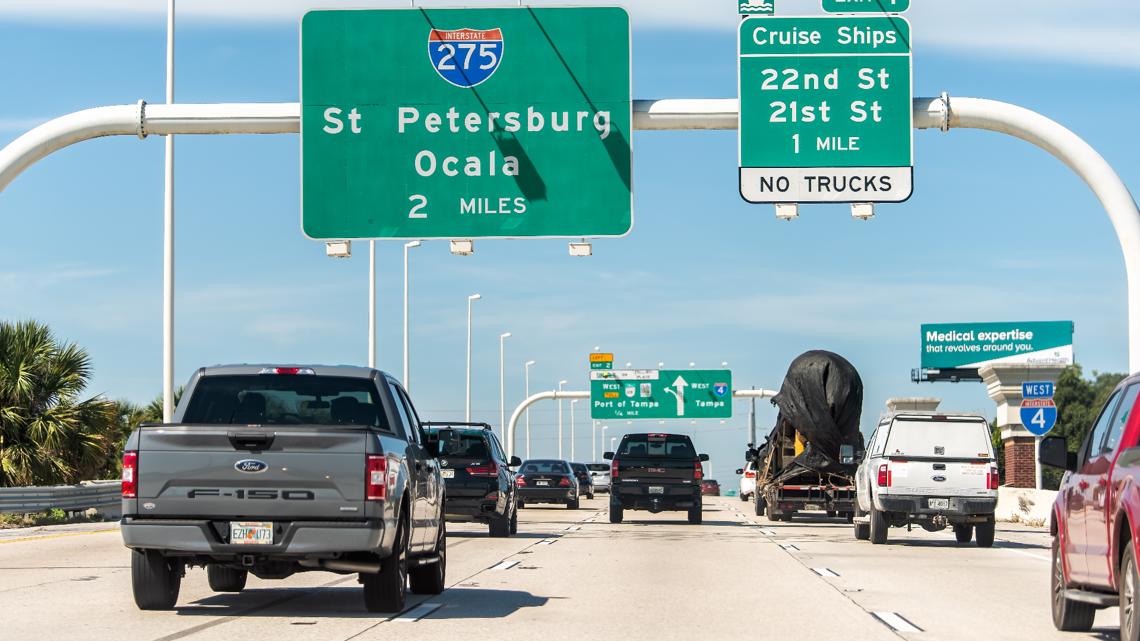
ST. PETERSBURG, Fla. — Florida’s latest legislation may pose legal challenges for drivers if their vehicle’s license plate or stickers are not fully visible.
This law, originating from bill HB-253, introduces stricter penalties for actions such as covering, obscuring, or altering a car’s license plates or stickers.
Introduced by Representative Doug Bankson and signed by Governor Ron DeSantis in May, the bill received unanimous approval from both the Florida Senate and House of Representatives in Tallahassee, becoming effective on October 1, as per public records.
Under this new law, applying any substance, coating, reflective material, or spray that diminishes the visibility of a license plate, or attaching illuminating devices or frames that obscure it, is now considered a second-degree misdemeanor. This is punishable by up to 60 days in jail and a $500 fine.
New rules around obscuring a license plate
The legislation elevates the offense from a “noncriminal traffic infraction” to a second-degree misdemeanor for individuals who “knowingly” alter or obscure their vehicle’s license plate, registration certificate, or temporary license plate.
This law increases the penalty from a “noncriminal traffic infraction” to a second-degree misdemeanor for anyone who “knowingly” alters or obscures their car’s license plates, registration certificate or temporary license plate.
It also says this applies to validation stickers and mobile home stickers.
Language in the new law defines a “license plate obscuring device” as anything designed or installed in a car that could switch “between two or more license plates,” hide it from view “by flipping the license plate,” partially or fully covering, obscuring or interfering “with the legibility, angular visibility, or detectability of the primary features or details.”
The ban also applies to anything on a car’s license plate that interferes with the ability to record it, partially or fully.
Possessing or buying any of these devices is now punishable as a second-degree misdemeanor, with similar penalties.
Manufacturing, selling, offering to sell or even distributing any license plate obscuring device is now punishable as a first-degree misdemeanor, according to this law. It’s punishable by up to one year in jail and a $1,000 fine.
“A person commits a felony of the third degree… if he or she uses a license plate obscuring device to assist in committing a crime or in escaping from or avoiding detection or arrest in connection with committing such crime,” the law states.
Driving with prohibited lights
This law also cracks down on anyone who drives a vehicle displaying “red, red and white, or blue light” and stops or tries to pull over someone else. This is considered a first-degree misdemeanor or a third-degree felony, and a person could be imprisoned for up to five years and a $5,000.
Exceptions for this part of the law include: federal, state or local law enforcement agents, specific buses or taxicabs and authorized emergency vehicles, such as fire engines or ambulances.
Potential impact of the law
A nonpartisan analysis published by the Florida Senate states this law could lead to more people in jails and prisons due to the crackdown on altering stickers or plates.
Also, people who previously purchased devices that are now prohibited will lose the money they spent on them, while sellers of those items will also experience the financial loss, according to the analysis.