
Share this @internewscast.com
EXCLUSIVE ON FOX: Amid a ceasefire, Hamas is reportedly using the lull to regroup and strengthen its hold on Gaza. Meanwhile, a few budding Palestinian militias are attempting to establish themselves as a new force within the region. Shawqi Abu Nasira, a leader of one such group, described the ceasefire as a “lifeline” for Hamas in conversation with Fox News Digital, noting that the group is in the process of rebuilding.
“Hamas operates under the influence of Iran,” Abu Nasira stated. “While they have been weakened, the ceasefire has revived them, allowing them to better prepare and re-equip. They’re setting up new centers,” he continued, also expressing gratitude to President Trump for freezing Hamas assets and designating the Muslim Brotherhood as a terrorist entity.
Abu Nasira, formerly a senior official with the Palestinian Authority police and a veteran of 16 years in an Israeli prison, now commands a small contingent of fighters on the eastern side of Gaza’s “yellow line,” an area under Israeli military jurisdiction. “I relocated east of the yellow line to an area controlled by the Israeli Army. Fleeing Hamas left me with no other choice,” he explained.
The story of Abu Nasira’s break from Hamas was detailed by Jusoor News, a pan-Arab media outlet that recently launched an English-language channel focused on Gaza. According to their report, Abu Nasira’s defection began after Hamas killed his only son and paraded his body through the streets, an act that cemented his resolve to stand against the group.
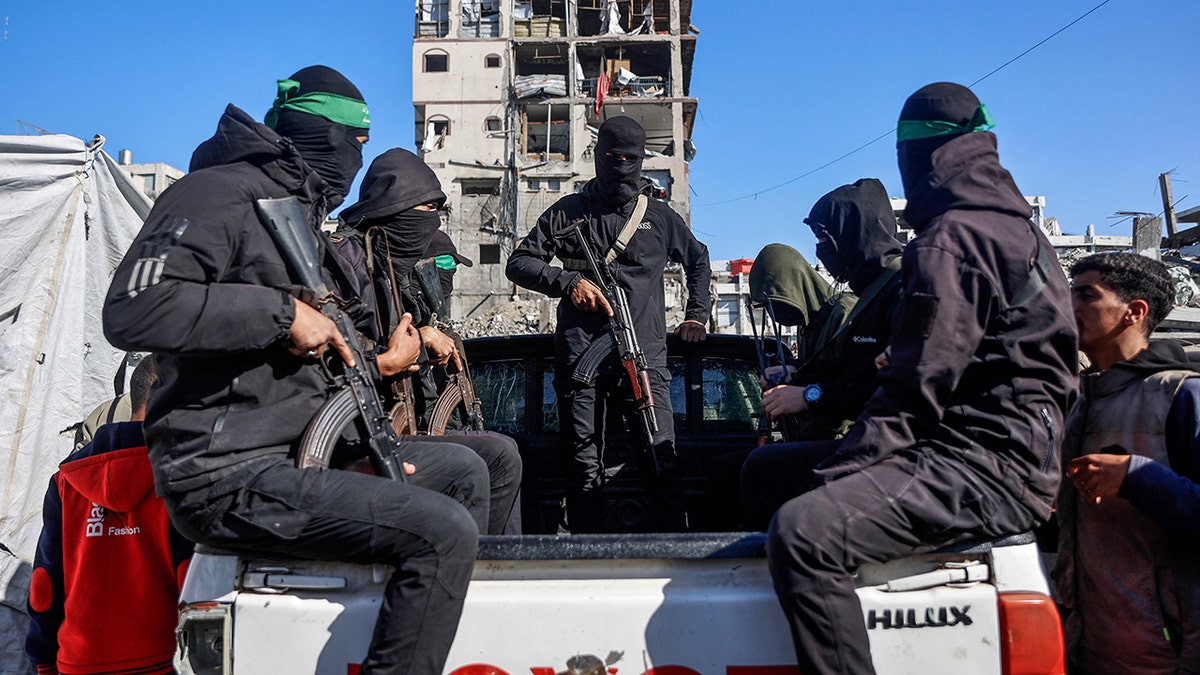
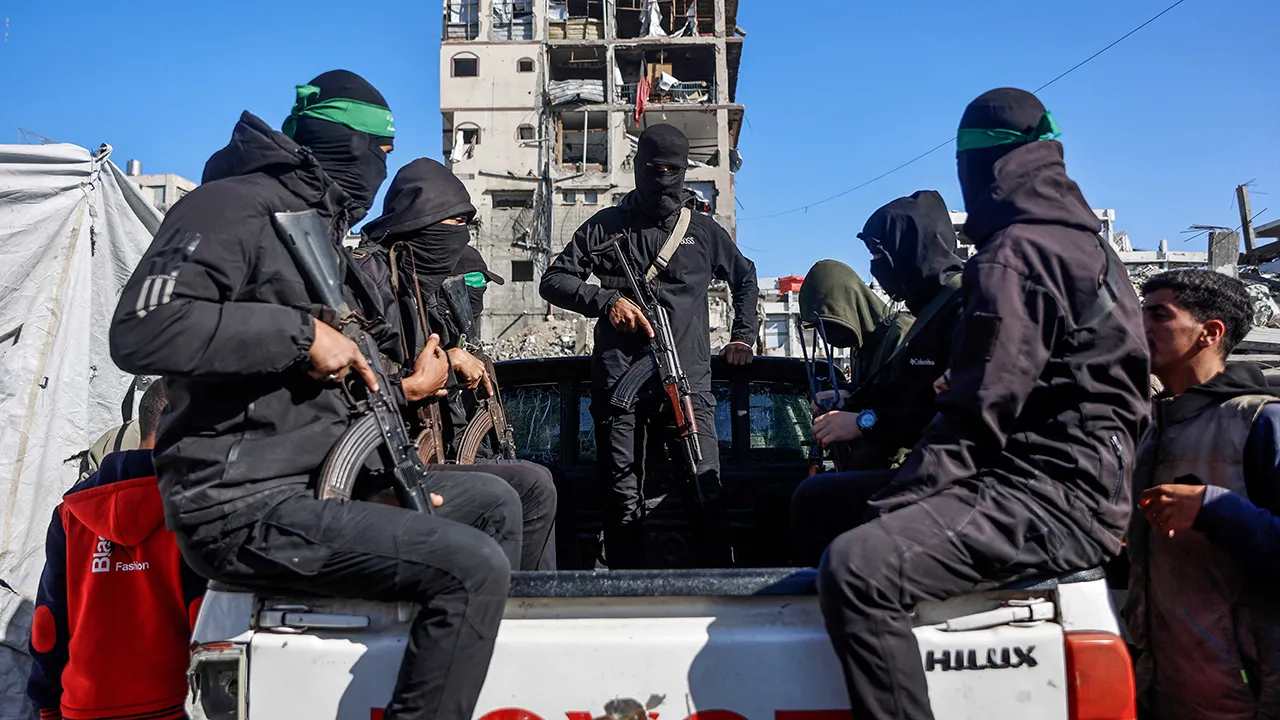
Hamas militants in northern Gaza on December 1, 2025. (Omar Al-Qatta / AFP via Getty Images)
In his discussion with Fox News Digital, Abu Nasira admitted the small scale of his faction. “I currently have dozens of fighters at my side,” he said, “though we are in dire need of better equipment and support.” He believes, however, that many Gazans align with his ideals. “Those living in tents, those starving, those without access to medicine, these people do not support Hamas,” he asserted.
The ceasefire has exposed a chaotic landscape of militias, clan groups and local networks that have emerged as Hamas’s control weakened. Although none rival Hamas in size or capability, several factions have gained visibility.
These include the Popular Forces in Rafah, the Popular Army in northern Gaza, the Counter-Terrorism Strike Force in Khan Yunis and the Shujaiya Popular Defense Forces in eastern Gaza City, along with powerful clan-based networks such as the al-Majayda and Doghmosh families. Their alliances shift frequently, and their structure varies widely, but all have appeared or strengthened during the breakdown of centralized rule.
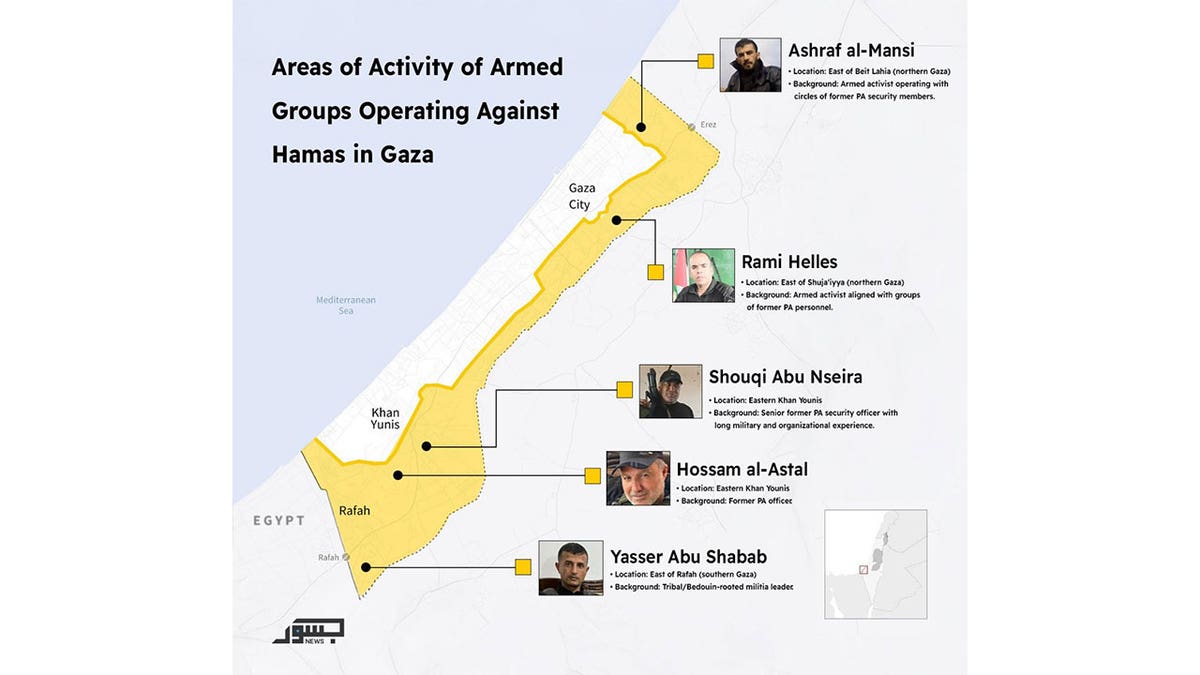
Overview of anti-Hamas militias and local armed groups active in Gaza. (Jusoor News)
Abu Nasira said many of these groups are in contact. “They are our brothers and sisters,” he said. “All of these people, they are holding arms and fighting Hamas for a reason, because they were the first witness to Hamas terrorism and they are victims of Hamas.”
He said early efforts are underway to unite the factions. “We are coordinating all of these groups together to work under one political umbrella, and they can act as a National Guard for East Gaza,” he said.
Abu Nasira argued that Palestinians, not outside powers, should be the ones to remove Hamas from Gaza. “We can now, as Palestinians, attack them,” he said. “We just need the support in order to win this war, and we can finish it in a few months.”
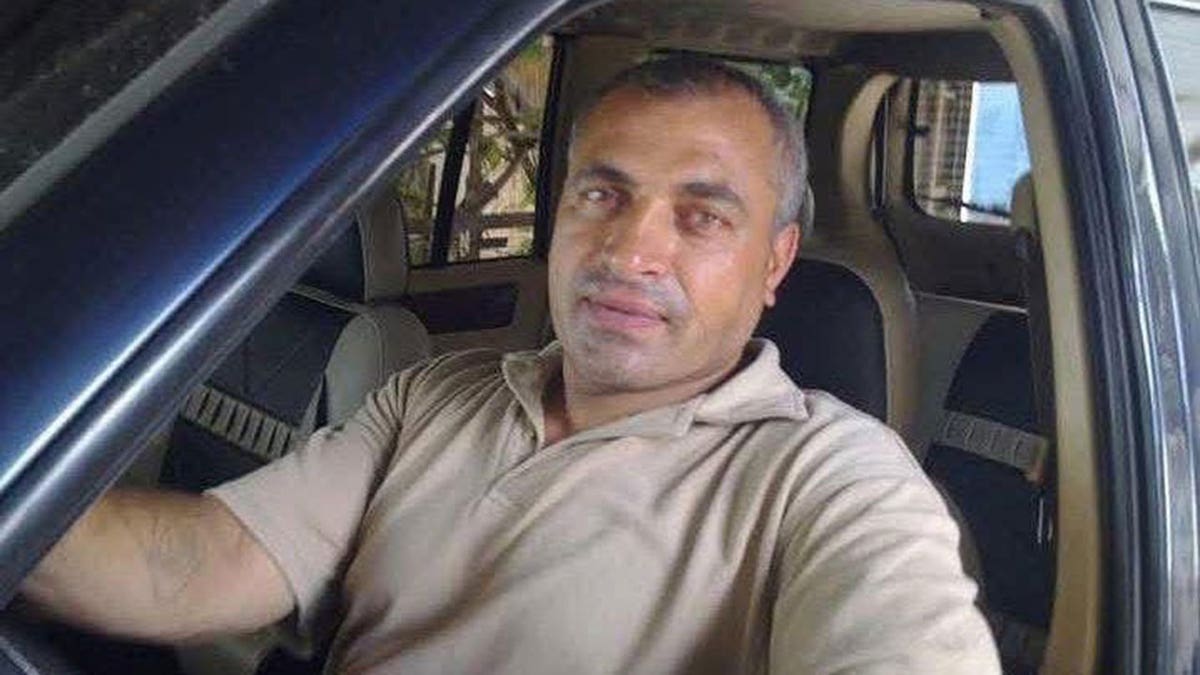
Shawqi Abu Nasira, an emerging anti-Hamas militia leader in Gaza. (Jusoor News)
He rejected the idea that Gazans would fear being labeled collaborators. “Whenever you say no to Hamas, you are accused as an operator, or you will be executed,” he said. “Everybody in Gaza knows that, so that’s not going to scare us anymore.”
In a message to Americans, Abu Nasira said the stakes go beyond Gaza. “Fighting terror is a campaign that we all should fight against,” he said. “It can spread from Gaza to all over the world.”
He described Hamas as part of a broader network. “As long as the triangle of Hamas, the Muslim Brotherhood and the Islamic Republic in Iran are working all together, that is a threat to the entire human, civilized world,” he said.
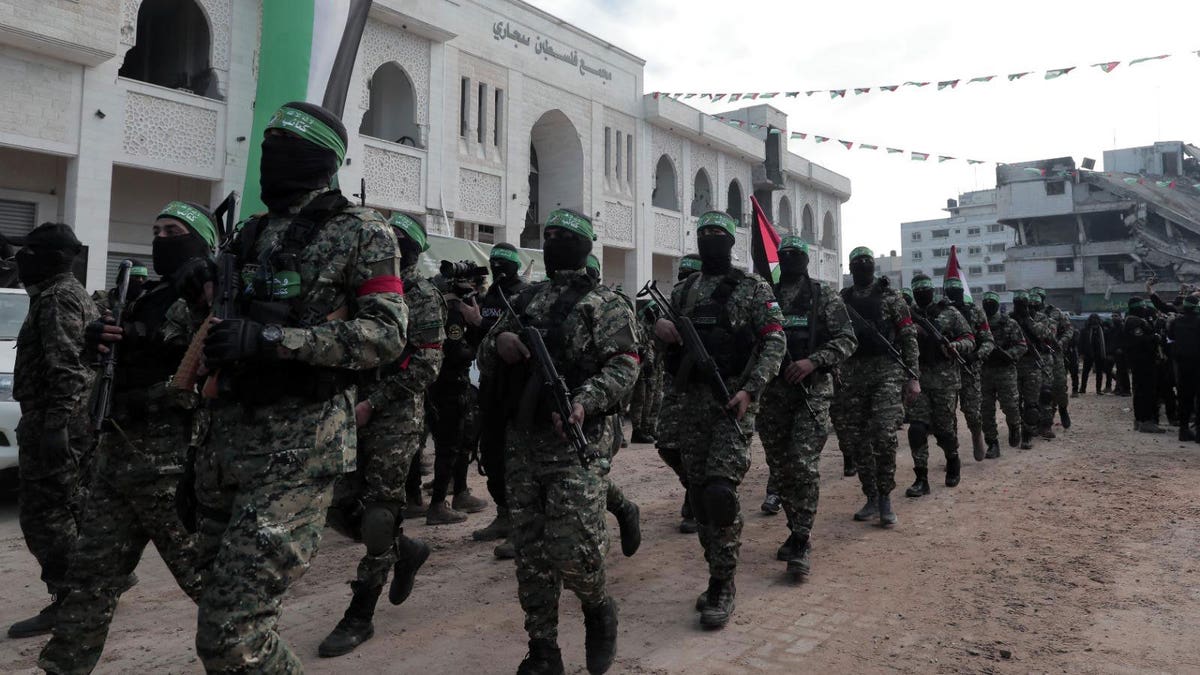
Hamas gathers in a show of strength during a parade by the terror group in Gaza on Jan. 25th, 2025. (TPS-IL)
He dismissed the concept known as the “Disneyland strategy,” which envisions building functioning civilian zones east of the yellow line to inspire pressure against Hamas over time. “This is a good, nice talk, but this is a long term,” he said. “We don’t need to give them the time to get strong.”
As Hamas regains strength under the ceasefire, Abu Nasira said Palestinians “are ready” and “want to fight for our future,” insisting that with international backing, a unified alternative can still be built.