
Share this @internewscast.com

Foreign capital is increasingly shaping American elections, not via individual contributions but through multinational corporations that discreetly funnel millions to influence outcomes. Currently, foreign stakeholders hold about 40% of U.S. corporate equity. This gives international interests considerable sway over companies that are legally allowed to invest unlimited funds in U.S. elections.
A troubling gap in our campaign finance laws was created by the Supreme Court’s 2010 Citizens United decision. This ruling permits corporations with major foreign investment to freely spend in federal, state, and local elections. Consequently, companies with significant foreign ownership, like Amazon, Chevron, and Uber, can legally channel funds into electoral processes, even though direct contributions from foreign nationals are banned.
This situation threatens a fundamental democratic ideal: that elections should be determined by the electorate.
In New York, efforts are underway to address this vulnerability.
We have put forward the Democracy Preservation Act, a legislative measure aimed at stopping foreign corporate money from swaying state and local elections in New York. The proposal takes a pragmatic approach, balancing legitimate business interests with the need to safeguard our democratic processes.
The Democracy Preservation Act specifically prohibits corporations from election spending if a single foreign investor holds 1% or more of the company, or if multiple foreign investors collectively own 5% or more. These thresholds are carefully chosen, reflecting ownership levels recognized by bodies like the Business Roundtable as influential in corporate governance and decision-making.
This approach is narrowly tailored and constitutionally sound. Two years after the Citizens United ruling, the high court upheld as constitutional the longstanding federal law barring foreign nationals from spending money directly or indirectly in any elections in the United States. Yet, because of the loophole in the Citizens United ruling, foreign investors can now subvert that federal law through multinational corporations. The Democracy Preservation Act ensures that New York elections are not shaped by foreign capital operating through corporate intermediaries. It preserves American self-government.
Consider Uber, one of the most politically active corporations in the country. For years, Uber’s largest shareholder was SoftBank Group, a multinational conglomerate headquartered in Japan, which at times held well more than 10% of the company’s equity. Further, the Saudi government made an enormous (and critical) early investment in Uber and still owns several percent of the company’s stock. Uber has spent millions of dollars on ballot initiatives and lobbying campaigns across the United States, including in state and local elections.
Under current law, that spending is legal, even though foreign nationals themselves are explicitly barred from influencing American elections. The result is a glaring contradiction: foreign investors may not write checks directly to political campaigns, but they can still benefit from corporate political spending carried out on their behalf.
This is precisely the loophole the Democracy Preservation Act is designed to close. The bill establishes clear, objective thresholds to ensure that election spending reflects democratic accountability rather than global interests. Without such guardrails, the integrity of our elections remains vulnerable to foreign influences that voters cannot see or control.
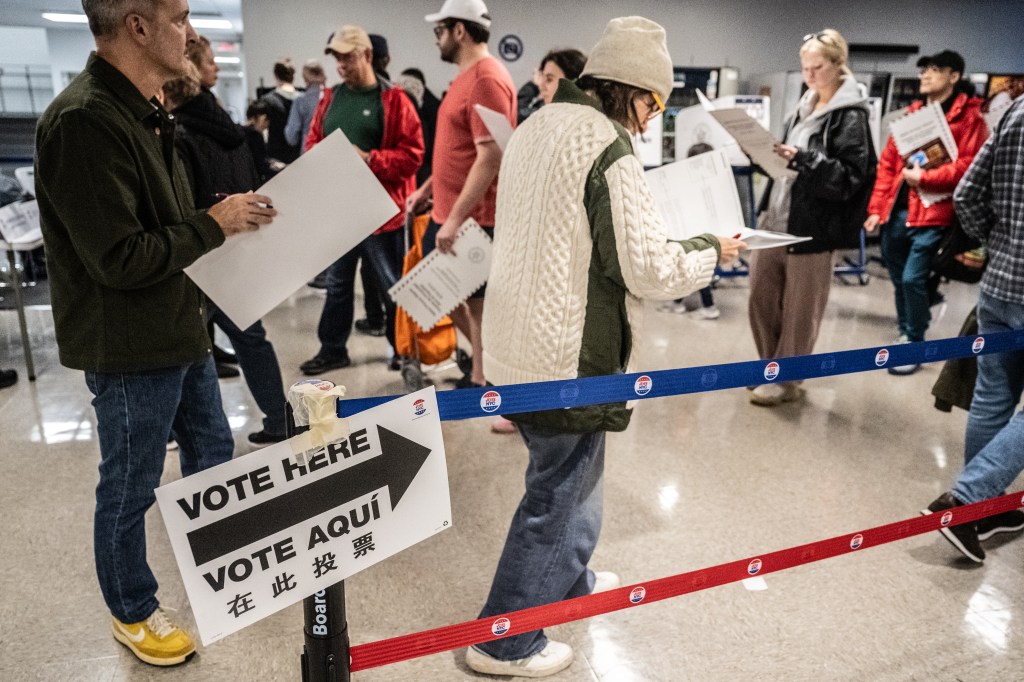
When voters believe elections are dominated by powerful interests beyond their control, trust in government erodes. Participation declines. New York has the chance to lead the nation in strengthening elections and our democracy; it’s up to us to deliver on the promise of self-government.
The state Senate has already taken an important step by passing the Democracy Preservation Act. Now, the Assembly has the opportunity to finish the job — and, with Gov. Hochul’s signature, make New York a national leader in protecting democratic integrity.
Other jurisdictions have already begun moving in this direction. Cities like San Jose, Calif. and Seattle have enacted similar protections to safeguard local elections from foreign-influenced corporate spending. New York should not lag behind.
Every day this loophole remains open, public confidence in our elections is undermined. Closing it would send a clear message: New York’s democracy shall not be undermined by foreign-influenced corporations.
By passing the Democracy Preservation Act, we can ensure that the voices heard in Albany are the voices of everyday New Yorkers — not multinational corporations shaped by foreign investors. At a moment when faith in democratic institutions is fragile, New York has a responsibility to lead. Our elections — and our democracy — will be stronger for it.
Gianaris is deputy leader of the New York State Senate. Walker is chair of the Assembly Election Law Committee.