
Share this @internewscast.com
Texas agriculture authorities have issued an urgent alert following the swift spread of an invasive pest across more than 20 counties, posing a significant threat to grazing lands, hay production, and livestock operations throughout the state.
Identified as Helicococcus summervillei, commonly called the pasture mealybug, this pest has never been recorded in North America until now. Texas Agriculture Commissioner Sid Miller highlighted that the mealybug is already causing noticeable damage in several areas.
“This is an entirely new pest to our continent, and Texas is once again at the forefront,” remarked Miller. “Should the pasture mealybug proliferate across Texas grazing lands similar to its spread in eastern Australia, it could severely impact Texas agriculture by reducing productivity and livestock capacity.”
The Texas Department of Agriculture is collaborating with the Texas A&M AgriLife Extension Service and the USDA’s Animal and Plant Health Inspection Service to assess the spread and devise an effective emergency response plan.
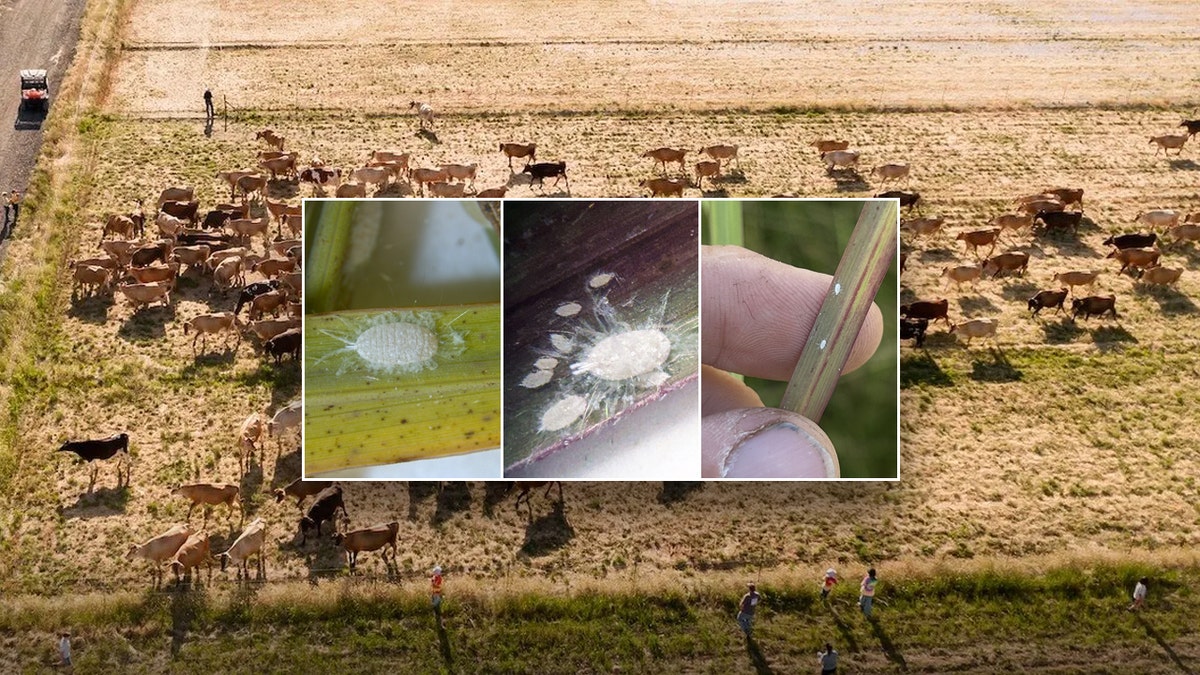
Texas ranchers are increasingly worried as this newly discovered invasive pest, depicted in inset images, expands across grazing areas, threatening vital crops essential for cattle feed. (Credits: Raw Farm, Danielle Sekula, and Stephen Biles)
According to AgriLife Extension publications, the pasture mealybug was first identified in Australia in 1928. It has been linked to the loss of millions of acres of pasture due to a condition known as “pasture dieback.” This condition occurs when the pest feeds at the soil level and within plant tissues, weakening and ultimately killing the grass necessary for grazing and hay production.
While the species is believed to be new to North America, researchers suspect the insect has been present since before 2022.
So far, state and extension experts have documented the following 20 counties as being infected, with possibly more: Brazoria, Galveston, Wharton, Matagorda, Colorado, Austin, Washington, Cameron, Hidalgo, Willacy, Refugio, Calhoun, Victoria, Goliad, Dewitt, Lavaca, Fayette, Jackson, Burleson, Brazos and Robertson.
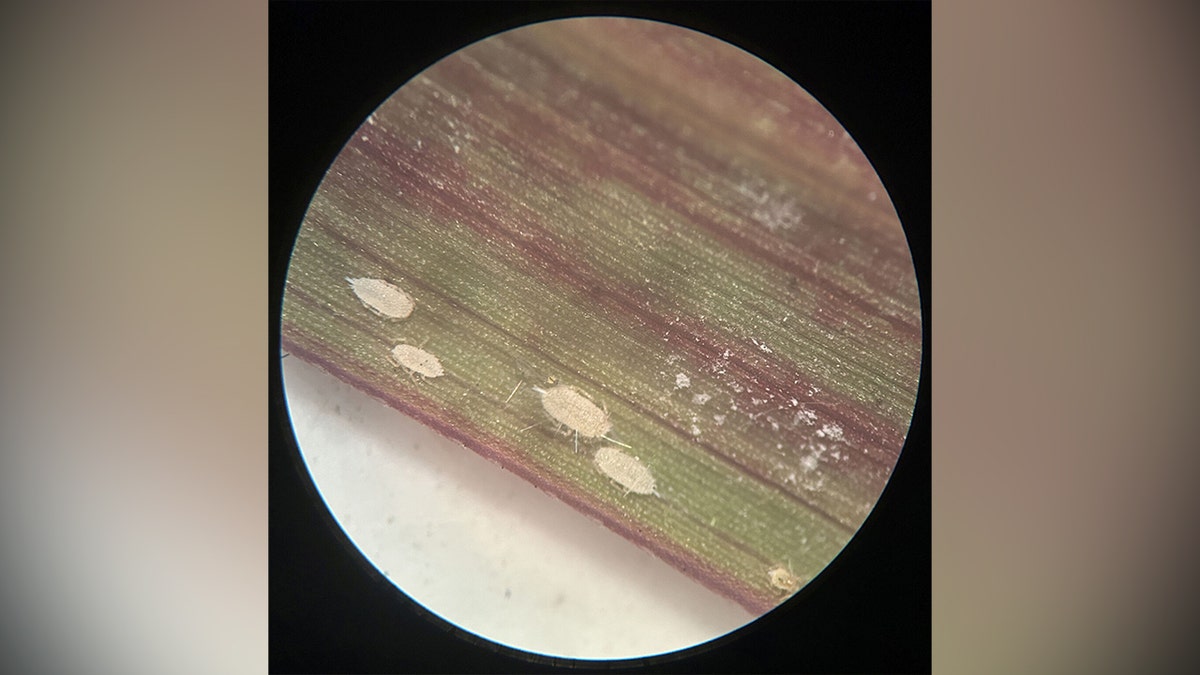
Microscope view shows pasture mealybugs feeding on a grass blade — the newly detected pest now threatening Texas hay and livestock operations. (Danielle Sekula and Stephen Biles)
According to a Pest Incident Worksheet from AgriLife entomologists, the most significant pasture losses are in Victoria County.
It’s also noted that the most susceptible grasses to infestation are Bermudagrass, Bahia grass, Johnsongrass, haygrazer (sorghum–sudangrass), St. Augustine grass, bluestem varieties and other tropical or subtropical grasses.
Damage can be difficult to detect early because the insects feed low on the plant and beneath surface debris. Warning signs include yellowing within a week of infestation, purpling or reddening of leaves, stunting despite adequate moisture, weakening root systems and patchy areas of thinning or dead grass. The bugs appear as small white fuzzy clusters on grass or plant matter.
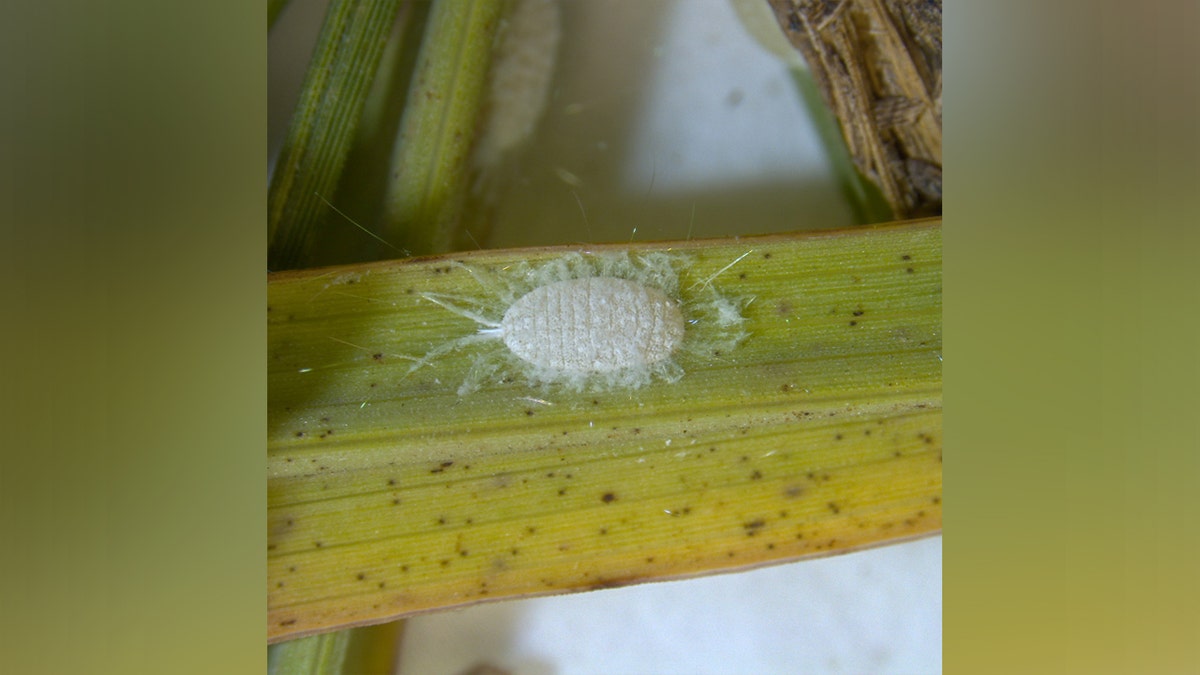
The wax-covered pasture mealybug, shown here on a damaged blade of grass, is causing dieback and threatening Texas grazing lands. (Danielle Sekula and Stephen Biles)
As of now, there are no insecticides labeled for the control of the pest in the U.S.
Anyone who believes they are affected and notices symptoms or insect clusters resembling mealybugs is being asked to contact the Texas Department of Agriculture at 1-800-TELL-TDA. State and federal officials say ongoing reporting will be essential to mapping the pest’s spread and preventing widespread economic losses.
“We need every producer’s eyes on the ground,” Miller emphasized.
TDA, AgriLife Extension and USDA APHIS are continuing to jointly investigate the pest and develop response strategies to safeguard Texas livestock and hay industries.