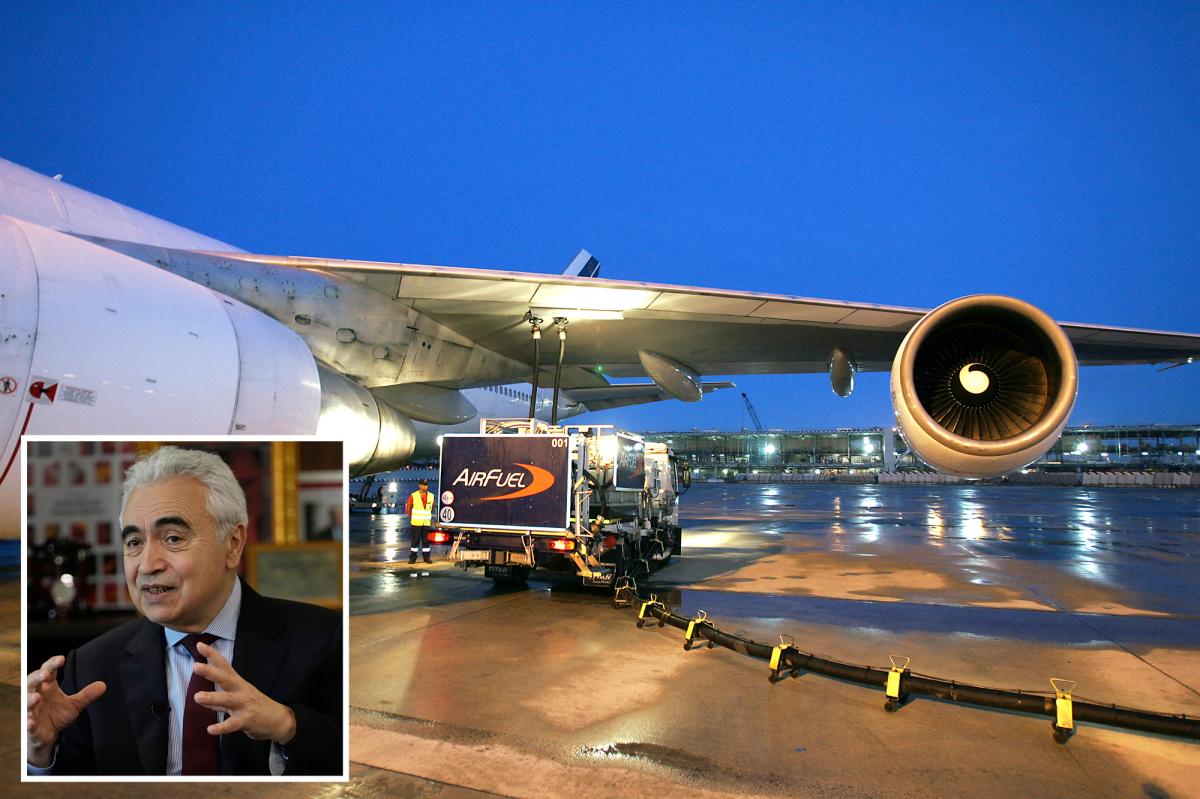


As tensions continue to escalate in the Middle East, Europe finds itself on the brink of a significant aviation disruption. The International Energy Agency has sounded an alarm, predicting that within six weeks, the continent could face a severe shortage of jet fuel if the ongoing blockade of oil supplies persists due to the conflict in Iran. This looming crisis threatens to coincide with the peak of the summer travel season, potentially leading to widespread flight cancellations.
Fatih Birol, the Executive Director of the IEA, labeled the situation as the “largest energy crisis we have ever faced,” underscoring the critical need for the reopening of the Strait of Hormuz. This vital passageway is essential for the unhindered flow of global oil and gas supplies. Speaking to the Associated Press, Birol highlighted the urgency of the situation, warning that European nations may soon have to contend with jet fuel shortages if the current impasse remains unresolved.
“If the Strait of Hormuz is not reopened,” Birol cautioned, “we might soon hear about flights from one city to another being canceled due to a lack of jet fuel.” Such scenarios could become a reality by June, according to the IEA’s latest report, which indicates that even with alternative supplies, Europe might still experience physical shortages.
The continent’s reliance on the Middle East for jet fuel is striking, with approximately 75% of its imports—equating to nearly 375,000 barrels per day—originating from this region. As summer approaches, the pressure mounts on European countries to find solutions to avert a full-blown aviation crisis, emphasizing the strategic importance of securing energy pathways and considering alternative fuel sources.
The IEA’s April report said Europe could start seeing physical shortages of jet fuel by June, even if the region can replace half of the supplies it normally gets from the Middle East.
The continent has the highest dependence on jet fuel from the Middle East, with the region supplying nearly 375,000 bpd, or 75%, of Europe’s net jet fuel imports, according to the IAE.
“In the past, there was a group called ‘Dire Straits.’ It’s a dire strait now, and it is going to have major implications for the global economy,” Birol said.
“And the longer it goes, the worse it will be for the economic growth and inflation around the world,” he added.
Birol’s warning comes just a week after ACI Europe, which represents airports across the continent, suggested that Europe had only three weeks before it faced a serious fuel shortage.
The fuel shortage is a direct result of Iran sealing off access to the Strait of Hormuz, a critical chokepoint that oversees the transport of 20% of the world’s oil supply.
Tehran shut down the strait in retaliation for the war, with the traffic of Iranian oil ships now also halted after the US issued its own naval blockade in the Gulf earlier this week.
It remains unclear how long the Strait of Hormuz will remain closed after US-Iranian peace talks broke down over the weekend, while further negotiations remain tense.
With Post wires