
Share this @internewscast.com

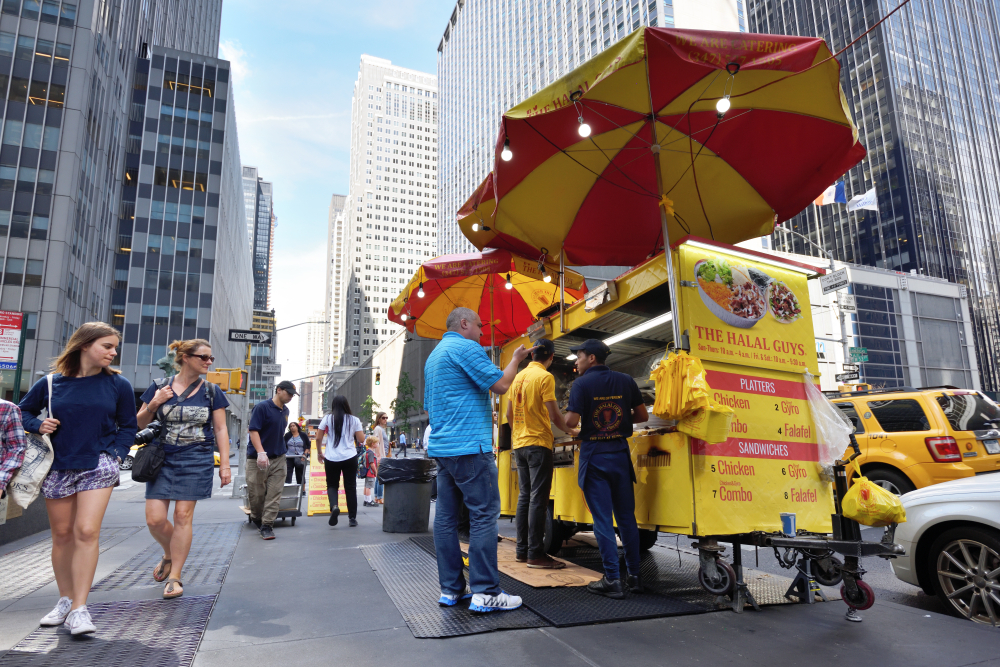
New York City stands on the brink of transformative change in street vending regulations, and as someone who has deep familial ties to this industry, I am filled with pride at the strides we’ve made. This is a cause that resonates deeply with me, being the daughter and granddaughter of street vendors.
In a moment filled with hope and solidarity, I found myself at a rally just before the final City Council meeting. There, an inspiring coalition of street vendors, bodegueros, restaurant owners, and supermarket representatives united under one clear message: we must pass Int. 431 to finally address the flaws in our street vending system.
This moment is significant because it reflects the substantial progress that has been made. When we embarked on this mission, we faced seemingly insurmountable challenges. Decades-old restrictions on licenses made it nearly impossible for most vendors to operate legally, pushing many into the shadows. Enforcement was sporadic and ineffective, and the divide among stakeholders was so wide that bringing them together seemed daunting. Vendors felt targeted and criminalized, while brick-and-mortar businesses felt overlooked. Past efforts at reform fell apart under the weight of mutual distrust.
In response, we developed a bill that is more robust and equitable than our initial drafts, gaining unprecedented support from brick-and-mortar businesses for street vending reform. Int. 431 aims to rectify long-standing issues by addressing the core problem of license scarcity, which leaves most vendors without a legal path to compliance. This artificial scarcity has made enforcement appear punitive rather than constructive, undermining the enforcement of quality-of-life regulations.
By broadening access to licenses, Int. 431 offers tangible incentives for vendors to operate within the law, laying the groundwork for a more orderly and harmonious coexistence on our streets. This reform is a beacon of hope, promising a future where street vending can flourish legally and fairly, benefitting the entire community.
Int. 431 does what reform has long failed to do: it addresses the root cause of disorder on our sidewalks — an artificial scarcity of licenses that leaves the vast majority of vendors operating without a legal pathway. When vendors cannot legally comply, enforcement becomes punitive instead of corrective, and quality-of-life rules become nearly impossible to uphold. By expanding access to licenses, Int. 431 creates real incentives for compliance and a foundation for order.
Over the next several years, existing vendors will have a genuine opportunity to apply for licenses and operate without fear of excessive fines or penalties simply for trying to earn an honest living.
But we didn’t stop there.
Through months of convenings, one-on-one meetings, Council hearings, written correspondence, and difficult — but productive — negotiations, we listened carefully to brick-and-mortar businesses who made one thing clear: expanding access to licenses must be paired with fair, real enforcement that protects quality of life on commercial corridors.
That feedback fundamentally shaped the bill.
The amended version of Int. 431 is substantially stronger than where we started. The bill pairs expanded access to licenses with more enforcement resources, a clearer, faster, and more enforceable accountability framework — one that can actually change behavior.
It defines meaningful suspension and revocation standards for repeat siting violations, escalates penalties for unlicensed vendors who bypass a fair opportunity to obtain a license, and adds new requirements to address cleanliness and waste disposal around vending carts.
It also strengthens oversight through the Street Vendor Advisory Board, ensuring the Council remains directly engaged as data comes in and conditions on the ground evolve.
These were not cosmetic changes. They were added deliberately, in direct response to quality-of-life and enforcement concerns raised by brick-and-mortar businesses.
That is why major stakeholders — like Gristedes, the National Supermarket Association, United Bodegas of America, the Bodega and Small Business Group, and the New York State Latino Restaurant Association — have publicly come out in support of this legislation. In open letters, brick-and-mortar leaders have said plainly that Int. 431 balances the equities.
It is also why a supermajority of my colleagues in the Council now cosponsor the bill.
We cannot afford to lose this moment.
Not in a city where the vast majority of street vendors are immigrants. Not at a time when the Trump administration is targeting these same neighbors — kidnapping them at routine court hearings and tearing families apart. And not after four years of work that brought us closer than ever to a real, enforceable solution.
If we fail to act now, we don’t pause — we reset. We risk spending another four years trying to maybe get back to where we are today.
This bill is not perfect. No legislation born of real compromise ever is. But it reflects the strongest enforcement framework street vending reform has ever had, paired with long overdue access to licenses — and it positions us for success in the new year, with new leadership at City Hall and in the Council.
I am fully committed to the success of this reform. Let’s not start from scratch. Let’s not squander the work that’s been done. Let’s turn a broken system on its head and finally get it right — for vendors, for small businesses, and for our most vulnerable New Yorkers.
I urge my Council colleagues to vote “Aye” when Int. 431-B comes before us tomorrow.
Let’s get it done.
Sanchez represents parts of the Bronx in the City Council.