Share this @internewscast.com
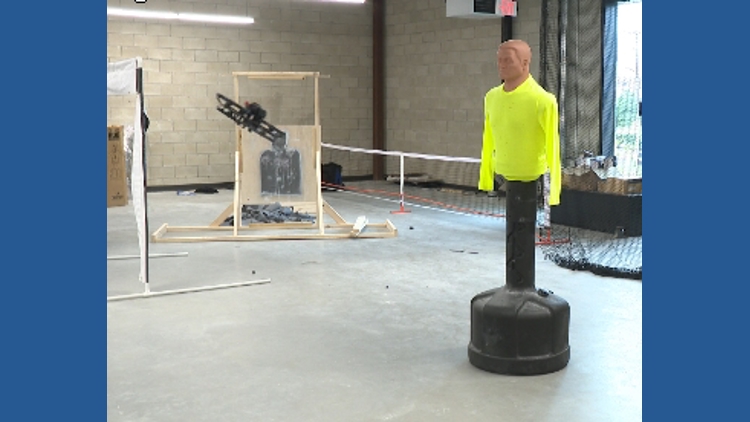
Three schools in Florida are set to trial innovative non-lethal drones, designed to thwart active shooters while streaming live audio and video to law enforcement during emergencies.
VOLUSIA COUNTY, Fla. — Florida is pioneering an unprecedented pilot program aimed at transforming the way schools handle active shooter situations.
The initiative hinges on drone technology remotely controlled from Texas, capable of intervening within seconds during a school shooting incident. The Florida Department of Education has confirmed the signing of a contract with Campus Guardian Angel. In the upcoming 60 days, these drones will be deployed at three schools participating in the program.
“This approach is unlike anything done before,” stated Justin Marston from Campus Guardian Angel. “From Austin, we can reach any school in Florida in five seconds, engage a shooter in 15 seconds, and neutralize or incapacitate them in 60 seconds.”
Marston and Bill King, co-founders of Campus Guardian Angel, lead the company awarded the contract. From their Austin, Texas command center, King demonstrated how the drones will be operated remotely, with a singular objective: preventing school shootings.
“We have recruited four of the top 10 racing drone pilots to our team,” King mentioned. “The operations will be controlled by individuals with hostage rescue expertise, former SWAT, and SOF operators. Their experience in high-stakes situations and proficiency in target identification is crucial. When on duty, they remain logged into the system, ready to respond instantly to any alerts.”
According to Education Week, a nonprofit news organization, 147 people have been killed and 420 injured in school shootings since 2018.
Florida, home to one of the deadliest school shootings in U.S. history, is the first state to publicly fund a pilot program testing this technology, awarding the company a $557,000 contract.
“Gun violence is a problem that affects every parent, it worries every parent,” Marston said. “The vast majority of kids by the time they get through high school now, have been through a school shooting alert that they thought was real.”
Seventeen lives were taken at Marjory Stoneman Douglas High School in Parkland in less than four minutes on Valentine’s Day in 2018. Experts say the first 10 minutes of a school shooting are often the most deadly, and stopping the threat quickly is exactly what these drones are designed to do.
“How do you build something that’s instantaneous, elite, affordable, and, you know, everywhere. And the only way that we could think of doing that is using this type of drone techniques,” Marston said. “If you could centralize the talent and then put robots at the edge that are disposable, then it completely changes the game.”
Broward, Leon and Volusia County Schools are the three districts participating in the pilot program. Each district will have the drones installed at one school.
“The concept is to see how it works, test it, see if we can break it, pros, cons, determine what the best way to implement it is and how we can best keep our students safe,” Captain Todd Smith, Volusia Schools Director of Safety and Security, said.
We met Captain Smith during a reunification drill at Port Orange High School, as the district prepared for a worst-case scenario.
“This is cutting-edge technology. It’s amazing. So the ability to have these drones inside the school, they don’t just deploy,” Smith said. “It’s only when there’s that level of a threat that they actually go out and do their job, and it’s really putting us at the forefront of technology.”
He says the drones will be stored in secure boxes placed strategically across campus.
“These drones are made in America. They’re not going to be hacked into. It is safe and we’re not doing any kind of surveillance on our students. That’s not the principle behind this. The principle is to keep our kids safe,” Smith said.
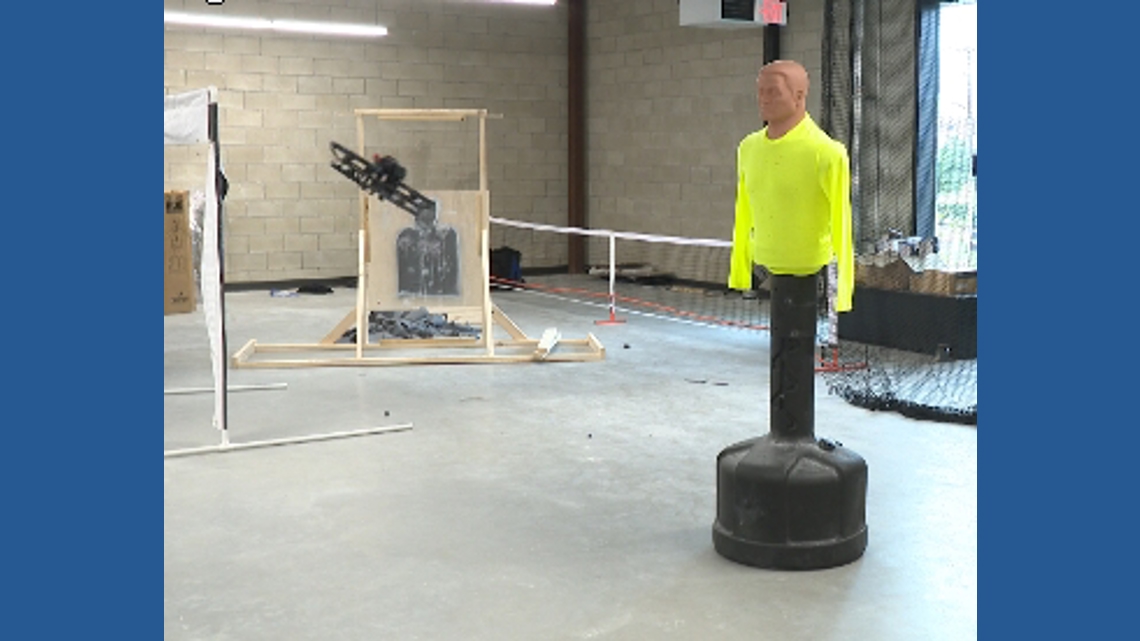
The drones provide real-time audio and video to police. While non-lethal, they are designed to overwhelm and stop an attacker.
“Think strobes. Think sirens,” King said. “We’re shooting paintballs that have pepper spray in them, and then the drone itself can be used as an effect by hitting the assailant at speed.”
The drones can even break through glass to enter a classroom if a door is locked.
“We have speaker phones on the drone so we can tell the person to surrender and drop the gun,” Marston said. “Then the next step after that is we can use pepper spray and so our goal is to make it hard for that person to see and breathe, so they can’t effectively target kids.”
If the pilot program proves successful, Florida could become a model for bringing this technology to schools nationwide.
“It’s all layers of protection. There’s not one thing that can protect every single kid on this campus. It’s all of the layers of protection that we have in place,” Smith said. “And as this technology grows and it gets better, I think that it will be an integral part in the long run. This is the future.”
The state contract with Campus Guardian Angel is slated to end June 30, 2026. The program will be fully integrated with the Alyssa Alert platform, the mobile panic alert system required in Florida schools.
The three school districts involved will select the participating schools, and the results of the pilot program will help determine whether the technology is expanded statewide.