Share this @internewscast.com

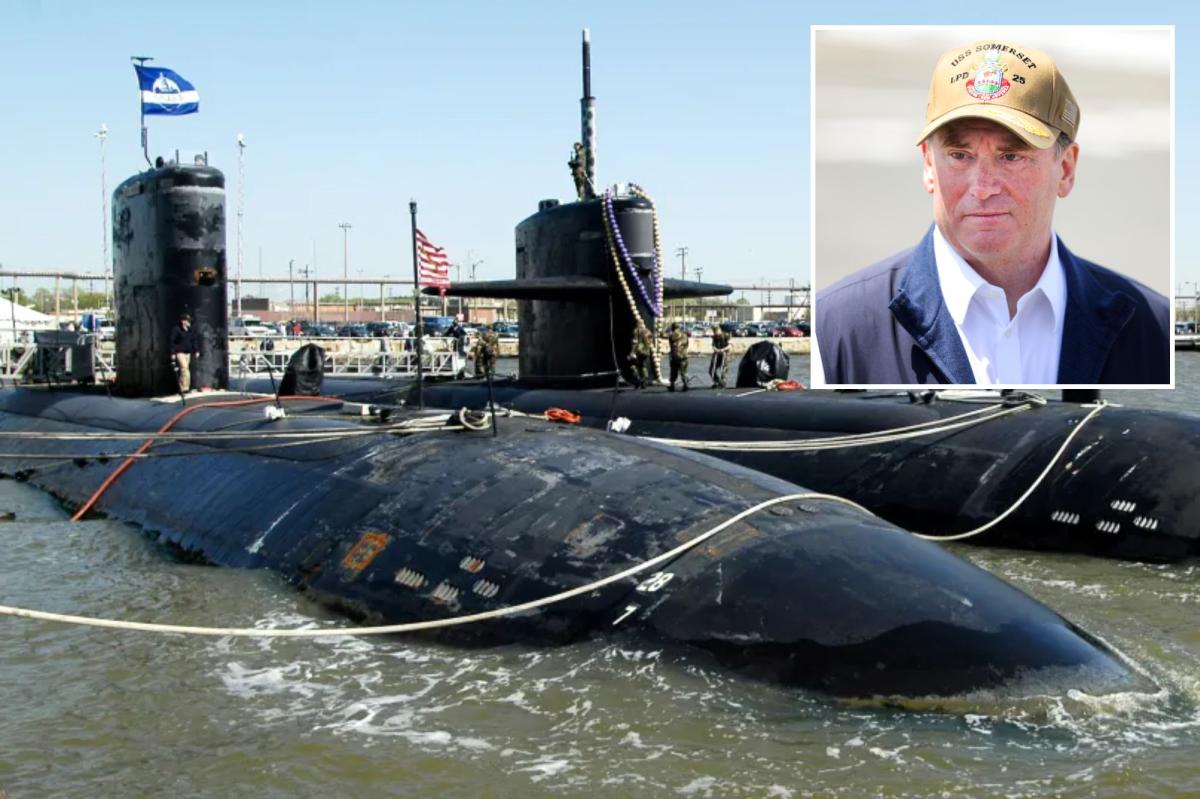
The U.S. Navy has decided to cancel the extensive and postponed refurbishment of the USS Boise, after the project’s costs soared to an almost $3 billion price tag. Navy Secretary John Phelan explained that continuing with the repairs no longer made sense financially or strategically.
To date, around $800 million has been spent on the Los Angeles-class attack submarine, and it was projected to need an additional $1.9 billion to finish—despite having only about 20% of its service life remaining. In an interview with Fox News Digital, Phelan stated that the Navy will instead allocate funds and skilled labor to the construction and delivery of newer Virginia- and Columbia-class submarines, aligning with a larger initiative to expedite ship production and reform problematic acquisition programs.
“At a certain point, it’s best to stop the losses and move forward,” Phelan remarked.
Initially, a contract valued at approximately $1.2 billion was awarded in 2024 under the Biden administration to refurbish the submarine, nearly ten years after initial repair plans were made. However, subsequent assessments revealed that the total cost to complete the overhaul had escalated well beyond the original estimates.
“The Boise has been idle at the pier since 2015, with nearly $800 million already spent, yet it’s only 22% complete—financially, it just doesn’t add up,” Phelan elaborated.
This decision arises as the Navy grapples with increasing pressure to grow and sustain its fleet amid escalating competition with China, which now possesses the largest navy in the world by ship count. U.S. officials have been stressing the importance of accelerating shipbuilding and submarine production to meet the demands of the evolving global landscape.
Boise’s problems long predate the canceled contract.
The submarine last deployed in 2015 and was slated to begin a routine overhaul the following year, but delays at Navy shipyards left it waiting years for an available dry dock.
As maintenance was pushed back, the situation worsened. The submarine lost its full operational certification in 2016 and its ability to dive in 2017, effectively sidelining it from combat operations.
Despite being a frontline attack submarine, Boise remained tied up at port for years as the Navy struggled with a growing backlog of repairs across its fleet, driven by limited dry dock space, workforce shortages and competing maintenance priorities.
The overhaul originally was planned to begin in 2016 but was repeatedly delayed for nearly a decade before the Navy finally awarded a contract in 2024 — by which point the submarine had already spent years out of service.
Even after work began, the timeline stretched further, with repairs not expected to be completed until 2029 — meaning the submarine would have spent roughly 15 years inactive by the time it returned to sea.
Over time, Boise became one of the clearest examples of the Navy’s broader maintenance and shipyard challenges, frequently cited by lawmakers and defense analysts as a case study in delays, rising costs and declining readiness.
Phelan said a key factor in the decision was freeing up scarce shipyard labor and engineering talent currently tied up in the Boise overhaul, which he said could be better used to accelerate construction of newer submarines.
“One of our big constraints in our shipyards, particularly in submarine building, is labor and engineering talent,” Phelan said. “We have a lot of that dedicated to this, which we could free up and put onto the Virginia-class submarine or Columbia and try to shift the schedule left on those.”
He argued the overhaul no longer made sense from a return-on-investment perspective, comparing the cost of repairing the aging submarine to building a new one.
“The Boise represents 65% of the cost of a new Virginia-class submarine, yet it only delivers 20% of the remaining service life,” Phelan said, adding that equates to roughly three deployments.
Follow The Post’s live coverage of President Trump and national politics for the latest news and analysis
The Boise, commissioned in 1992, is a Cold War-era attack submarine designed primarily for open-ocean combat, while newer Virginia-class submarines are quieter, more versatile and better suited for modern missions, including intelligence gathering, special operations and operating in contested coastal environments.
“Is it time we just simply pull the plug on that one?” Sen. Mike Rounds, R-N.D., asked during a confirmation hearing in June 2025.
Chief of Naval Operations Adm. Daryl Caudle called the situation “an unacceptable story” and “like a dagger in the heart” for the submarine force.
No public criticism immediately surfaced after the decision was announced Friday.
Phelan described the program’s failure as the result of multiple factors over more than a decade, including engineering challenges, shifting priorities and strain on the Navy’s industrial base.
“I can’t point to one thing that killed it,” he said. “I think it was a combination … the complexity of the engineering, COVID impacts, and pressure on the industrial base.”
The cancellation is part of a broader effort by Navy leadership to reevaluate underperforming programs and change how the service approaches acquisitions, Phelan said.
“We’re reviewing every program,” he said, adding the Navy is pushing for “radical transparency” and a shift away from what he described as a culture of accepting delays and rising costs.
Phelan said the decision reflects a broader push to prioritize speed and efficiency in delivering war-fighting capability to the fleet.
“We need to be more disciplined and move out faster,” he said. “The president wants things yesterday.”