
Share this @internewscast.com
Students from a British private school are among nearly 200 young people who have suffered a significant bout of food poisoning at a ski resort in France.
According to local reports, at least 197 children at the UCPA residence in Plagne 1800, located in the Savoie region, were struck by gastroenteritis on Tuesday.
French media have reported that among the affected group is a cohort of students attending a private co-educational school.
Details remain unclear about the number of British students impacted and the severity of their conditions.
This troubling outbreak, described by some as ‘apocalyptic,’ also affected students from Canada, France, and Belgium.
In addition to the students, at least five teachers and several staff members are reportedly experiencing symptoms such as vomiting and diarrhea.
Those who have fallen ill are being treated in the centre, with some youngsters placed on IV drips as authorities turned the hotel into a makeshift hospital ward.
There are currently 409 children and 30 accompanying adults staying at the centre, which hosts summer camps and school ski trips.

Students from a British private school are among nearly two hundred youngsters hit by ‘severe’ food poisoning at a French ski resort. Pictured: Children with facemasks sit in a hallway inside the holiday centre where scores of students have fallen in

Those who have fallen ill are being treated in the centre. Pictured: A child with a face mask
Firefighters were mobilised to the scene this morning to assist with the evacuation, while several doctors were also dispatched.
Mayor Jean-Luc Boch confirmed that the incident appeared to be a ‘severe case of gastroenteritis spreading among the children,’ adding that authorities were awaiting advice from the Regional Health Authority.
‘We’ll have to make a decision, and we want to avoid a lockdown and the building’s closure,’ he said.
According to several witnesses, these cases of gastroenteritis are not the first in the UCPA establishment in La Plagne 1800.
The head of sports at a French high school, known only as Steeve, said this was not the first time his students had fallen ill at the holiday centre.
Speaking to local news outlet Le Dauphine, he said: ‘Back in January, when we came, fifteen kids got sick during their stay. And now it’s happening again. We’re so frustrated!
‘And the UCPA management is telling us it’s our fault, that we brought the disease home. But every time we come to a holiday camp, we bring our masks and disinfect every door handle because we know that being in a group carries risks.
‘We’re used to all this. Just yesterday at 4.30pm, a child vomited before even getting on the chairlift. We had to take him back to the UCPA, and there were already other kids who were sick.

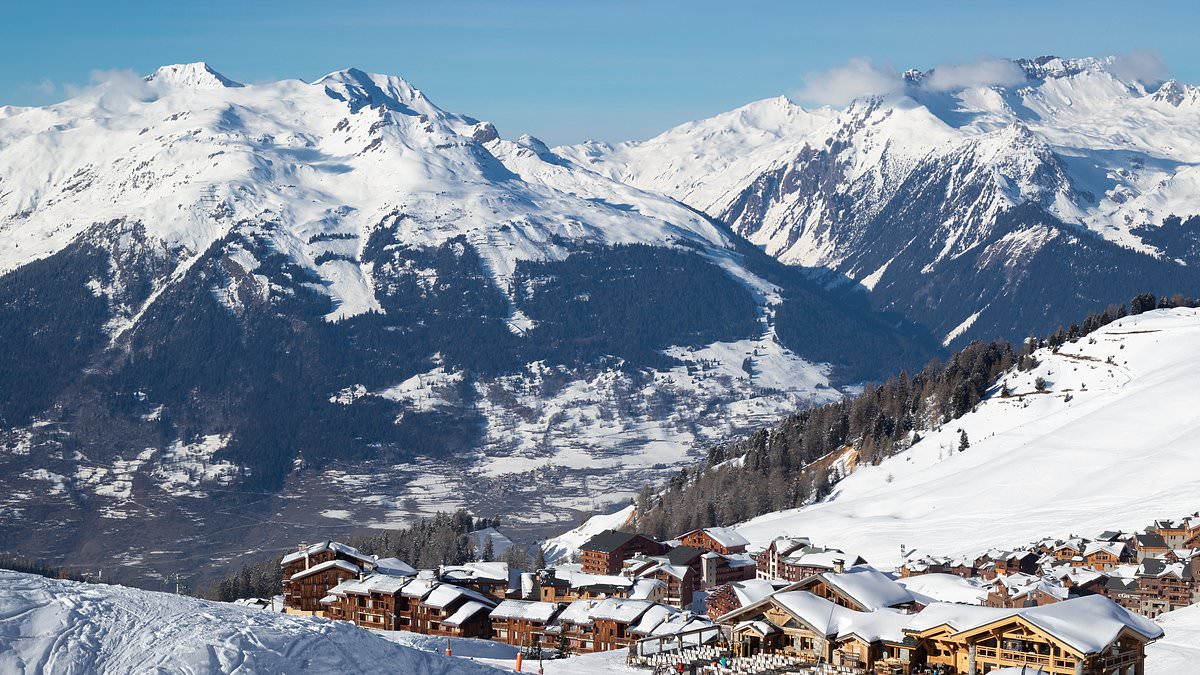
There are currently 409 children and 30 accompanying adults staying at the centre, which hosts summer camps and school ski trips in La Plagne ski resort
‘These are trips to the biggest resorts in the world that all these kids look forward to, and some of them have never even skied in their lives. Now, everything’s ruined,’ he said.
The incident in the French Alps comes after a British snowboarder died after plunging 330 feet from a rocky ledge in an off-piste area nearby.
A ski patrol at La Plagne was first alerted to the disappearance of a 43-year-old man on Saturday.
An initial investigation established that he had last been seen using the ski lifts in the Bécoin area.
Meanwhile, an alpinist in the area reported a grim discovery to mountain rescue after finding a victim off-piste.
Ski patrollers, alongside the mountain rescue team from the Modane centre, rushed to the scene.
Despite their efforts, the man in his forties did not survive. His body was evacuated by helicopter.
Authorities have opened an investigation to determine the exact cause of death.