
Share this @internewscast.com
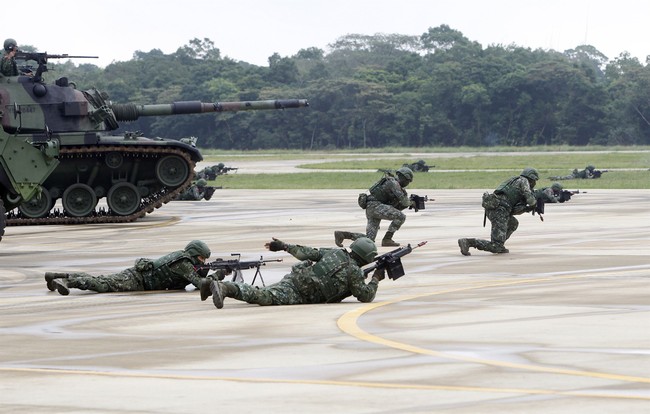
As we approach the end of the year, the Trump administration continues to solidify its support for Taiwan, challenging the narrative that it might sacrifice the island’s interests for a bargain with China. Recent developments have particularly undermined claims that President Trump is ready to leave Taiwan out in the cold in exchange for a deal with President Xi Jinping.
This week, the Pentagon unveiled its 2025 China Military Power Report, a comprehensive document that mentions Taiwan a staggering 232 times. The report highlights a significant uptick in Chinese military maneuvers around Taiwan, reflecting Beijing’s persistent ambitions to bring the island under its control.
The document is candid about China’s strategic intentions, analyzing Beijing’s declarations and omissions in key public statements over the past two years. It suggests that China is working toward gaining the capability to capture Taiwan by 2027, outlining several potential military strategies to enforce unification.
While the possibility of China resorting to military action against Taiwan in the immediate future is uncertain, the report emphasizes the importance of U.S. vigilance. It is crucial for Washington to ensure its allies are well-equipped to counter any aggressive moves from Beijing. However, the report also points out significant hurdles for the People’s Liberation Army, such as a lack of combat experience and pervasive corruption. These issues, affecting everything from recruit morale to the efficiency of the Chinese defense industry, pose substantial challenges to China’s military readiness.
In a notable move earlier this December, the Trump administration authorized an $11 billion arms deal with Taiwan, marking the largest arms sale to the island to date. This decisive action underscores the continuing U.S. commitment to bolstering Taiwan’s defense capabilities.
It maintains that Beijing aims to have the ability to take Taiwan by 2027 and outlines a number of military options to achieve forced unification.
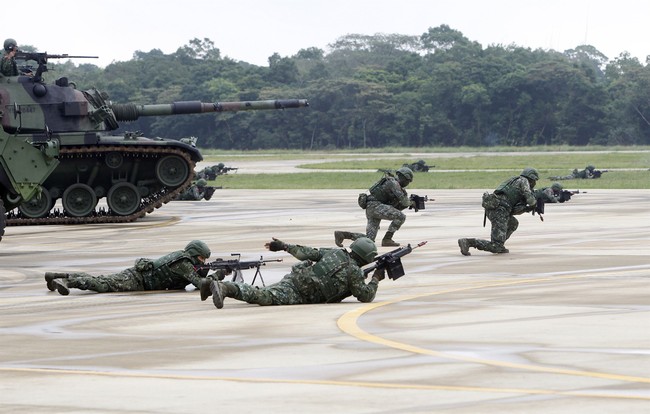
In pursuit of these goals, the PLA continues to refine multiple military options to force Taiwan unification by brute force. Those options include, most dangerously, an amphibious invasion, firepower strike, and possibly a maritime blockade. Over 2024, the PLA tested essential components of these options, including through exercises to strike sea and land targets, strike U.S. forces in the Pacific, and block access to key ports. PLA strikes could potentially range up to 1500-2000 nautical miles from China. In sufficient volume, these strikes could seriously challenge and disrupt U.S. presence in or around a conflict in the Asia-Pacific region.
Whether Beijing actually moves to take Taiwan militarily in the near future remains a question. Washington must be vigilant and ensure that its allies are armed to the teeth. But factors like the lack of combat experience and rampant corruption — which the report discusses at length, referring to how corruption impacts everything from recruits’ morale to the Chinese defense industry (with implications for military capability and preparedness) — are serious challenges that the People’s Liberation Army faces.
Earlier in December, the Trump administration approved an $11 billion arms package to Taiwan. This is the largest proposed arms sale to the self-governed island to date.
China’s Ministry of Foreign Affairs (MFA) expressed anger at the move, as expected. Beijing also sanctioned 20 U.S. defense companies and 10 executives on Friday.
Q: The U.S. has announced a package of arms sales to Taiwan worth up to US$11 billion, making it one of the largest sales. Does the Foreign Ministry have any comment on this?
A: The U.S. blatantly announced its plan to sell massive advanced weapons to China’s Taiwan region. This… pic.twitter.com/WQpP1YZFhQ
— Lin Jian 林剑 (@SpoxCHN_LinJian) December 18, 2025
The MFA claims Washington violated the “one-China” principle. The U.S. has never adhered to Beijing’s “one-China” principle, which defines Taiwan as an inalienable part of China. Instead, Washington’s “one-China” policy affirms that there is one China but does not recognize China’s claims over Taiwan as legitimate. It merely recognizes that China holds the view that it is entitled to Taiwan.
The post then references how this arms sale package violates the three China-U.S. joint communiqués. Only the third communiqué sought to address the issue of arms sales to the island. It ultimately failed to resolve the matter.
President Ronald Reagan clarified in a subsequent memo that any reduction in U.S. arms sales to Taiwan would be conditioned on the Chinese Communist Party’s commitment to peace and that the quantity and quality of arms would depend on the threat that Beijing poses.
Most importantly, the Taiwan Relations Act of 1979 legally requires Washington to supply Taiwan with “arms of a defensive nature” (we define what is and isn’t defensive).
The Taiwanese government, on the other hand, expressed gratitude for the massive arms sale package.
A number of the weapons included in Washington’s package, like drones and high-mobility artillery rocket systems (HIMARS), overlap with the items listed in Taiwan President Lai Ching-te’s supplementary defense budget — which the China-friendly opposition Kuomintang and the Taiwan People’s Party blocked from the legislative agenda multiple times — that aims to enhance Taipei’s asymmetric capabilities, oftentimes informally referred to as the porcupine strategy.
READ MORE: Taiwan Update: POTUS Reaffirms Support, Recent KMT Legislative Actions Add to Defense Budget Uncertainty
Washington, Get Ready for Taiwan’s New Opposition Leader
Taiwan had long neglected to devote an adequate share of its GDP to defense spending and to invest in low-cost, highly mobile, durable weapons. This is luckily changing.
This package is a testament to the Trump administration’s willingness to assist Taiwan in boosting such capabilities. All of the items in the arms package would markedly enhance cross-strait deterrence.
Aside from strengthening Taipei’s ability to defend itself, this package reassures our regional allies that our support remains steadfast and sends a strong signal to Beijing that our position on Taiwan’s security has not shifted in its favor.
It remains to be seen what Taipei will decide to purchase, whether this sale goes through, and how Taiwan’s 2026 defense budget will shape up amid a deepening constitutional crisis on the island, caused by the opposition’s legislative maneuvers and obstruction that have paralyzed the constitutional court.
Our weapons shipment backlog to Taiwan, which currently sits at $21.54 billion, also deserves more attention. Taiwan’s decision to increase military spending is one thing; our capacity to deliver what Taiwan has purchased is another.
The administration identified the backlog early on as a major issue. Both the Trump administration and Congress have been working to address this.
The Senate recently passed the PORCUPINE Act, which aims to expedite arms sales and transfers to the island. Under this legislation, Taiwan would receive the same treatment as our NATO allies, cutting some congressional and licensing constraints.
Our strained defense industry is another contributing factor. Prioritizing co-production of certain weapons in Taiwan would take the pressure off our defense industrial base immensely. Taiwanese National Chung-Shan Institute of Science and Technology and American Anduril Industries signed a co-production deal this year.
The 2026 National Defense Authorization Act (NDAA) — signed into law last week, which also includes $1 billion for the Taiwan Security Cooperation Initiative and backs Taiwan’s membership in the International Monetary Fund — calls on the Pentagon to establish a drone program with Taiwan, with a focus on co-development and co-production. Hopefully, the administration sets aside its concerns about this provision and establishes a joint program.
In addition to preparing for kinetic war, it is imperative that Washington work with Taipei to counter Beijing’s gray-zone operations. The Chinese government will continue its assault on Taiwan below the threshold of armed conflict, as this approach is less costly.
Editor’s Note: Do you enjoy RedState’s conservative reporting that takes on the radical left and woke media? Support our work so that we can continue to bring you the truth.