
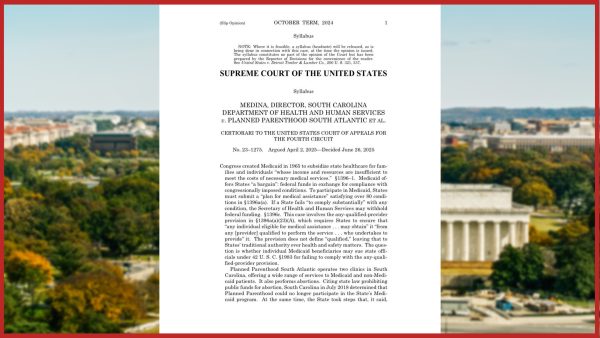
On June 26, 2025, the U.S. Supreme Court ruled 6-3 that states can block Planned Parenthood from receiving Medicaid funds for services like contraception and cancer screenings, shielding taxpayers from indirectly supporting the nation’s largest abortion provider.
The South Carolina case decision prevents patients from suing to enforce provider choice, affirming state control over public funds.
The decision bolsters continuing efforts in South Carolina and other regions to emphasize financial prudence in healthcare spending, while also supporting religious groups against abortion by ensuring public funds align with their beliefs.
South Carolina’s Stand Against Public Funding
In 2018, Governor Henry McMaster of South Carolina issued an executive order to stop Medicaid payments to Planned Parenthood South Atlantic, which runs clinics in Charleston and Columbia.
These clinics received $90,000 each year from Medicaid for services not related to abortion, which represents a small fraction of the state’s Medicaid budget. Federal law already bars Medicaid from covering abortion procedures, except under certain circumstances.
McMaster argued that taxpayer money should not support an organization tied to abortion services.
A Medicaid patient, Julie Edwards, sued, citing the Medicaid Act’s provider choice provision. Lower courts initially blocked McMaster’s order, but South Carolina contended that patients cannot file such lawsuits. The Supreme Court’s majority, led by Justice Neil Gorsuch, agreed. According to the Associated Press, Gorsuch wrote:
Deciding whether to permit private enforcement poses delicate policy questions involving competing costs and benefits — decisions for elected representatives, not judges.
The ruling empowers states to allocate Medicaid funds without patient-driven lawsuits, preserving administrative oversight.
Safeguarding Taxpayer Dollars
Planned Parenthood’s South Carolina clinics serve a small fraction of Medicaid patients—3.5%—for services unrelated to abortion.
The organization claimed that defunding could lead to clinic closures nationwide, but South Carolina maintains that other providers can meet healthcare needs.
The state, which banned abortion after six weeks following the 2022 overturn of Roe v. Wade, prioritizes directing public funds to providers unaffiliated with abortion services.
The American Cancer Society and other groups argued in court filings that lawsuits are critical for Medicaid patients to enforce provider choice.
However, the ruling clarifies that administrative processes, not courts, are the appropriate venue for resolving funding disputes, reducing the burden on taxpayers to fund litigation.
Dissent and State Sovereignty
The court’s liberal justices, led by Justice Ketanji Brown Jackson, dissented, arguing the ruling limits patient choice. The majority, however, prioritized state authority over federal mandates.
The Guardian reported that other Republican-led states may adopt similar measures, further restricting Planned Parenthood’s access to public funds.
South Carolina’s non-expanded Medicaid program limits reimbursements, reinforcing the state’s stance that taxpayer money should not subsidize organizations linked to abortion.
Mark Lynch’s Senate Bid in South Carolina
The ruling coincides with South Carolina’s U.S. Senate race, where Mark Lynch, a businessman, is running for office. Lynch, a pro-life advocate, argues that public funds must not support providers linked to abortion services, a stance echoed by Catholic leaders.
Bishop Daniel E. Thomas of Toledo, chairman of the U.S. Conference of Catholic Bishops’ Committee on Pro-Life Activities, stated:
South Carolina was right to deny Planned Parenthood taxpayer dollars. A group dedicated to ending children’s lives deserves no public support.
Lynch also emphasizes cutting wasteful spending to strengthen fiscal oversight, resonating with Catholic voters and pro-life advocates who hailed the ruling as a step toward life-affirming healthcare funding.
This SCOTUS ruling proves Republicans fund abortions with votes to fund Medicaid.
Medicaid funds abortions in the 9 states that allow partial-birth abortion.
Lindsey Graham has shed the blood of innocent babies.
No pro-life organization should support Graham based on this. pic.twitter.com/Qekg76fWrO
— Mark Lynch (@MarkLynchSC) June 26, 2025
Broader Fiscal Implications
The Supreme Court’s decision strengthens state control over Medicaid budgets, a key concern for taxpayers opposed to funding Planned Parenthood’s operations.
Furthermore, the ruling supports South Carolina’s 2018 executive order and aligns with a Republican-backed federal budget bill, endorsed by President Donald Trump, to eliminate Planned Parenthood Medicaid funding nationwide.
As a result, this could redirect significant public funds to other healthcare providers. Moreover, the decision reinforces states’ rights to exclude providers associated with abortion, thus ensuring taxpayer dollars align with local values.
In addition, Planned Parenthood vowed to seek alternative funding to maintain services in South Carolina.