Supreme Court takes up Republican attack on Voting Rights Act in case over Black representation
Share this @internewscast.com

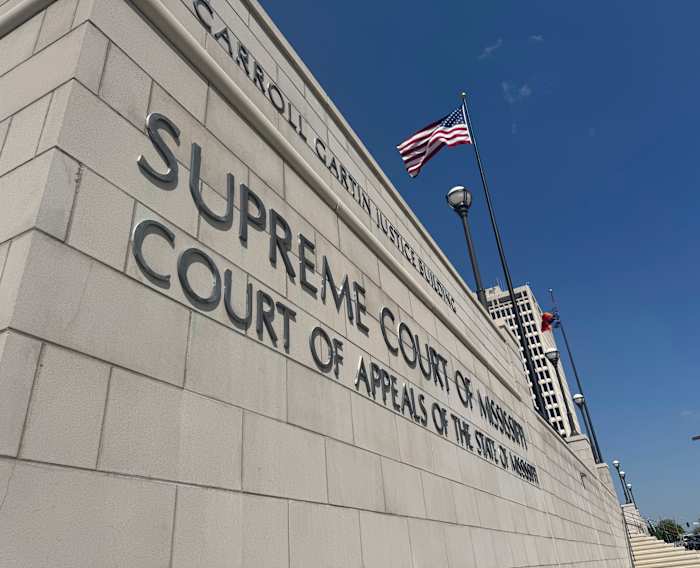
WASHINGTON (AP) — A Republican challenge to a fundamental element of the Voting Rights Act, which aims to safeguard racial minorities, is being presented to the Supreme Court this week. This comes over 10 years after the court dismantled another key component of the 60-year-old legislation.

In Wednesday’s arguments, attorneys representing Louisiana and the Trump administration will attempt to convince the justices to eliminate the state’s second majority Black congressional district, making it significantly more difficult, if not unfeasible, to incorporate racial considerations in redistricting.

“Race-based redistricting is fundamentally contrary to our Constitution,” Louisiana Attorney General Elizabeth Murrill stated in the brief submitted to the Supreme Court.

A nationwide conflict over congressional redistricting is already unfolding, encouraged by President Donald Trump’s urging for Texas and other Republican-majority states to revise their maps to help the GOP maintain its slender control of the House of Representatives. A favorable decision for Louisiana could escalate these efforts and impact state legislative and local districts as well.

The predominantly conservative court, which just two years ago abolished affirmative action in college admissions, might be amenable to these arguments. Chief Justice John Roberts, a pivotal figure in this legal battle, has been scrutinizing the landmark civil rights law since his early days as a lawyer in the Reagan-era Justice Department and continues to do so in his current role.

“It is a sordid business, this divvying us up by race,” Roberts expressed in a dissenting opinion in 2006, during his initial major voting rights case as chief justice.

In 2013, Roberts wrote for the majority in gutting the landmark law’s requirement that states and local governments with a history of discrimination, mostly in the South, get approval before making any election-related changes.

“Our country has changed, and while any racial discrimination in voting is too much, Congress must ensure that the legislation it passes to remedy that problem speaks to current conditions,” Roberts wrote.

The challenged provision relies on current conditions

Challenges under the provision known as Section 2 of the voting rights law must be able to show current racially polarized voting and an inability of minority populations to elect candidates of their choosing, among other factors.

“Race is still very much a factor in current voting patterns in the state of Louisiana. It’s true in many places in the country,” said Sarah Brannon, deputy director of the American Civil Liberties Union’s Voting Rights Project.

The Louisiana case got to this point only after Black voters and civil rights groups sued and won lower court rulings striking down the first congressional map drawn by the state’s GOP-controlled Legislature after the 2020 census. That map created just one Black majority district among six House seats in a state that is one-third Black.

Louisiana appealed to the Supreme Court but eventually added a second majority Black district after the justices’ 5-4 ruling in 2023 that found a likely violation of the Voting Rights Act in a similar case over Alabama’s congressional map.

Roberts and Justice Brett Kavanaugh joined their three more liberal colleagues in the Alabama outcome. Roberts rejected what he described as “Alabama’s attempt to remake our section 2 jurisprudence anew.”

That might have settled things, but a group of white voters complained that race, not politics, was the predominant factor driving the new Louisiana map. A three-judge court agreed, leading to the current high court case.

Instead of deciding the case in June, the justices asked the parties to answer a potentially big question: “Whether the state’s intentional creation of a second majority-minority congressional district violates the Fourteenth or Fifteenth Amendments to the U. S. Constitution.”

Those amendments, adopted in the aftermath of the Civil War, were intended to bring about political equality for Black Americans and gave Congress the authority to take all necessary steps. Nearly a century later, Congress passed the Voting Rights Act of 1965, called the crown jewel of the civil rights era, to finally put an end to persistent efforts to prevent Black people from voting in the former states of the Confederacy.

A second round of arguments is rare at the Supreme Court

The call for new arguments sometimes presages a major change by the high court. The Citizens United decision in 2010 that led to dramatic increases in independent spending in U.S. elections came after it was argued a second time.

“It does feel to me a little bit like Citizens United in that, if you recall the way Citizens United unfolded, it was initially a narrow First Amendment challenge,” said Donald Verrilli, who served as the Obama administration’s top Supreme Court lawyer and defended the voting rights law in the 2013 case.

Among the possible outcomes in the Louisiana case, Verrilli said, is one in which a majority holds that the need for courts to step into redistricting cases, absent intentional discrimination, has essentially expired. Kavanaugh raised the issue briefly two years ago.

The Supreme Court has separately washed its hands of partisan gerrymandering claims, in a 2019 opinion that also was written by Roberts. Restricting or eliminating most claims of racial discrimination in federal courts would give state legislatures wide latitude to draw districts, subject only to state constitutional limits.

A shift of just one vote from the Alabama case would flip the outcome.

With the call for new arguments, Louisiana changed its position and is no longer defending its map.

The Trump administration joined on Louisiana’s side. The Justice Department had previously defended the voting rights law under administrations of both major political parties.

Rep. Cleo Fields has been here before

For four years in the 1990s, Louisiana had a second Black majority district until courts struck it down because it relied too heavily on race. Fields, then a rising star in the state’s Democratic politics, twice won election. He didn’t run again when a new map was put in place and reverted to just one majority Black district in the state.

Fields is one of the two Black Democrats who won election to Congress last year in newly drawn districts in Alabama and Louisiana.

He again represents the challenged district, described in March by Roberts as “a snake that runs from one end of the state to the other,” picking up Black residents along the way.

If that’s so, civil rights lawyer Stuart Naifeh told Roberts, it’s because of slavery, Jim Crow laws and the persistent lack of economic opportunity for Black Louisianans.

Fields said the court’s earlier ruling that eliminated federal review of potentially discriminatory voting laws has left few options to protect racial minorities, making the preservation of Section 2 all the more important.

They would never win election to Congress, he said, “but for the Voting Rights Act and but for creating majority minority districts.”

___

Associated Press writer Gary Fields contributed to this report.

___

Follow the AP’s coverage of the U.S. Supreme Court at

Share this @internewscast.com
You May Also Like
Chicago nonprofit Concrete Rose 773 hosts girls flag football camp at Pullman Community Center

Empowering Girls: Chicago’s Concrete Rose 773 Launches Flag Football Camp at Pullman Center

CHICAGO (WLS) — A flag football camp in Chicago is dedicated exclusively…
French actress Brigitte Bardot dead at 91

Legendary French Icon Brigitte Bardot Passes Away at 91: A Tribute to Her Legacy

Iconic French actress Brigitte Bardot, who captivated audiences with her alluring style…
Knicks survive near meltdown vs. Hawks, 128-125

Knicks Triumph Over Hawks in Tense 128-125 Victory

Karl-Anthony Towns is hitting his stride, and the New York Knicks’ young…
3 injured in fight turned shooting at Jacksonville Westside bar, officers said

Three Injured in Jacksonville Westside Bar Shooting Incident, Police Report

In the early hours of Sunday morning, a restaurant on Jacksonville’s Westside…
Africa’s Christian Crisis: How 2025’s deadly attacks finally drew global attention after Trump’s intervention

Global Attention on Africa’s Christian Crisis: 2025 Attacks Highlighted Following Trump’s Involvement

JOHANNESBURG: Across sub-Saharan Africa, millions of Christians are facing a perilous Christmas…
Italian authorities arrest 9 people who allegedly used charities to funnel more than $8m to Hamas

Italian Authorities Detain Nine Suspects in Alleged $8 Million Charity Funds Diversion to Hamas

In a significant crackdown, Italian authorities have detained nine individuals associated with…
TSA's union distractions thwart air safety — so Trump is stepping in

Trump Intervenes as TSA Union Issues Raise Concerns Over Air Safety

This holiday season, approximately 18 million Americans are relying on the Transportation…
UK flag clash as foreign banners fly, citizens push back against woke policies reshaping Britain

UK Flag Controversy: Citizens Challenge ‘Woke’ Policies Amid Rising Foreign Banner Displays

LONDON: In the United Kingdom’s landscape of 2025, a contentious debate over…
California: Gas Line Explosion Shuts Down 5 Freeway Near Castaic

Gas Line Explosion Forces Closure of 5 Freeway Near Castaic, California: Traffic Disrupted

In a sudden and alarming event, the Interstate 5 (I-5) Freeway near…
Russia strikes Kyiv, Ukraine, kills at least 1 person day before presidents Volodymyr Zelenskyy, Donald Trump meet in Florida

Russian Attack on Kyiv Claims Life on Eve of Zelenskyy-Trump Florida Summit

In a dramatic escalation, Russia launched a barrage of ballistic missiles and…
Head of America's 'free enterprise' college optimistic about academia despite left-wing bias: 'there is hope'

Free Enterprise College Leader Sees Bright Future for Academia Amid Left-Wing Challenges

PHOENIX — At the helm of a Michigan-based private university, grounded in…
Unsung heroes of 2025: First responders and everyday Americans who saved lives across US

Celebrating 2025’s Unsung Heroes: First Responders and Ordinary Citizens Who Became Lifesavers Across America

This year, amidst numerous disasters, it was the quiet acts of bravery…