
Share this @internewscast.com
A tragic incident has shaken the prestigious Massachusetts Institute of Technology (MIT) and its scientific community, as a globally acclaimed professor and expert in fusion energy was fatally shot in his Brookline home earlier this week.
Nuno F. Gomes Loureiro, aged 47, held the position of professor in nuclear science and engineering at MIT, where he also served as the director of the Plasma Science and Fusion Center. He was highly respected in the field of fusion-energy research, dedicated to harnessing the power of the sun within Earth-bound fusion reactors. His innovative theories and models have been instrumental in guiding significant fusion experiments both in the United States and Europe.
Loureiro suffered “apparent gunshot wounds” on Monday evening and was transported to a hospital, where he was pronounced dead the following morning, according to the Norfolk District Attorney’s Office. Authorities have launched a homicide investigation.

An undated photograph of Nuno Loureiro, an MIT professor specializing in nuclear science, engineering, and physics. (Photo by Jake Belcher for MIT)
At this time, no suspect has been identified, and the motive behind the attack remains unclear.
This tragic event in Brookline follows closely on the heels of another violent incident at Brown University, which resulted in two fatalities and nine injuries over the weekend.
While investigators in both cases, at prestigious universities less than 50 miles apart, are sharing intelligence, the special agent in charge of Boston’s FBI office, Ted Docks, said at a news briefing Tuesday that authorities don’t think they’re connected.
Originally from Portugal, Loureiro studied in his home country, in the United Kingdom and in the United States, where he researched topics including the phenomenon behind solar flares. He also focused on plasma — a super-hot form of matter found in stars and in experimental fusion reactors.
Fusion is the process that makes the sun burn and Loureiro’s work explored how that power could be bottled on Earth and controlled inside those reactors. If fusion ever becomes a real source of cheap, clean electricity, it will rely on the kind of physics he helped explain.
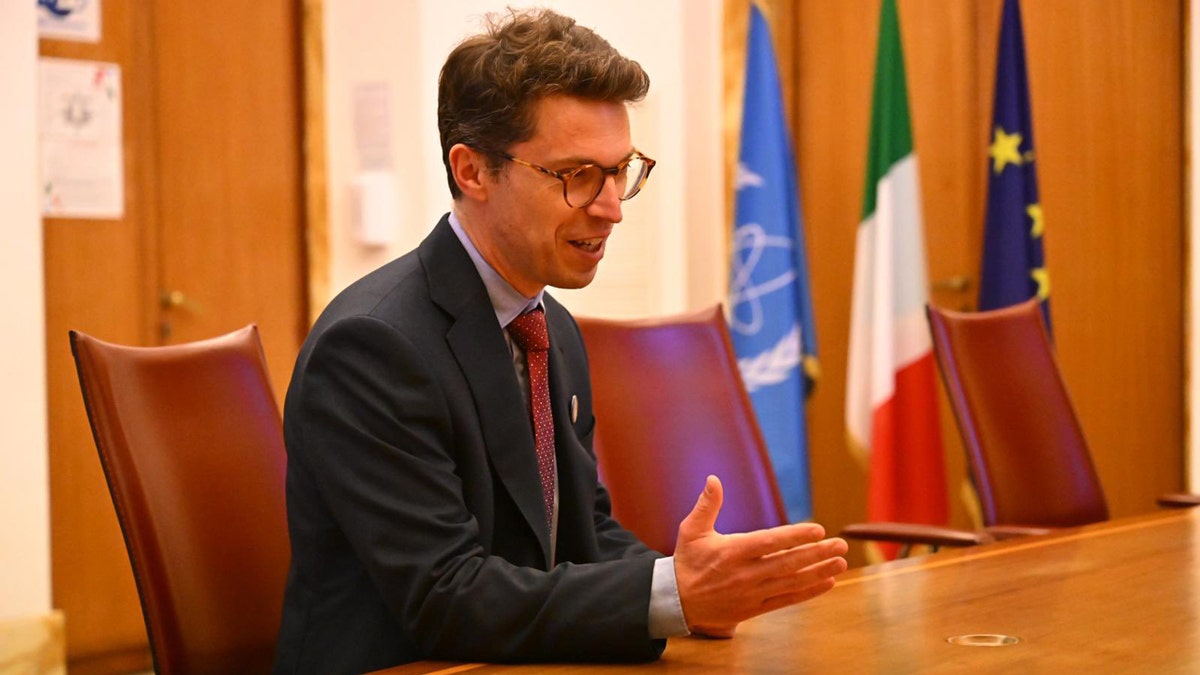
MIT Professor Nuno F.G. Loureiro speaks in an undated photo. (rafaelmgrossi via X)
“Nuno was not only a brilliant scientist, he was a brilliant person,” Dennis Whyte, a fellow MIT professor, said in an obituary posted by the university. “He shone a bright light as a mentor, friend, teacher, colleague and leader and was universally admired for his articulate, compassionate manner. His loss is immeasurable to our community at the PSFC, NSE and MIT, and around the entire fusion and plasma research world.”
Allen Taylor, a Tufts University professor of biomechanical and molecular nutrition who lives in the area, told Fox News Digital outside Loureiro’s home on Wednesday that the shooting rocked the tight-knit community, which is also home to several Brown University students, where another shooting claimed two lives over the weekend.
“I’m concerned because he was a human being, first, and secondly, because he’s a scientist, and I know how much we invest in training people so they can make major contributions to our society, and then when they’re murdered, it’s a tremendous compromise to our community and to the world at large,” Taylor said.
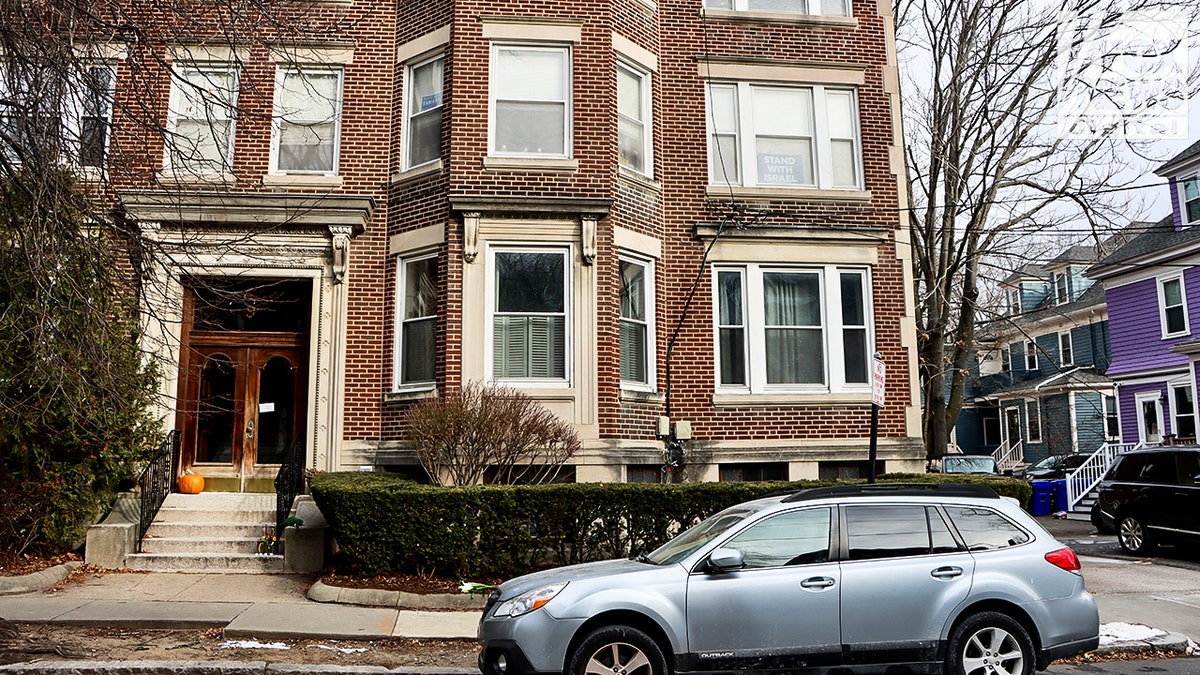
The Brookline apartment building where MIT professor Nuno F. G. Loureiro was shot earlier this week is seen Wednesday, Dec. 17, 2025, as investigators continue to search for leads in the homicide case. (Michael Dorgan/Fox News Digital)
Loureiro obtained an undergraduate degree from the Instituto Superior Tecnico in Lisbon before getting a Ph.D. in physics at Imperial College London.
He went on to do post-doctoral work at Princeton University in New Jersey and UKAEA Culham Centre for Fusion Energy in the U.K. and returned to research in Lisbon before joining MIT’s faculty in 2016. He became a full professor in 2021 and was later named the director of the school’s Plasma Science and Fusion Center.
His research has earned him a half-dozen awards since 2015, most recently honored with the U.S. government’s Presidential Early Career Award for Scientists and Engineers, which he received earlier this year.
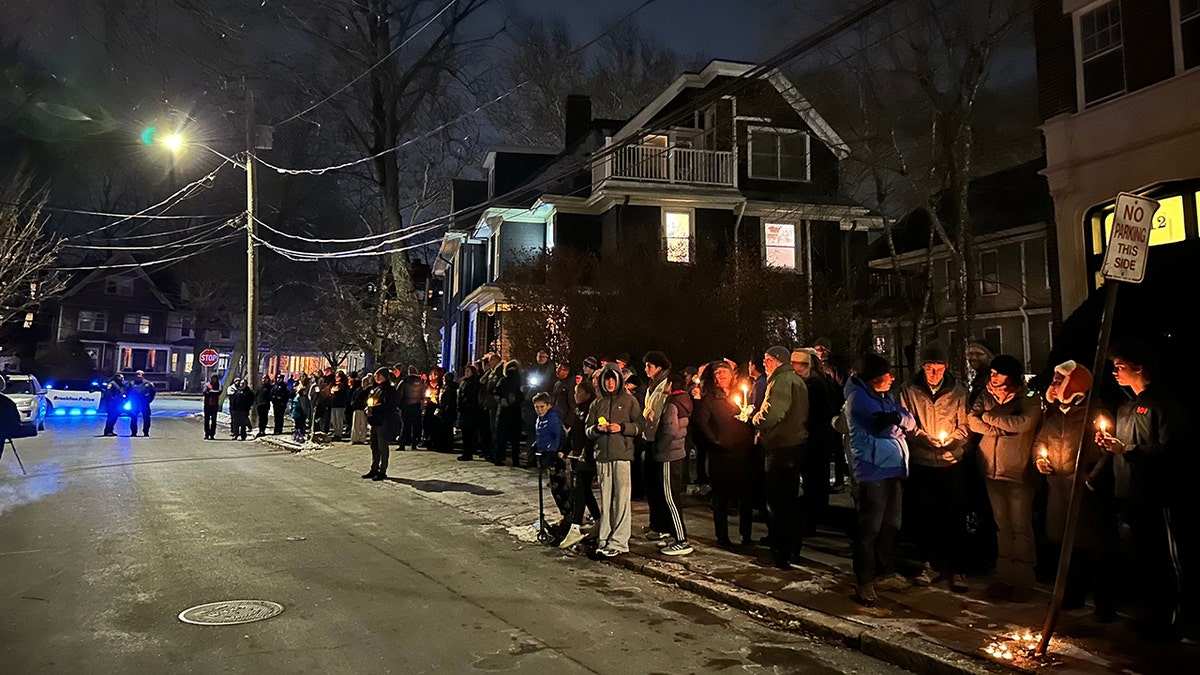
A crowd of people holding candles gather outside the home of Massachusetts Institute of Technology professor Nuno F.G. Loureiro in Brookline, Mass., Tuesday, Dec. 16, 2025. (AP Photo/Leah Willingham)
In a 2019 interview, Loureiro likened complicated science to an art form.
“When we stimulate theoretically inclined minds by framing plasma physics and fusion challenges as beautiful theoretical physics problems, we bring into the game incredibly brilliant students — people who we want to attract to fusion development,” he said.
In an earlier lecture on accepting and overcoming failure, he urged students to set their goals high and not be afraid of falling short.
“If you’re not failing all the time, you’re aiming too low,” he said.