
Share this @internewscast.com

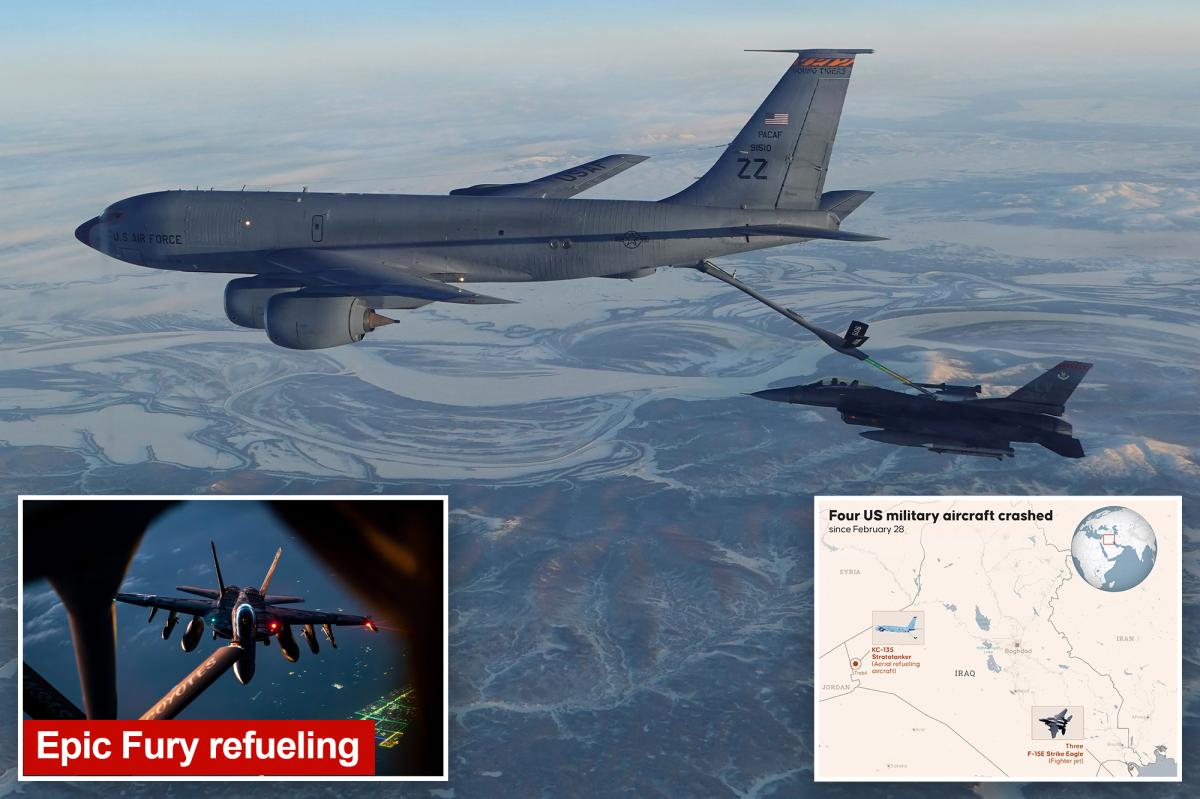
Tragedy struck in western Iraq as six crew members lost their lives following the crash of a US Air Force refueling aircraft, the KC-135 Stratotanker, on Thursday. This somber announcement was made by the US Central Command Friday morning.
The command, headquartered in Tampa, Florida, reported that the crash occurred after an undisclosed incident involving two aircraft in what was described as “friendly airspace.” Details surrounding the incident remain under investigation. However, CENTCOM emphasized that the crash was not a result of hostile or friendly fire.
While the ill-fated KC-135 met its end, a second aircraft of the same model managed to land safely in Israel. This was confirmed by Yechiel Leiter, Israel’s ambassador to the United States.
As is customary, the military has chosen to withhold the names of the fallen crew members until 24 hours after their families have received notice. At a Pentagon news conference on Friday, War Secretary Pete Hegseth paid tribute to the deceased, hailing them as heroes.
“War is hell. War is chaos,” Hegseth remarked. “And as we saw yesterday with the tragic crash of our KC-135 tanker, bad things can happen. American heroes, all of them.”
“War is hell. War is chaos,” he said. “And as we saw yesterday with the tragic crash of our KC-135 tanker, bad things can happen. American heroes, all of them.”
The Islamic Resistance in Iraq, an umbrella group of Iran-backed armed factions, initially claimed responsibility for taking down the aircraft Thursday evening.
The group said in a statement that it had shot down the military refueling tanker “in defense of our country’s sovereignty and airspace.”
The KC-135 has been in service for more than 60 years and has been involved in several fatal accidents, most recently on May 3, 2013, when a KC-135R crashed after takeoff south of Chaldovar, Kyrgyzstan, while supporting the war in Afghanistan.
In that crash, the crew experienced problems with the plane’s rudder, according to an Air Force investigation. While the crew struggled to stabilize the plane, the tail section broke away and the plane exploded midair, killing all three onboard.
The KC-135 Stratotanker is used to refuel other planes in midair, allowing them to travel longer distances and maintain operations longer without landing. The plane is also used to transport wounded personnel during medical evacuations or conduct surveillance missions, according to military experts.
Based on the same design as the Boeing 707 passenger plane, the tanker has been in service for more than 60 years, supporting the Air Force, Navy and Marine Corps as well as allied aircraft, according to an Air Force description. The aging plane is set to be gradually phased out as more of the next-generation KC-46A Pegasus tankers enter service.
Despite upgrades over the years, the age of the KC-135s has raised concerns about their reliability and durability.
Follow The Post’s coverage of the United States’ airstrikes on Iran:
According to the Congressional Research Service, the Air Force last year had 376 KC-135s, including 151 on active duty, 163 in the Air National Guard and 62 in the Air Force Reserve.
A basic KC-135 crew consists of three people: a pilot, co-pilot and boom operator. Nurses and medical technicians are added in aeromedical evacuation missions.
Refueling typically happens at the back of the plane, where the boom operator is located. A fuel boom is lowered to connect with fighters, bombers or other aircraft. On many of the planes, the boom operator works lying face down while looking out of a window on the underside of the plane.
Some KC-135s can also refuel planes from pods on their wings. The tankers have room to carry cargo or passengers if needed.
A total of 13 American service members have been killed since combat operations began Feb. 28. About 140 US forces have been wounded, eight of them severely, the Pentagon said earlier this week.
Six US Army Reserve troops were killed when Iran launched a drone strike on a US base in Kuwait on Feb. 28.
They were later identified as Maj. Jeffrey O’Brien, 45, of Indianola, Iowa; Capt. Cody Khork, 35, of Winter Haven, Fla.; Chief Warrant Officer 3 Robert Marzan, 54, of Sacramento, Calif.; Sgt. 1st Class Nicole Amor, 39, of White Bear Lake, Minn.; Sgt. 1st Class Noah Tietjens, 42, of Bellevue, Neb.; and Sgt. Declan Coady, 20, of West Des Moines, lowa, who was posthumously promoted from specialist.
A seventh service member, Sgt. Benjamin N. Pennington, of Glendale, Ky. and the Army’s elite 1st Space Brigade, succumbed to his injuries after being wounded in an Iranian retaliatory strike at the Prince Sultan Air Base in Saudi Arabia.
Operation Epic Fury entered its 14th day on Friday, with US officials promising the most intense strikes yet against the Islamic Republic.
With Post wires