
Share this @internewscast.com
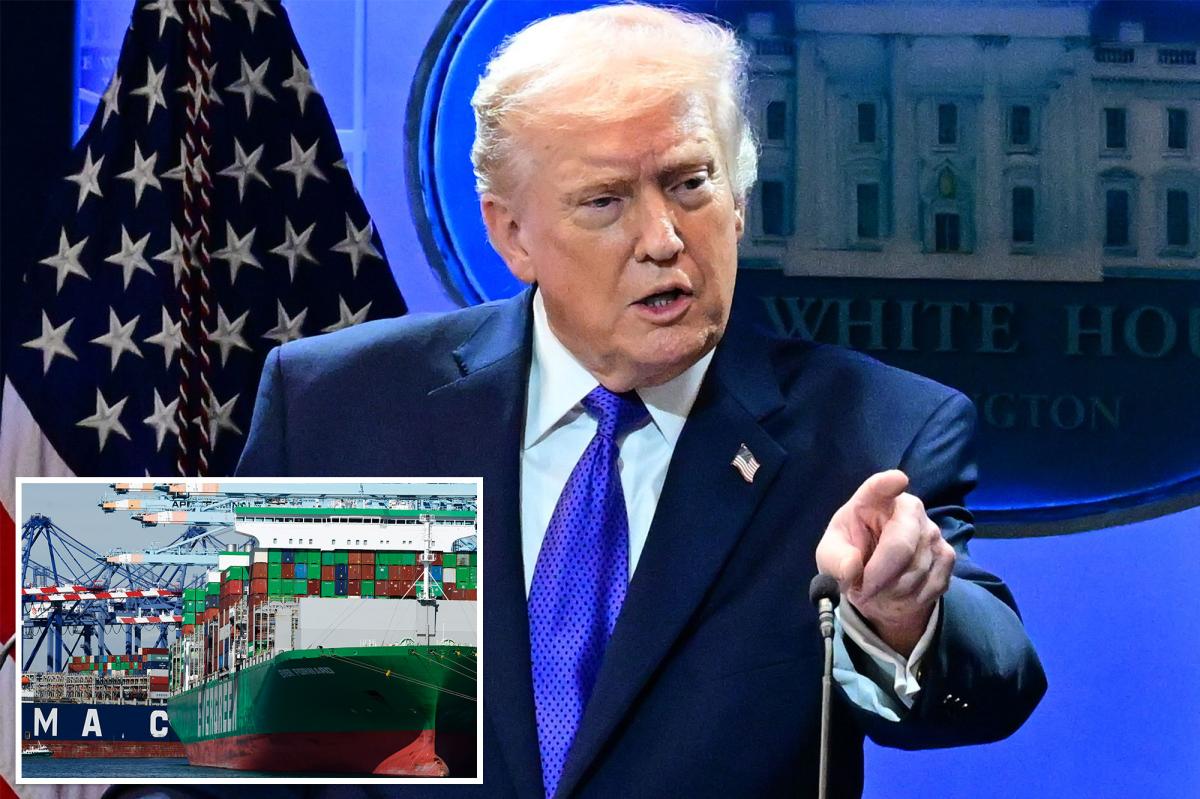
President Donald Trump announced on Saturday that he plans to elevate global tariffs to 15% following a setback in the Supreme Court.
Initially, Trump had declared a 10% global tariff during a heated press briefing, responding to the court’s decision that challenged his key tariff policies.
In a post on Truth Social, Trump stated, “Let this serve as notice that I, as President of the United States, am immediately increasing the Worldwide Tariff from 10% to the fully permissible and legally validated 15%. This change targets countries that have taken advantage of the U.S. for decades without facing consequences until my tenure.”

Trump explained the tariff hike was “based on a comprehensive review of the unreasonable, poorly crafted, and strikingly anti-American Supreme Court ruling on tariffs issued after months of deliberation.”
He further mentioned, “In the coming months, the Trump Administration will outline and implement new tariffs that are legally sound, continuing our mission to Make America Great Again – GREATER THAN EVER BEFORE!!!”
The Supreme Court, in a 6-3 decision on Friday, determined that the president overstepped his authority under the International Emergency Economic Powers Act of 1977 (IEEPA). This act allows presidents to regulate commerce during national emergencies, a power Trump used to impose tariffs aimed at correcting trade imbalances and curbing fentanyl trafficking.
Trump had previously said he was “ashamed” of three conservative Supreme Court justices who ruled against him, and now plans to rely on a different legal provision known as Section 122, under the Trade Act of 1974.
The legal avenue is fast, but it’s also temporary.
The tariffs expire after 150 days.
Here’s the latest on President Trump’s tariffs following Supreme Court ruling:
The president is “already on shaky ground,” said Andrew Hale, a trade expert at the think tank Advancing American Freedom, which is affiliated with former Vice President Mike Pence.
He said the law only applies when there are “large and serious US balance of payments deficits under a fixed rate system,” but the world “abandoned the fixed rate exchange rate system in the 1970s.”
Trump also said he would use other authorities to reimpose tariffs, but these take more time and require official investigations before taking effect.