Share this @internewscast.com
In a dramatic escalation of rhetoric, U.S. President Donald Trump has claimed that Iran is eager to negotiate with Washington. This follows his stern warning to launch a strike against the Islamic Republic, reacting to Iran’s harsh crackdown on protestors. Activists have reported that the unrest has resulted in at least 646 fatalities.
The Iranian government has yet to respond directly to Trump’s assertions. This silence comes on the heels of a visit to Iran by Oman’s foreign minister, who has historically served as a mediator between the U.S. and Iran. The potential for dialogue remains shrouded in uncertainty, especially given Trump’s firm preconditions regarding Iran’s nuclear ambitions and missile capabilities, which Tehran maintains are essential for its national security.
In Tehran, Iranian Foreign Minister Abbas Araghchi addressed foreign diplomats, declaring that the tumultuous situation is now “under total control.” He pointed fingers at Israel and the U.S., blaming them for inciting violence, though he provided no concrete evidence to support these claims.
“The protests spiraled into violence and bloodshed, offering the U.S. president a pretext to intervene,” Araghchi stated, in remarks broadcasted by Al Jazeera. Interestingly, Al Jazeera, funded by Qatar, has been able to report live from within Iran, despite widespread internet blackouts.
Despite these tensions, Araghchi indicated that Iran remains “open to diplomacy.” Esmail Baghaei, a spokesperson for the Iranian Foreign Ministry, affirmed that communication with the U.S. is still possible, but any discussions must be “based on mutual interests and concerns,” rejecting any notion of a one-sided, dictated negotiation process.
In a show of loyalty to the regime, pro-government supporters filled the streets on Monday, vocally backing Iran’s theocratic leadership. This demonstration followed a series of protests challenging the authority of Supreme Leader Ayatollah Ali Khamenei, who is 86 years old. Iranian state television broadcasted scenes of the massive crowd, reportedly in the tens of thousands, chanting slogans like “Death to America!” and “Death to Israel!”
Others cried out, “Death to the enemies of God!” Iran’s attorney general has warned that anyone taking part in protests will be considered an “enemy of God,” a death-penalty charge.
White House press secretary Karoline Leavitt said Iran’s public rhetoric diverges from the private messaging the administration has received from Tehran in recent days.
“I think the president has an interest in exploring those messages,” Leavitt said. “However, with that said, the president has shown he’s unafraid to use military options if and when he deems necessary, and nobody knows that better than Iran.”
Trump acknowledges proposal for talks
Trump and his national security team have been weighing a range of potential responses against Iran, including cyberattacks and direct strikes by the U.S. or Israel, according to two people familiar with internal White House discussions who weren’t authorized to comment publicly and spoke on condition of anonymity.
“The military is looking at it, and we’re looking at some very strong options,” Trump told reporters on Air Force One on Sunday night. Asked about Iran’s threats of retaliation, he said, “If they do that, we will hit them at levels that they’ve never been hit before.”
Meanwhile, Trump announced Monday that countries doing business with Iran will face 25% tariffs from the United States. Trump announced the tariffs in a social media posting, saying they would be “effective immediately.”
It was action against Iran for the protest crackdown from Trump, who believes exacting tariffs can be a useful tool in prodding friends and foes on the global stage to bend to his will.
Brazil, China, Russia, Turkey and the United Arab Emirates are among economies that do business with Tehran.
The White House declined to offer further comment about the president’s tariff announcement.
Trump said Sunday that his administration was in talks to set up a meeting with Tehran, but cautioned that he may have to act first as reports of the death toll in Iran mount and the government continues to arrest protesters.
“I think they’re tired of being beat up by the United States,” Trump said. “Iran wants to negotiate.”
Iran, through the country’s parliamentary speaker, warned Sunday that the U.S. military and Israel would be “legitimate targets” if Washington uses force to protect demonstrators.
More than 10,700 people also have been detained over the two weeks of protests, said the U.S.-based Human Rights Activists News Agency, which has been accurate in previous unrest in recent years and gave the latest death toll early Tuesday. It relies on supporters in Iran crosschecking information. It said 512 of the dead were protesters and 134 were security force members.
With the internet down in Iran and phone lines cut off, gauging the demonstrations from abroad has grown more difficult. The Associated Press has been unable to independently assess the toll. Iran’s government hasn’t offered overall casualty figures.
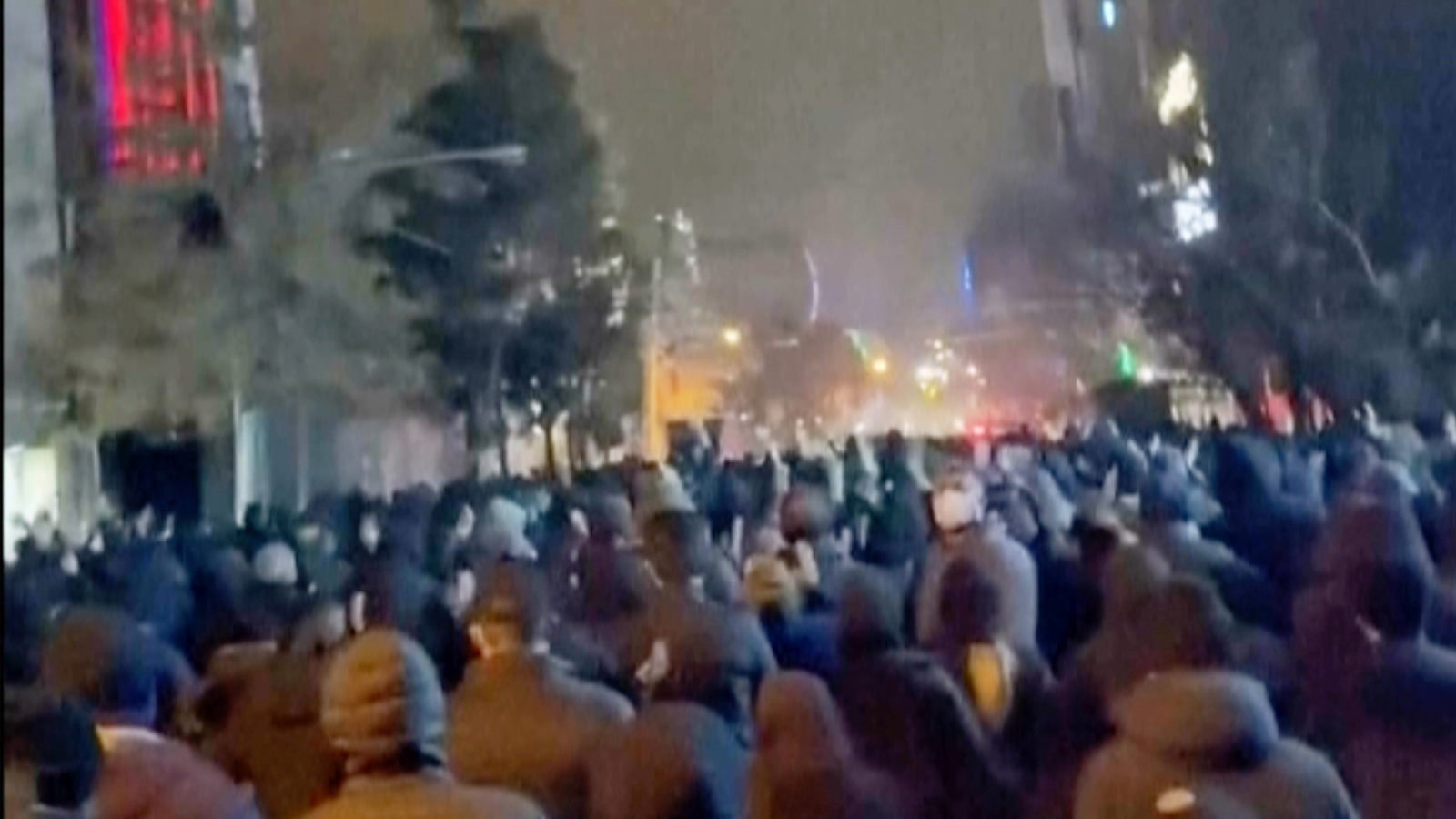
Those abroad fear the information blackout is emboldening hard-liners within Iran’s security services to launch a violent crackdown. Online videos purported to show more demonstrations Sunday night into Monday, with a Tehran official acknowledging them in state media.
At 2 p.m. Monday, Iranian state television showed images of demonstrators thronging Tehran toward Enghelab Square, or “Islamic Revolution” Square in the capital. It had been airing statements all morning from Iranian government, security and religious leaders to attend the demonstration.
It called the rally an “Iranian uprising against American-Zionist terrorism,” without addressing the underlying anger in the country over the nation’s ailing economy. State television aired images of such demonstrations around the country, trying to signal it had overcome the protests.
Fear pervades Iran’s capital
In Tehran, a witness told the AP that the streets were empty at the sunset call to prayers each night. By the Isha, or nighttime prayer, the streets are deserted.
Part of that stems from the fear of getting caught in the crackdown. Police sent the public a text message that warned: “Given the presence of terrorist groups and armed individuals in some gatherings last night and their plans to cause death, and the firm decision to not tolerate any appeasement and to deal decisively with the rioters, families are strongly advised to take care of their youth and teenagers.”
Another text, which claimed to come from the intelligence arm of the paramilitary Revolutionary Guard, also directly warned people not to take part in demonstrations.
The witness spoke on condition of anonymity due to the ongoing crackdown.
The demonstrations began Dec. 28 over the collapse of the Iranian rial currency, which trades at more than 1.4 million to $1, as iran’s economy is squeezed by international sanctions in part levied over its nuclear program. The protests intensified and grew into calls directly challenging Iran’s theocracy.
Copyright © 2026 by The Associated Press. All Rights Reserved.