
Share this @internewscast.com
Donald Trump’s presidency marked a seismic shift in U.S.-Israel relations, far surpassing the policies of any prior administration in its explicit support and acceleration of Israeli geopolitical objectives.
The term “Judeo-Accelerationism” describes a shift in U.S. foreign policy under the Trump administration, characterized by a swift and significant alignment with Israeli interests. This approach diverges from the cautious, incremental strategies of past presidents and embraces bold, impactful actions with enduring consequences.
Breaking Diplomatic Norms: Jerusalem and the Golan
One of the most symbolic actions taken by the Trump administration occurred in 2018 when the decision was made to relocate the U.S. embassy from Tel Aviv to Jerusalem. This move, tied to Israel’s 70th anniversary, disrupted longstanding international consensus and ignited significant tension in the Israeli-Palestinian conflict, as it led to violent clashes in Gaza. The relocation was a clear indication of U.S. support for Israeli claims, setting aside international legal considerations and peace negotiations.
In 2019, President Trump further solidified this stance by recognizing Israel’s sovereignty over the Golan Heights, a region annexed by Israel decades prior but never internationally recognized as such. The timing of this decision, just ahead of Israeli elections, highlighted a strategic motive to bolster then-Prime Minister Netanyahu, suggesting U.S. endorsement of territorial acquisition by force.
Dismantling the Two-State Framework
The Trump administration also shifted away from the traditional U.S. advocacy of a two-state solution. In 2019, Jared Kushner openly dismissed the term, reflecting a new approach that proposed fragmented Palestinian territories while allowing Israel to annex a significant portion of the West Bank. This proposal was promptly rejected by Palestinian leaders.
Secretary of State Mike Pompeo’s 2019 announcement that Israeli settlements were “not inherently illegal” marked a major departure from established U.S. policy and international norms. Dubbed the “Pompeo Doctrine,” this move effectively encouraged settlement expansion, recognized as a significant barrier to peace. Meanwhile, the Abraham Accords facilitated normalization of relations between Israel and several Arab states without requiring concessions for Palestinians, further diminishing hopes for a viable Palestinian state and contributing to the tensions that erupted into the October 7, 2023, Hamas attack.
Iran: The Frontline Proxy
A key component of Trump’s foreign policy was his hardline approach to Iran. Even before his presidency, Trump had insisted on halting Iran’s nuclear program “by any and all means necessary.” His administration’s withdrawal from the Joint Comprehensive Plan of Action (JCPOA) in 2018 launched a “maximum pressure” sanctions campaign aimed at crippling Iran’s economy and forcing political change. These sanctions targeted Iran’s central bank and the inner circle of Supreme Leader Ali Khamenei, showcasing a level of confrontation unprecedented in previous administrations.
The assassination of General Qassem Soleimani in 2020 by a U.S. drone strike brought relations to the precipice of war and embodied Trump’s willingness to use lethal force to defend Israeli interests. Despite warnings from military leaders like Chairman of the Joint Chiefs about the risks of full war, Trump’s administration prepared and launched strikes on Iranian nuclear facilities in 2025, heralding a new phase of regional confrontation. Although these strikes reportedly failed to fully disable Iran’s nuclear program, they signaled an irreversible commitment to an aggressive posture aligned with Israeli security priorities.
Transferring Gaza and Policing Dissent
Domestically, Trump’s policies reinforced this paradigm. His 2025 executive order to “Combat Anti-Semitism” gave authorities power to suppress pro-Palestinian activism on campuses and deport foreign students involved in such causes. This represented an unprecedented use of federal power to silence political dissent that was seen as critical of Israel.
Trump himself floated the idea of forcibly relocating Gaza’s 2 million Palestinians to Egypt and Jordan, describing the territory as a problem to be “cleaned out.” He further suggested that the U.S. might take over Gaza in the future and transform it into a lavish tourist zone—a manifest example of treating Palestinian lives and land as expendable in pursuit of Israeli priorities.
Financing and Staffing the Israel First Agenda
Behind these policies stood an infrastructure of political and financial support. Pro-Israel interests, notably Miriam Adelson’s Preserve America PAC, contributed over $215 million to Trump since 2020. This bloc softened opposition among neoconservatives and helped cement an administration that elevated figures who openly supported the most extreme elements of Israeli policy.
Ambassadors like David Friedman and Mike Huckabee championed settlement expansion and even contemplated population transfer of Palestinians — long considered a toxic fringe idea before becoming normalized under Trump. The administration’s alignment with these viewpoints institutionalized the agenda within the highest levels of U.S. government.
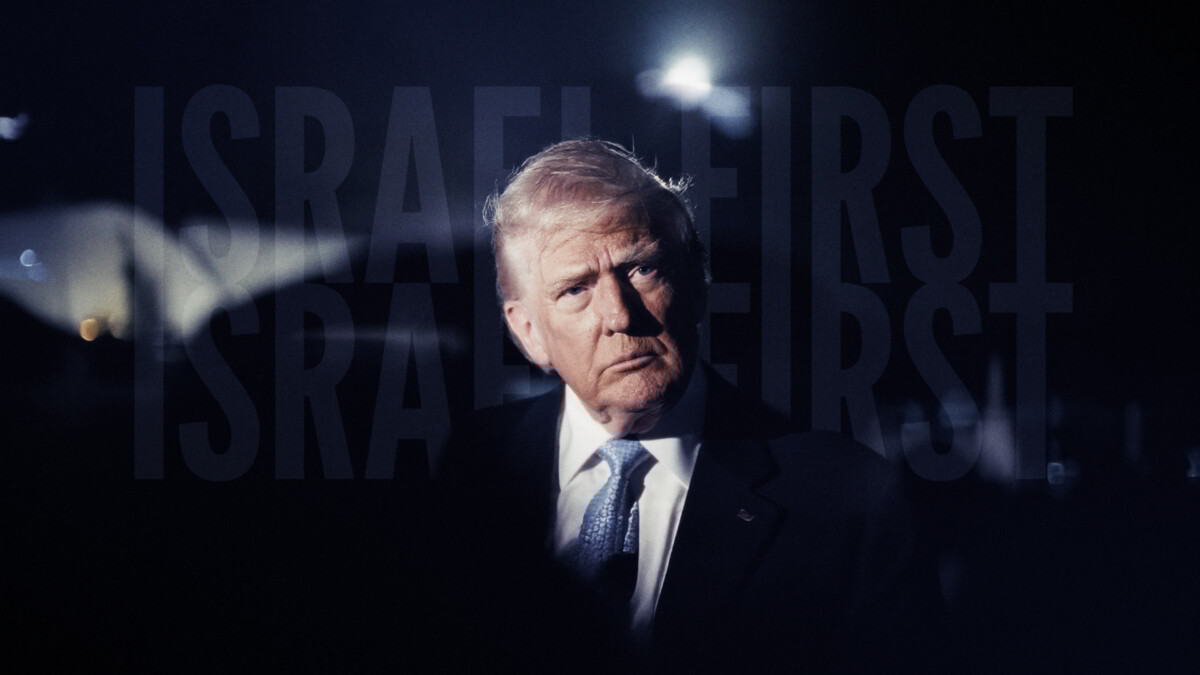
The Enduring Legacy: America Last, Israel First
What differentiates Trump’s presidency is not just individual policies but their cumulative normalization of a radical realignment. By shattering norms on Jerusalem’s status, settlements, annexation, and population displacement, Trump created irreversible facts on the ground that future leaders will find nearly impossible to undo.
This administration discarded multilateral diplomacy and international law, becoming a blunt instrument for Israeli expansionism. While earlier presidents pursued diplomacy — even with flawed results — Trump pursued dominance in service of a foreign power’s aims, often at American expense.
Despite campaigning on “America First,” his record reveals a stark inversion: American resources, soldiers, and diplomatic capital have been expended to guarantee Israel’s regional hegemony, no matter the cost to U.S. credibility, regional stability, or human life.
Trump’s “Judeo-Accelerationist” presidency marks a break from tradition with far-reaching consequences that will echo for decades, forging an uncritical U.S.-Israel alliance as a defining feature of contemporary American foreign policy.