
Share this @internewscast.com

Early Saturday, the U.S. Department of Homeland Security (DHS) was forced to shut down, significantly impacting the agency responsible for the security checks of passengers and luggage at airports nationwide. This development may have travelers recalling the 43-day government shutdown last year, which led to unprecedented flight cancellations and extensive delays.
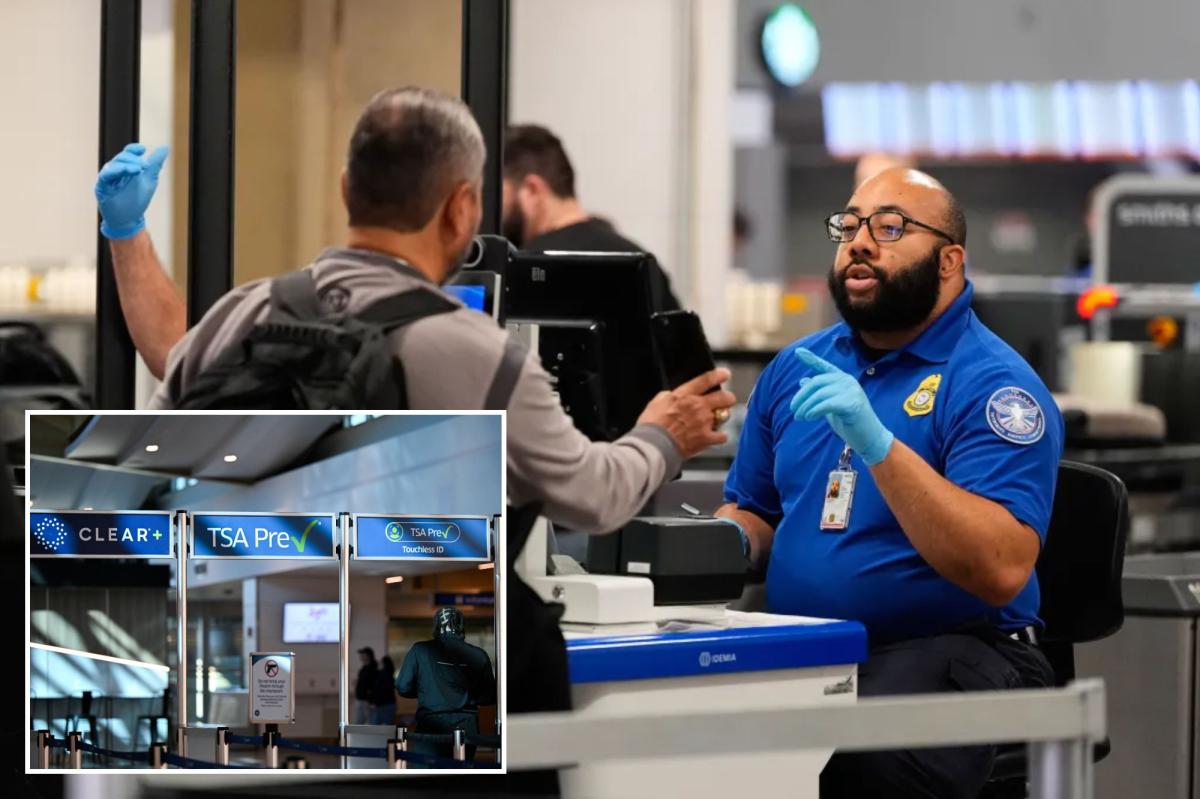
Transportation Security Administration (TSA) officers are set to continue their duties without pay, as Congress has yet to reach a consensus on the DHS’s annual budget. While TSA officers also remained on the job during the record-setting shutdown that concluded on November 12, aviation experts suggest this scenario could unfold differently this time around.
Trade organizations representing the U.S. travel sector and major airlines have cautioned that prolonged lapses in DHS funding could result in lengthier security lines at commercial airports across the country.
Here’s what you need to know about the current shutdown and tips on how to prepare for it.
What’s different about this shutdown?
Homeland Security’s funding officially expired at midnight, although other parts of the federal government are financially secure until September 30. This continuity ensures that air traffic controllers working for the Federal Aviation Administration (FAA) will continue receiving their salaries, which should minimize the risk of widespread flight cancellations.
According to DHS’s contingency plan, approximately 95% of TSA employees are classified as essential and are required to work despite the funding lapse. Lawmakers from the Democratic Party in both the House and Senate are insisting on introducing new restrictions on federal immigration operations before agreeing to fund the DHS.
During past shutdowns, disruptions to air travel tended to build over time, not overnight. About a month into last year’s shutdown, for example, TSA temporarily closed two checkpoints at Philadelphia International Airport. That same day, the government took the extraordinary step of ordering all commercial airlines to reduce their domestic flight schedules.
John Clark, arriving at Detroit Metropolitan Airport from a business trip in Mississippi, said he was impacted by that earlier shutdown and is worried.
“You might not be able to get home if you’re already out, or it might delay if you worked all week and you’re trying to get home,” said Clark, who frequently travels for his job balancing machines. “It’s really bad.”
John Rose, chief risk officer for global travel management company Altour, said strains could surface at airports more quickly this time because the TSA workforce also will be remembering the last shutdown.
“It’s still fresh in their minds and potentially their pocketbooks,” Rose said.
What is the impact on travelers?
It’s hard to predict whether, when or where security screening snags might pop up. Even a handful of unscheduled TSA absences could quickly lead to longer wait times at smaller airports, for example, if there’s just a single security checkpoint.
That’s why travelers should plan to arrive early and allow extra time to get through security.
“I tell people to do this even in good times,” Rose said.
Experts say flight delays also are a possibility even though air traffic controllers are not affected by the DHS shutdown.
Airlines might decide to delay departures in some cases to wait for passengers to clear screening, said Rich Davis, senior security adviser at risk mitigation company International SOS. Shortages of TSA officers also could slow the screening of checked luggage behind the scenes.
Burnest R. Green, who flew to Detroit from Phoenix for his sister’s 70th birthday, says he wants the shutdown ended before he flies back in over a week’s time.
“I just hope that things start to get better before they get any worse,” he said.
What travelers can do to prepare
Most airports display security line wait times on their websites, but don’t wait until the day of a flight to check them, Rose advised.
“You may look online and it says two-and-a-half hours,” he said. “Now it’s two-and-a-half hours before your flight and you haven’t left for the airport yet.”
Passengers should also pay close attention while packing since prohibited items are likely to prolong the screening process. For carry-on bags, avoid bringing full-size shampoo or other liquids, large gels or aerosols and items like pocketknives in carry-on bags.
TSA has a full list on its website of what is and isn’t allowed in carry-on and checked luggage.
At the airport, Rose said, remember to “practice patience and empathy.”
“Not only are they not getting paid,” he said of TSA agents, “they’re probably working with reduced staff and dealing with angry travelers.”
Will the shutdown drag on?
The White House has been negotiating with Democratic lawmakers, but the two sides failed to reach a deal by the end of the week before senators and members of Congress were set to leave Washington for a 10-day break.
Lawmakers in both chambers were on notice, however, to return if a deal to end the shutdown is struck.
Democrats have said they won’t help approve more DHS funding until new restrictions are placed on federal immigration operations after the fatal shooting of Alex Pretti and Renee Good in Minneapolis last month.
In a joint statement, U.S. Travel, Airlines for America and the American Hotel & Lodging Association warned that the shutdown threatens to disrupt air travel as the busy spring break travel season approaches.
“Travelers and the U.S. economy cannot afford to have essential TSA personnel working without pay, which increases the risk of unscheduled absences and call outs, and ultimately can lead to higher wait times and missed or delayed flights,” the statement said.