
Share this @internewscast.com
The U.S. military has officially withdrawn its forces from the al-Tanf Garrison in Syria, as confirmed by U.S. Central Command (CENTCOM) on Thursday. This departure, finalized on February 11, marks a significant shift in the United States’ military strategy in the region, part of the ongoing efforts under Operation Inherent Resolve. This coalition mission, initiated in 2014, aims to combat the threat posed by ISIS.
For years, American troops maintained a strategic presence in Syria to support partner forces and ensure ISIS did not regain a foothold following its territorial defeat in 2019. However, the recent withdrawal represents a recalibration of U.S. military involvement in the area.
Following the U.S. exit, Syria’s Defense Ministry announced that government forces have assumed control of the al-Tanf base. According to the Syrian Arab News Agency, the state-run media, Syrian troops have commenced deployment along the borders with Iraq and Jordan, reinforcing their presence in the region.
The handover of al-Tanf was reportedly coordinated between U.S. and Syrian officials, ensuring a smooth transition of control. Syrian Arab Army units have since moved in to secure the base and its surrounding areas, located in the strategic tri-border desert region.

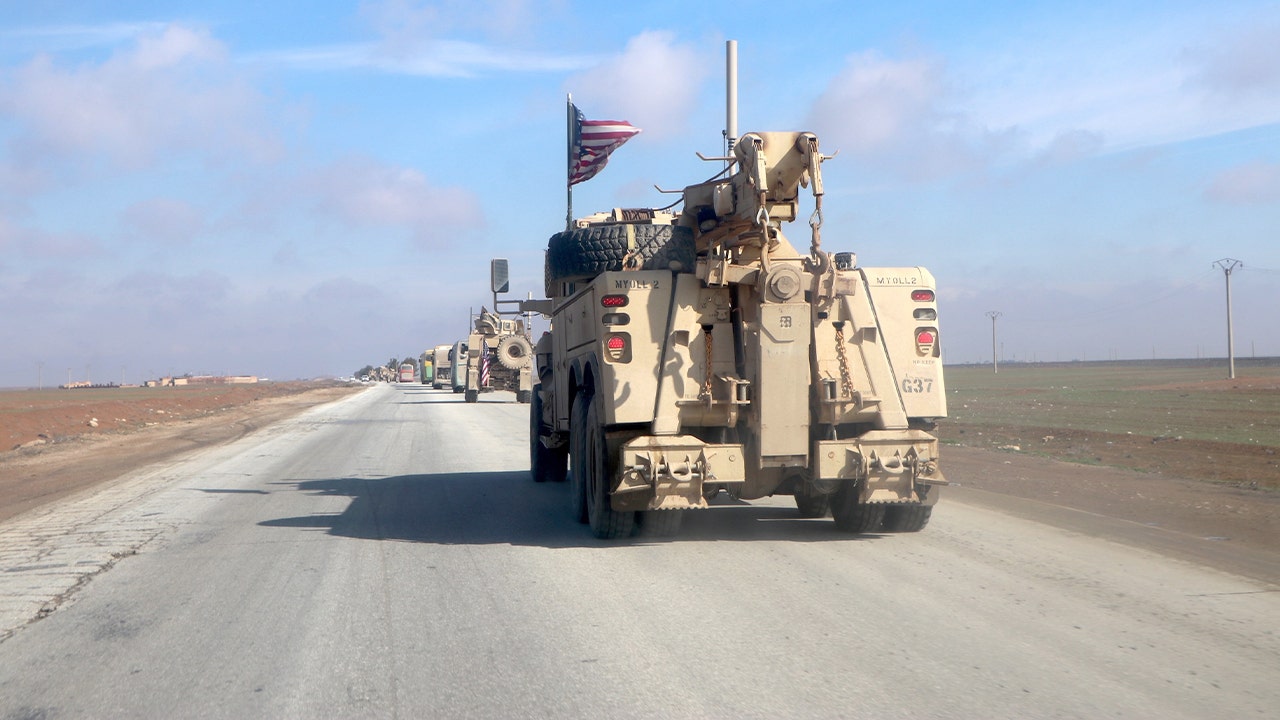
In related developments, U.S. military vehicles were observed escorting passenger buses carrying Islamic State detainees from northeastern Syria into Iraq on February 8, 2026, as captured in images by Xinhua via Getty Images.
The ministry said the handover was coordinated with U.S. officials and that Syrian Arab Army units moved in to secure the base and surrounding areas in the tri-border desert region.
The development follows a Pentagon decision in April 2025 to scale back and consolidate U.S. forces in Syria.
Caroline Rose, director of the Crime-Conflict Nexus and Military Withdrawals portfolios at the New Lines Institute, told Fox News Digital that al-Tanf was one of the most strategically important U.S. garrisons in Syria, if not the broader Middle East, as it offered access, insight and intelligence collection along Syria’s borders with Jordan and Iraq.

A satellite image shows the al-Tanf Base in Syria, July 20, 2025. (Planet Labs PBC/Reuters)
“This was not only pivotal during the U.S.-led Coalition to defeat the Islamic State, where there was a threat of cross-border offensives and violence, but also proved key to U.S. deterrence efforts against Iran-backed militia networks that operated in Iraq and Syria,” she said. “The U.S. pullout from Al-Tanf is a signal that Washington is now comfortable with where the counter-ISIS fight is and the defeat of Iran-aligned proxy networks in the region, along with Syrian security integration efforts with the [Syrian Democratic Forces].”
Rose added that the departure could be viewed as a setback for Jordan, which has long depended on the U.S. position at al-Tanf to deter adversarial actors in the region.
Despite the withdrawal, U.S. forces remain prepared to counter ISIS threats, CENTCOM said, noting that in the past two months, American forces have struck more than 100 targets in the region and captured or killed more than four dozen ISIS fighters.
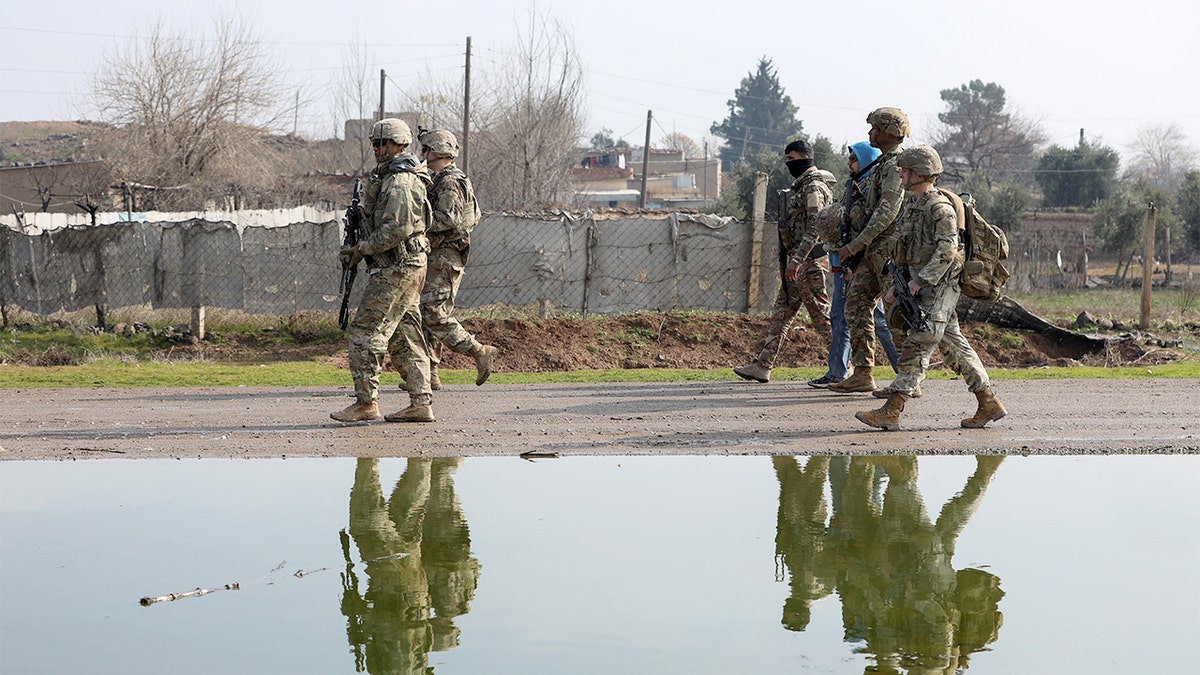
Soldiers from the U.S.-led coalition walk with members of the Kurdish-led Syrian Democratic Forces (SDF) in the countryside of Qamishli, northeastern Syria, Feb. 8, 2024. (Orhan Qereman/Reuters)
The change in posture comes just weeks after U.S. forces transferred 150 ISIS fighters from a detention facility in Hasakah, Syria, to a secure location in Iraq.
Officials indicated in late January that thousands more detainees could also be moved as part of the broader effort to maintain long-term security in the region.
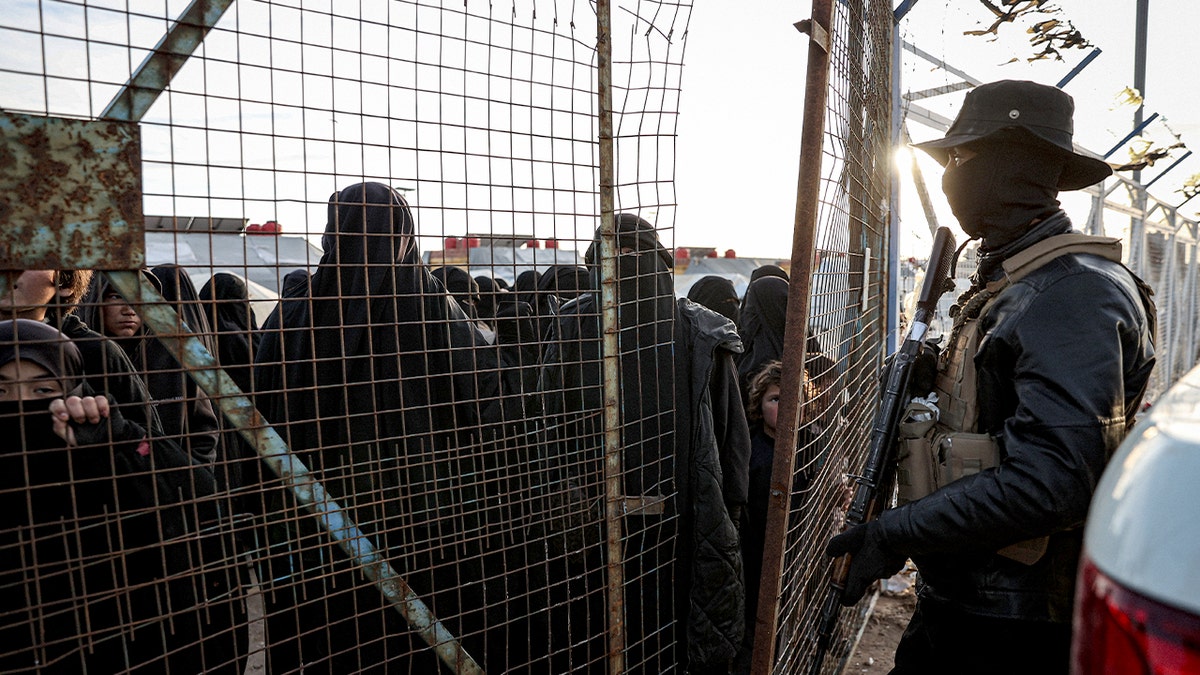
A view of al-Hol camp, where families linked to the Islamic State group are being held, in Hasakah province, Syria, Jan. 21, 2026. (Izz Aldien Alqasem/Anadolu via Getty Images)
Syria became the 90th member of the Global Coalition to Defeat ISIS, a U.S.-led alliance formed to coordinate international efforts against the extremist group, in November.
Tom Barrack, the U.S. ambassador to Turkey and special envoy for Syria, said Damascus — under interim President Ahmed al-Sharaa — is prepared to assume security responsibilities, including control of ISIS detention facilities and camps, following the 2024 ouster of Bashar al-Assad.