
Share this @internewscast.com
Ukraine has deployed interceptor drones and a specialized drone team to aid in safeguarding U.S. military installations in Jordan, amid escalating conflict linked to the Iran war. This move was confirmed by Ukrainian President Volodymyr Zelenskyy during an interview with The New York Times.
Zelenskyy shared with the publication that the request from Washington arrived on Thursday, prompting Kyiv to take swift action by sending the drone team the next day.
“We responded without delay,” Zelenskyy remarked. “I immediately agreed to send our experts.”
The White House has yet to provide a response to Fox News Digital’s inquiry for confirmation.
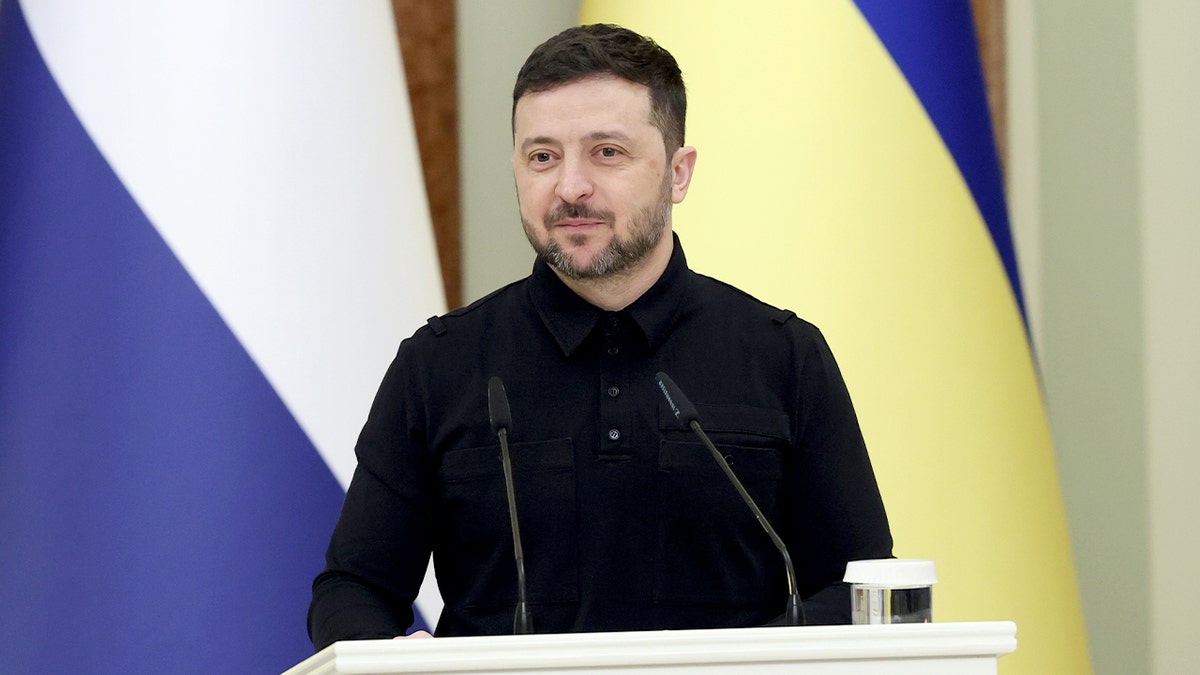
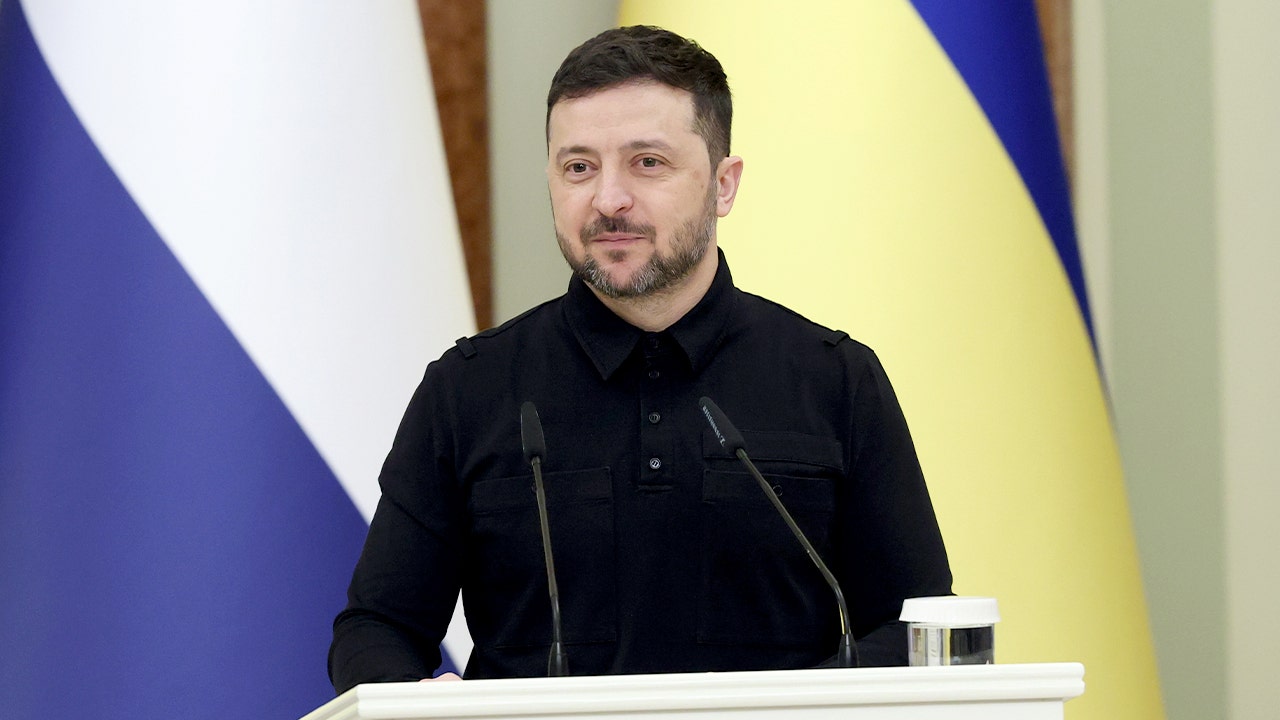
In the accompanying image, Ukrainian President Volodymyr Zelenskyi is seen during a joint press briefing with Dutch Prime Minister Rob Jetten on March 8, 2026, in Kyiv, Ukraine. (Photo by Viktor Kovalchuk/Global Images Ukraine/Getty Images)
This request arises as the U.S. and Gulf nations strive to neutralize hundreds of Iranian missiles and thousands of drones, which have been launched in retaliation following U.S.-Israeli actions that resulted in the death of Supreme Leader Ayatollah Ali Khamenei.
Iranian drones have struck the United Arab Emirates, Saudi Arabia and Bahrain, including an attack on a tactical operations center in Kuwait that killed six U.S. service members.
The high volume of Iranian Shahed drone launches has drawn attention to the cost disparity between the relatively inexpensive unmanned aircraft and the far more sophisticated air defense systems, such as Patriot missiles, used to intercept them.
According to the Department of the Army’s Fiscal Year 2026 budget estimates, the cost for a single Patriot PAC-3 MSE interceptor is $3.8 million.
A basic Iranian-designed Shahed drone costs roughly $20,000 to $50,000, according to the Center for Strategic and International Studies (CSIS).
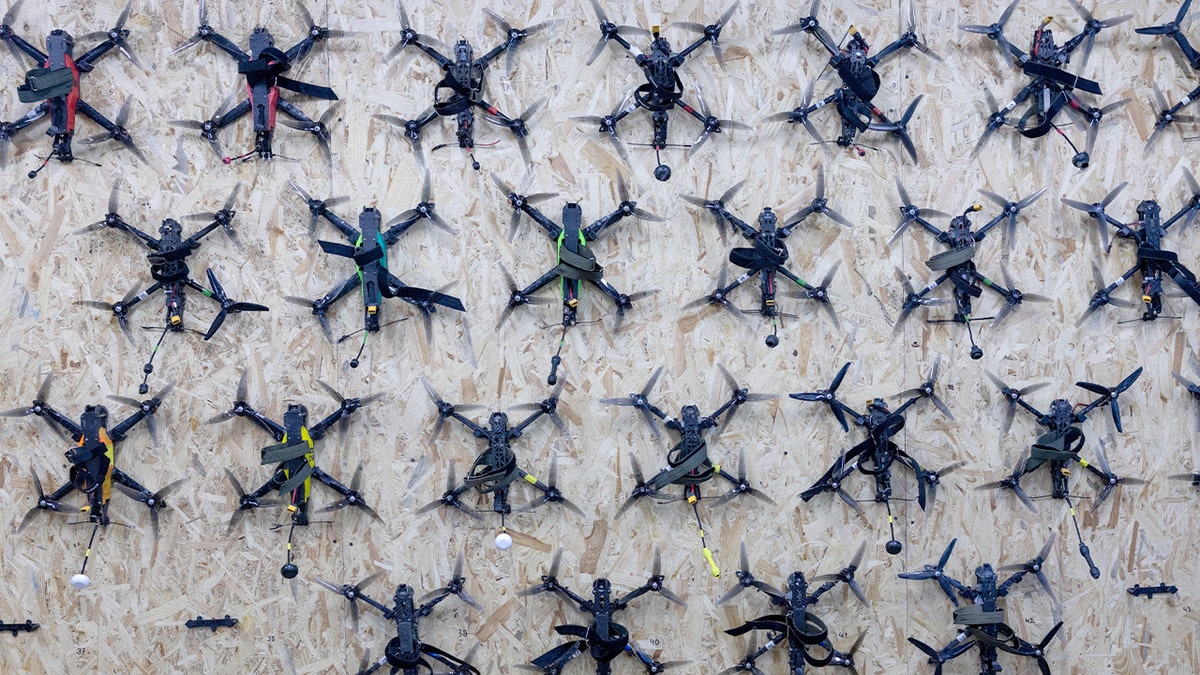
FPV training drones are seen on a wall at the Killhouse Academy drone training center on March 4, 2026, in Kyiv, Ukraine. (Chris McGrath/Getty Images)
“Iran knows it can’t match the U.S. or Gulf states plane for plane or missile for missile, but it can change the economics of the conflict,” said Patrycja Bazylczyk, an associate director with the Missile Defense Project at CSIS, in an interview with Military Times.
“Drones let Iran punch above its weight, keep its adversaries off balance, and project power across the region at minimal cost. We can’t just play whack-a-mole in the sky,” she added. “Shooting drones down one by one is the most expensive way to fight the cheapest threat. We have to go after the roots – the launch sites, the production lines, and the storage depots.”