
Share this @internewscast.com
Kosovo is grappling with a constitutional dilemma after failing to elect a new head of state by the established deadline. In response, President Vjosa Osmani, who shares strong ties with former U.S. President Donald Trump, has dissolved the parliament and announced plans for snap elections.
Amid global conflicts and the ongoing responsibility of a NATO peacekeeping force stationed in the Balkans to maintain stability, President Osmani emphasized the urgency of completing the electoral process in the current geopolitical climate. “Given the complexities of the global situation, it’s crucial to conclude the upcoming elections,” she stated, expressing uncertainty about future developments, as reported by Kiro7.
In a speech earlier this year, Trump commended President Osmani for her leadership in Kosovo. Osmani accepted an invitation from Trump to join the Board of Peace in January and has committed resources to the International Stabilization Force for Gaza.
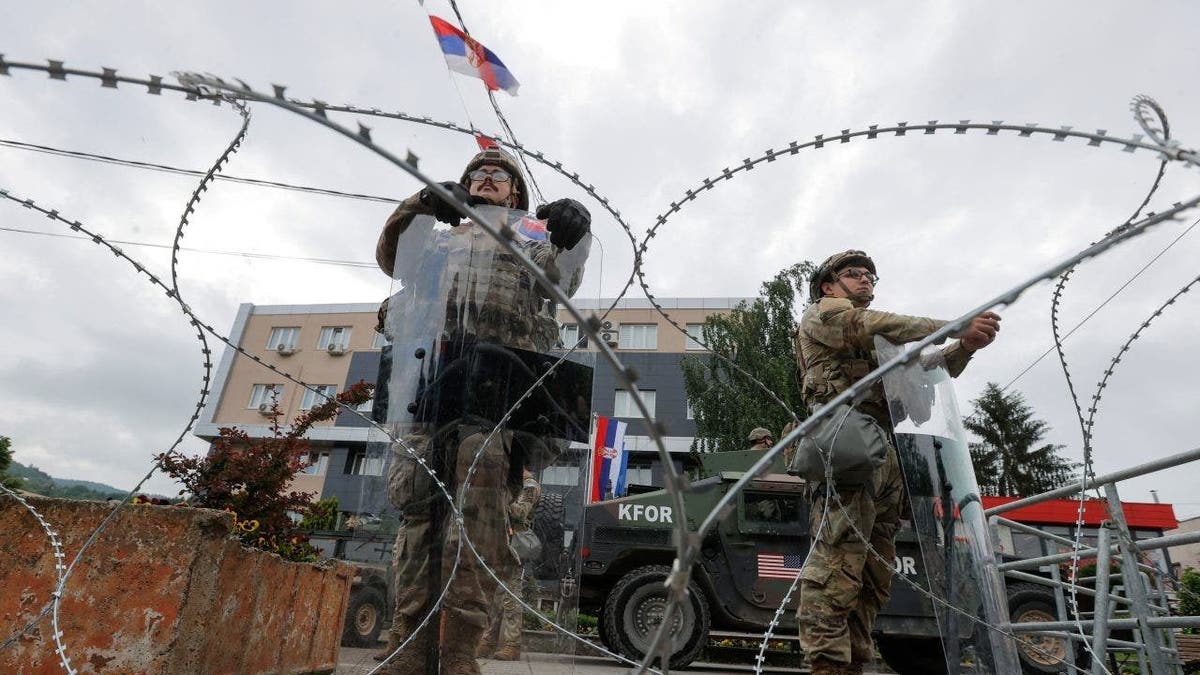
Amidst this political turbulence, U.S. KFOR soldiers are maintaining their presence in front of the municipality office in Leposavic, Kosovo, as of May 29, 2023, according to Valdrin Xhemaj of Reuters.
Another potential shift in Kosovo’s domestic landscape could further influence Osmani’s role. Discussions are swirling about a potential reorganization or reduction of KFOR, the international NATO peacekeeping mission that has been active since 1999 to help stabilize Kosovo post-conflict.
However, KFOR’s commander, Maj. Gen. Özkan Ulutaş, stated in February that the U.S. has no plans to decrease its troop presence in Kosovo, as reported by Reporteri. Currently, around 600 American troops are stationed in the country.
Following Kosovo’s declaration of independence from Serbia in 2008, tensions between the countries have remained high.
Former Albanian Prime Minister Pandeli Majko told Fox News Digital, “Kosovo needs governance and then a compromise for the election of the president.” He said he “hopes that the Constitutional Court will provide a solution.”
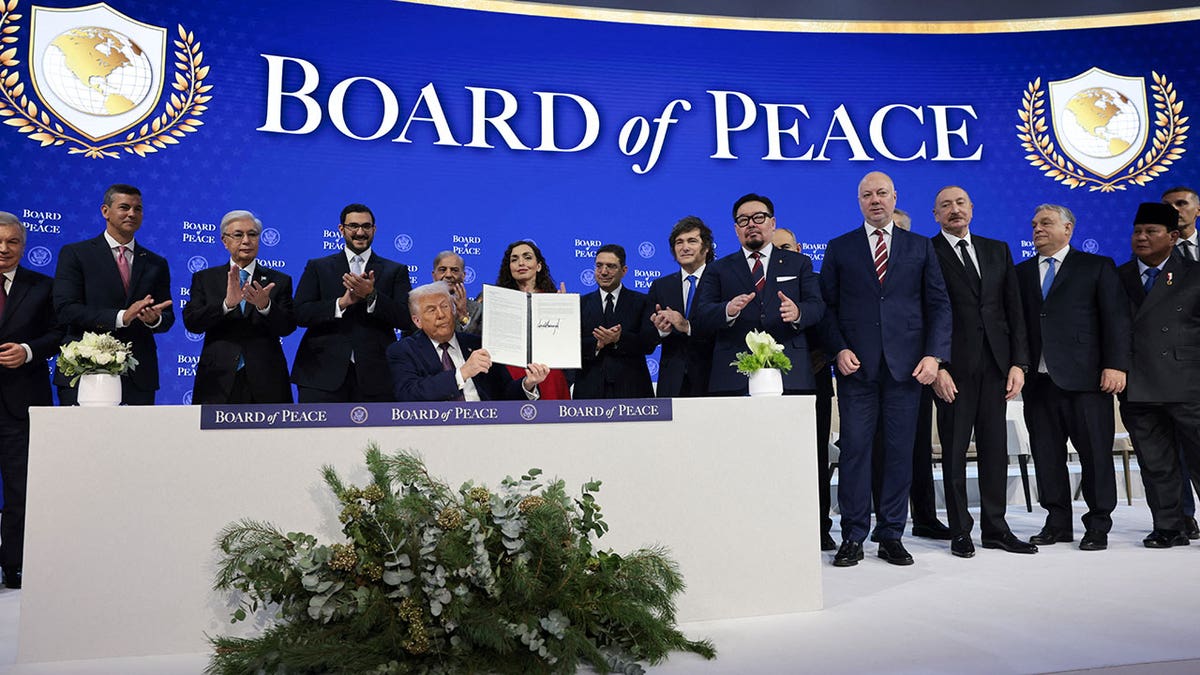
Kosovo President Vjosa Osmani, to the right of President Donald Trump, takes part in a charter announcement for his Board of Peace initiative aimed at resolving global conflicts, in Davos, Switzerland, Jan. 22, 2026. (Jonathan Ernst/Reuters)
The Kosovo Parliament has been besieged by stalemate for more than a year. Balkan Insight reported that a February 2025 poll failed to result in the formation of a government. Snap elections in December resulted in a win for the Vetevendosje party of Prime Minister Albin Kurti, but the party could not garner enough support from the opposition to elect a president.
Friday’s vote failed because the session fell 14 members short of a quorum. Opposition members boycotted the vote because they did not support Kurti’s nominee, Minister of Foreign Affairs and Diaspora of Kosovo Glauk Konjufca.
Osmani met with opposition party leaders Friday, a meeting Kurti chose not to attend. The prime minister said that “there should be a failure to elect a president in the third round before dissolving parliament and going to new elections.”
Kurti’s party has appealed to the Constitutional Court for a review of the constitutionality of the election process, according to the European Western Balkans site.
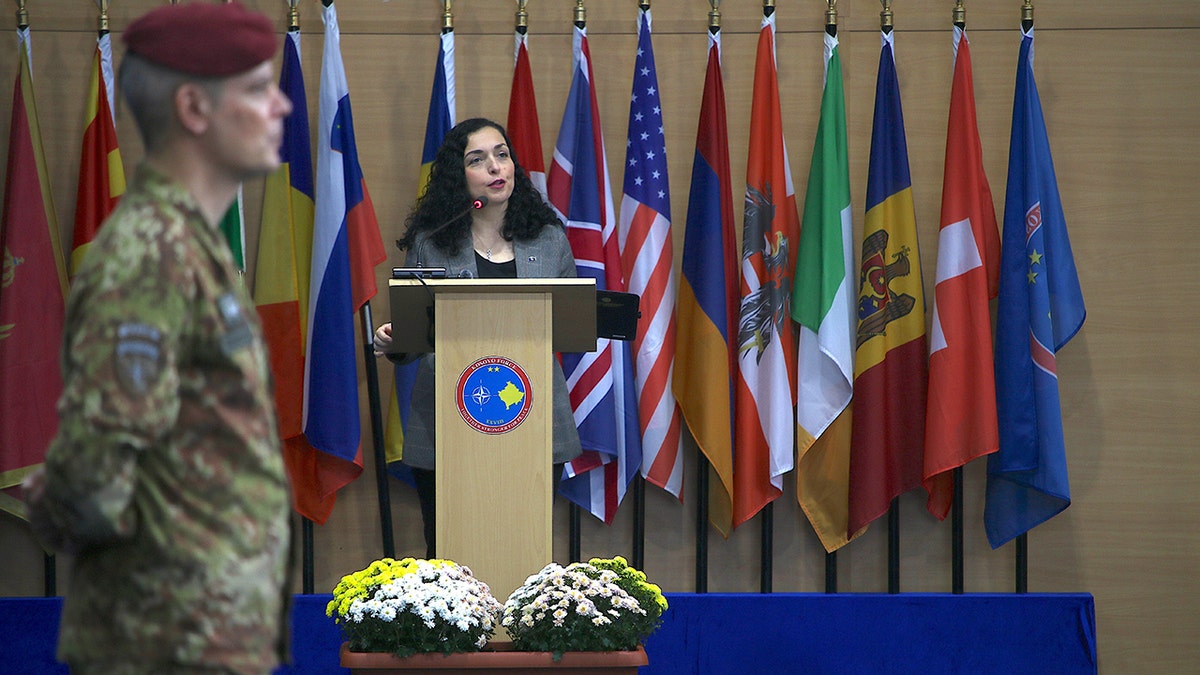
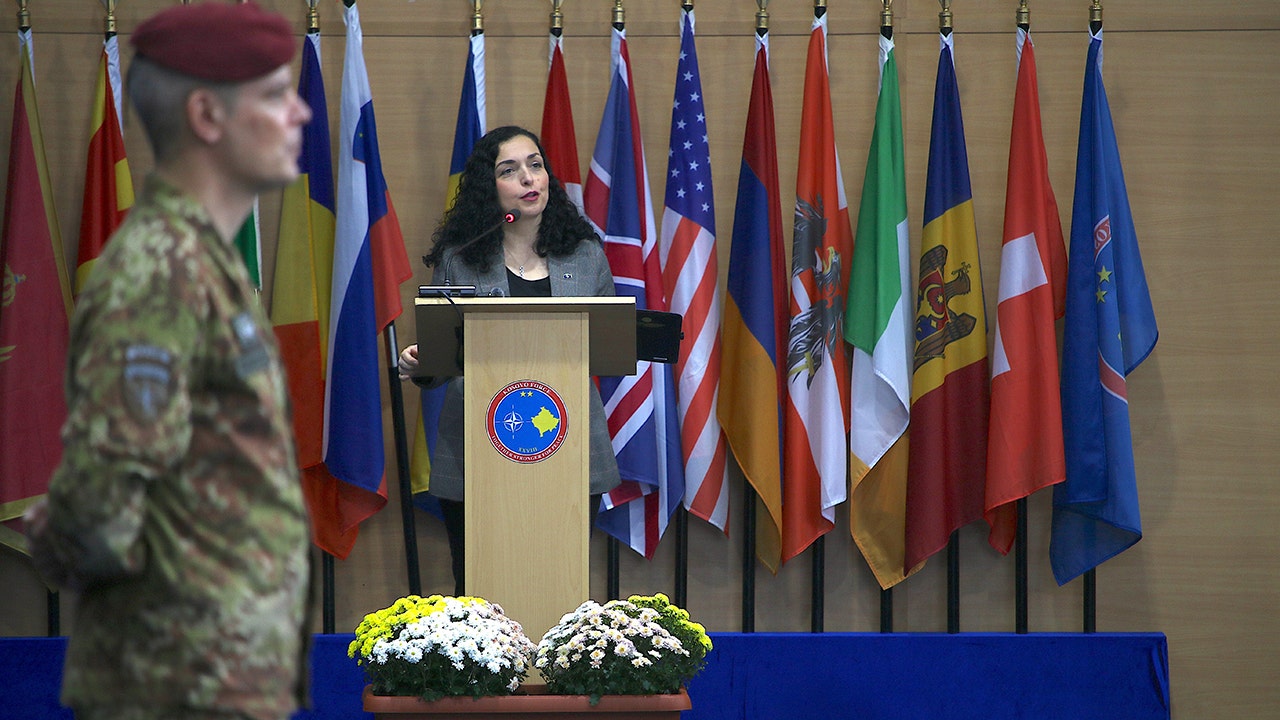
President of Kosovo Vjosa Osmani delivers a speech during ceremony of the Kosovo Peacekeeping Force (KFOR) Command, led by Turkey to Italy, in Pristine, Kosovo on Oct. 11, 2024. (Erkin Keci/Anadolu via Getty Images)
New elections may be held as early as April 5, opposition leader Ramush Haradinaj suggested.
Majko told Fox News Digital that he does not see the debate between the parties as a problem, explaining that their ranking in the elections would not change even if they were held again. He said the idea of early elections is an exhausting political crisis that does not produce solutions.
Related Article