
Share this @internewscast.com
CHICAGO (WLS) — Rising unease surrounds the U.S. military’s lethal actions against suspected drug-smuggling vessels in international waters near Venezuela. Questions are being raised about the methods employed, the legality of these actions, and whether lawmakers have full access to all videos and documents related to these operations.
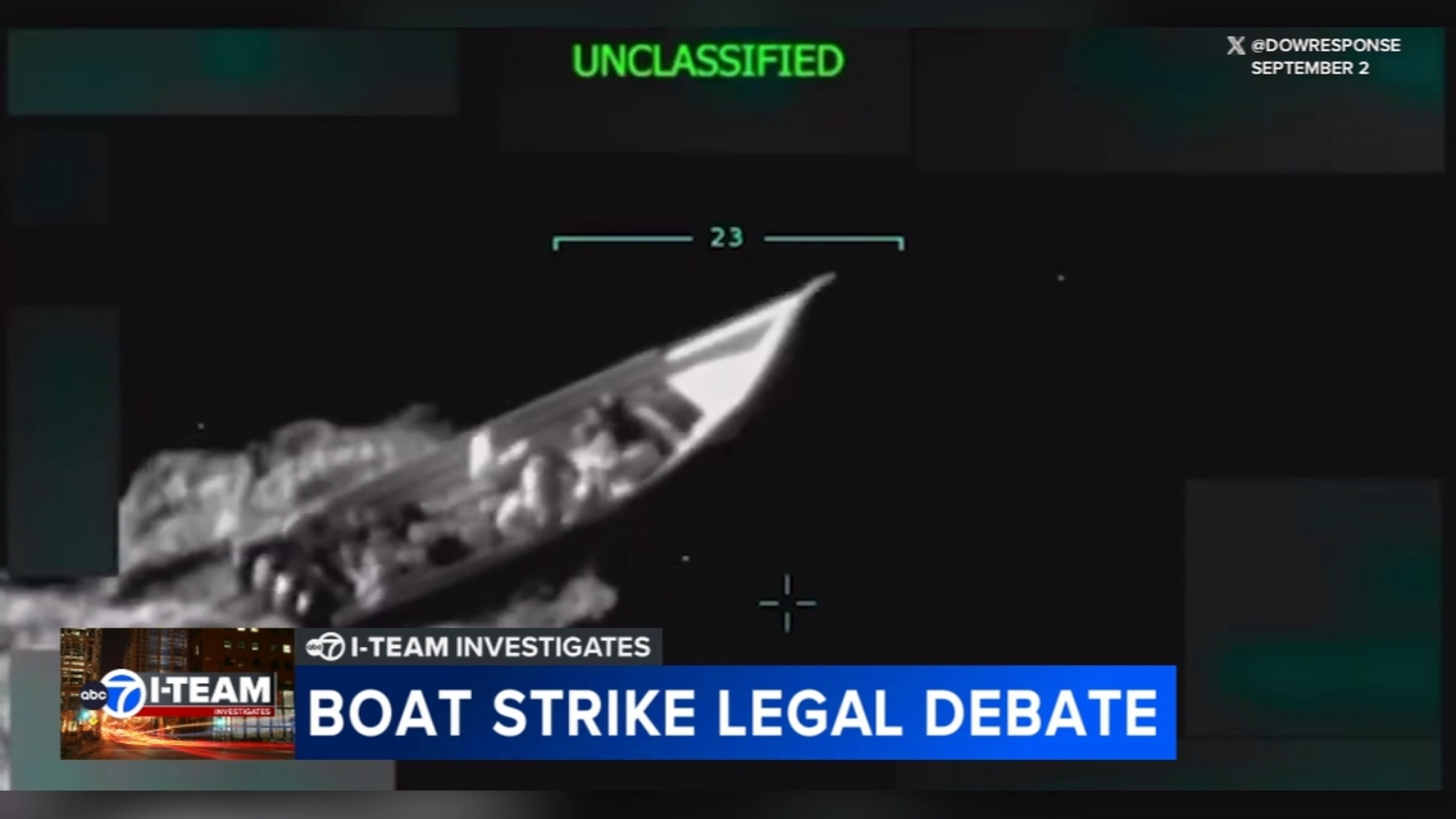
In response, Congress has initiated a probe into a specific incident that took place on September 2 in the Caribbean. This follows a Washington Post article alleging that a U.S. Navy admiral ordered a subsequent strike on a vessel to ensure no survivors remained.
ABC7 Chicago is now streaming 24/7. Click here to watch
Legal professionals and former government officials have informed the I-Team that if these allegations prove accurate, such an action could constitute a crime if unarmed survivors were deliberately targeted.
As this investigation unfolds, the Trump administration continues its campaign against suspected narcotics traffickers.
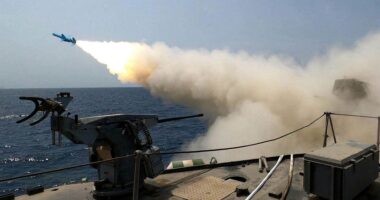
On Thursday, the U.S. Southern Command released footage of another lethal strike in the eastern Pacific Ocean. The operation targeted a vessel identified as being operated by a terrorist organization and transporting illegal narcotics, according to the U.S. Department of Defense. This strike reportedly resulted in the deaths of four individuals.
Coinciding with the release of this video, U.S. Navy Adm. Frank “Mitch” Bradley provided closed-door testimony on Capitol Hill. His testimony is part of the ongoing inquiry into the contentious September 2 incident, which resulted in the death of at least 11 people.
A source who saw the Sept. 2 video told ABC News two survivors from that Sept. 2 strike were clinging to the overturned boat for their lives, incapacitated and defenseless before the second strike obliterated them.
Chicago-area Congressman Raja Krishnamoorthi, D-Illinois, told the I-Team only a select few have been given access to the full set of videos, including video of the second strike on two survivors, as well as records behind the strikes, raising concerns over transparency and accountability.
Krishnamoorthi sits on the House Intelligence Committee but says the Trump administration is selectively withholding vital information from Congress and the American public.
“I myself am very, very concerned about the fact that this is a pattern that this administration is pursuing now,” Krishnamoorthi said. “They restrict access to the information. That’s happened with Iran, the Iran strikes. That’s happened with regards to other parts of the world. Now it’s happening with regard to Venezuela and these boat strikes.”
Because of that, Krishnamoorthi says he and many other intelligence committee members still have not seen the full video of both targeted strikes by the U.S. on an alleged drug boat on Sept. 2, now causing a firestorm across the country.
Lawmakers who were present during Thursday’s closed-door meeting have shared differing views.
“I didn’t see anything disturbing about it,” said Arkansas Sen. Tom Cotton, the Republican chairman of Senate Select Committee on Intelligence. “What’s disturbing to me is that millions of Americans have died from drugs being run to America by these cartels.”
Virginia Sen. Mark Warner, the leading Democrat and vice chairman of the Senate Intelligence Committee, disagreed, but held back on drawing conclusions yet.
“I think the, the video was very disturbing,” Warner said. “I am not going to weigh in on all of the questions about lawful morality judgments until I get all the information.”
New reporting from ABC News indicates the survivors from that first strike on Sept. 2 were waving for help, that they were clinging to the overturned boat after the devastating kinetic strike from the U.S. military and were defenseless before being annihilated by the second strike.
Legal experts have labeled all kinetic strikes a potential war crime.
Brian Finucane is a senior advisor for International Crisis Group, an independent organization focused on preventing wars, who formally worked for the U.S. State Department under President Barack Obama and President Donald Trump’s first administration.
“I worked at (the U.S.) State Department for 10 years as an attorney advisor, advising the government on international and domestic law,” Finucane told the I-Team. “I’ve never seen anything like this. Nor has anyone else I worked with in government, either civilian or JAG (Judge Advocate General’s Corps), seen anything like this.”
Finucane said just because the Trump administration designates actors as foreign terrorist organizations, or narco-terrorists as they have in the case of the Sept. 2 strike, does not mean the U.S. is in an armed conflict where the targets could be considered legitimate targets of war.
“My overall interpretation is that the U.S. government is engaged in a killing spree at sea completely outside the law,” Finucane said. “They have tried to cloak this bombing campaign in the guise of counter-terrorism, but it’s simply inappropriate because they’re not actually attacking terrorists.”
“The administration seems to have created a legal fantasy land that gives the executive a license to kill based on the president’s own say,” Finucane said.
Former Chicago-area Drug Enforcement Administration agent Michael Gannon recently told the I-Team these strikes continue to send a strong message to cartels.
“With the border being appropriately shut down, they have to go, resort back to continuing to utilize the Caribbean,” Gannon said. “It’s an absolute game changer that the military is involved in helping, going after these narco-terrorist organizations.”
Earlier this week, President Trump said he would release the full video of the Sept. 2 strikes. On Friday, the White House told ABC News, “The Pentagon is engaging with the White House on how best to move forward.”
No timeline has been set on when that video will be released.