

WASHINGTON — The United States military has announced a significant escalation in its strategy against Iran, with Gen. Dan Caine, chairman of the Joint Chiefs of Staff, stating on Thursday that the military will “actively pursue” Iranian-flagged ships and any vessels aiding the Iranian regime globally. This move is part of an expanded blockade targeting Iranian ports within the vital Strait of Hormuz.
Gen. Caine outlined that beyond the blockade of the regime’s ports in this key oil transit region, US military forces will also monitor and intercept vessels suspected of supporting Iran in other parts of the world, including the Indo-Pacific area. “The joint force, through operations and activities in other areas of responsibility, like the Pacific Area of Responsibility under the command of Admiral Samuel Paparo, will actively pursue any Iranian-flagged vessel or any vessel attempting to provide material support to Iran,” Caine conveyed during a Thursday press conference.
This includes targeting “Dark Fleet” vessels, which are identified as those operating illicitly or illegally to evade international regulations, sanctions, or insurance mandates. These ships often transport Iranian oil under the radar of international enforcement efforts.
Additionally, Secretary of War Pete Hegseth issued a stern warning to Iranian leaders, advising them to “choose wisely” when considering any potential agreements with the United States.
For real-time updates and comprehensive analysis, follow The Post’s live coverage of President Trump and national politics.
Follow The Post’s live coverage of President Trump and national politics for the latest news and analysis
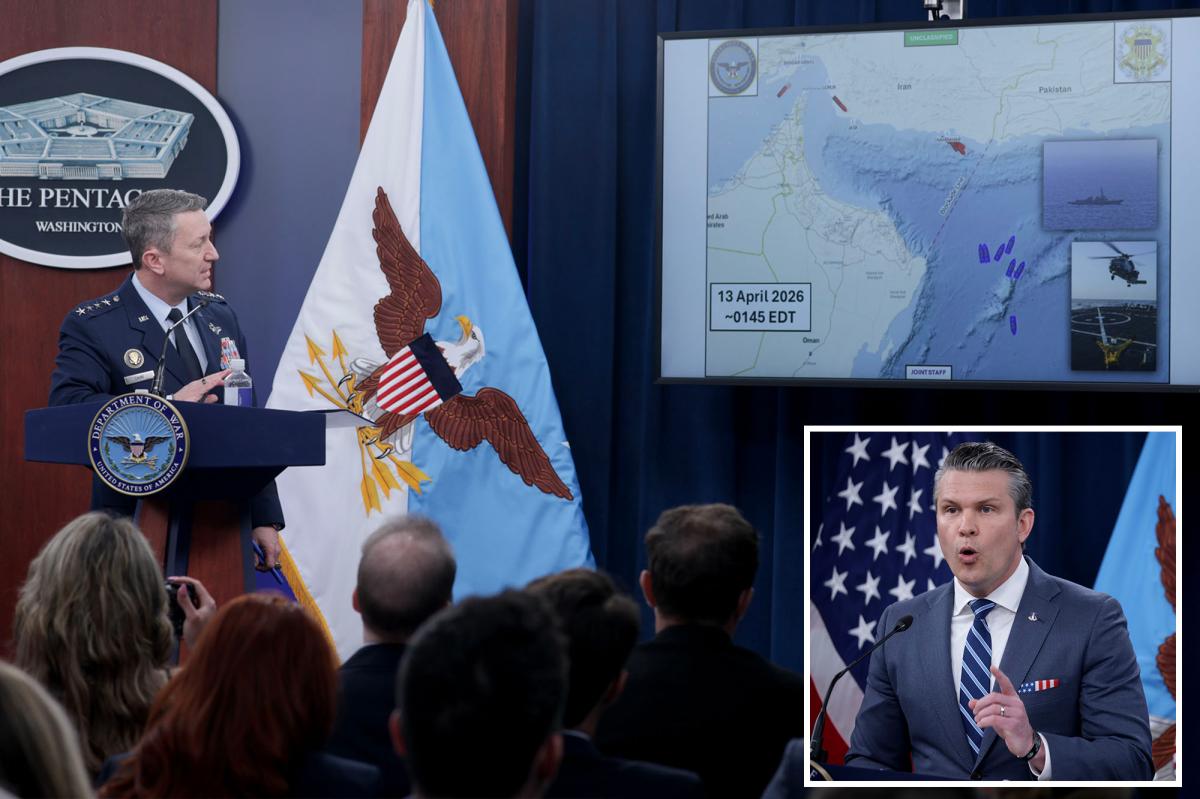
“To Iran: Choose wisely. I pray you choose a deal which is in your grasp for the betterment of your people and for the betterment of the world,” Hegseth said at the press conference. “In the meantime, the War Department is locked and loaded.”
President Trump first announced the blockade in the Strait of Hormuz on Sunday — and by Tuesday, US Central Command, which coordinates the joint forces in the Middle East, announced the cutoff of Iranian ports was fully implemented.
Caine also stressed, as White House press secretary Karoline Leavitt did on Wednesday, that non-Iranian-linked traffic is still allowed through the Strait of Hormuz.
“Let me be clear, this blockade applies to all ships, regardless of nationality, heading into or from Iranian ports,” Caine said.
“The US action is a blockade of Iran’s ports and coastline, not a blockade of the Strait of Hormuz. Enforcement will occur inside Iran’s territorial seas.”
Trump ordered the blockade in response to Iran taking control of the Strait of Hormuz, through which over a fifth of the world’s seaborne oil flows annually.
Iran had spooked maritime traffic by allegedly laying mines, claiming to have forgotten their locations, and firing off drone and missile strikes on ships. The chaos sent oil prices surging.
The sides agreed to a two-week cease-fire on April 8. Trump suggested that a cease-fire would reopen the Strait of Hormuz; however, Iran began charging tolls on ships transiting the waterway, violating US demands for freedom of navigation.
Caine showcased graphics to reporters during the Thursday press conference to illustrate how Iranian ships have “made the wise decision not to move transit or run this blockade,” adding that “so far, 13 ships have made the wise choice of turning around.”
As of Thursday morning, US Central Command, which a top official said is rearming during the cease-fire, “has not been required to board any particular ships.”
“You like to say publicly, Iran, that you control the Strait of Hormuz, but you don’t have a navy or real domain awareness. You can’t control anything, to be clear,” Hegseth chided during the press conference.
“To be clear, threatening to shoot missiles and drones at ships, commercial ships that are lawfully transiting international waters. That is not control. That’s piracy. That’s terrorism,” the secretary went on. “The United States Navy controls the traffic going in and out of the strait, because we have real assets and real capabilities.
“We’re doing this blockade, performing it with less than 10% of America’s naval power.”
Hegseth branded the blockade the “polite way that this can go,” warning that while Iran’s energy is being blocked from moving, “it’s not destroyed yet.”
“If Iran chooses poorly, then they will have a blockade and bombs dropping on infrastructure,” he warned.