
Share this @internewscast.com
An initial intelligence briefing from the Defense Intelligence Agency challenges the assertions made by Trump and Netanyahu regarding the condition of the nuclear sites.
WASHINGTON — According to two individuals familiar with the early analysis, a U.S. intelligence report indicates that Iran’s nuclear agenda has only been delayed by a few months following U.S. attacks and has not been “completely and fully obliterated” as President Donald Trump claimed.
The Defense Intelligence Agency’s report, released on Monday, is at odds with the statements made by Trump and Israeli Prime Minister Benjamin Netanyahu concerning Iran’s nuclear capabilities. The assessment, according to these sources, determined that while the strikes on the Fordo, Natanz, and Isfahan nuclear facilities inflicted considerable damage, the infrastructure was not utterly destroyed. The individuals chose to remain anonymous due to unauthorized permission to speak publicly on the matter.
The U.S. has held out hope of restarting negotiations with Iran to convince it to give up its nuclear program entirely, but some experts fear that the U.S. strikes — and the potential of Iran retaining some of its capabilities — could push Tehran toward developing a functioning weapon.
The assessment also suggests that at least some of Iran’s highly enriched uranium, necessary for creating a nuclear weapon, was moved out of multiple sites before the U.S. strikes and survived, and it found that Iran’s centrifuges, which are required to further enrich uranium to weapons-grade levels, are largely intact, according to the people.
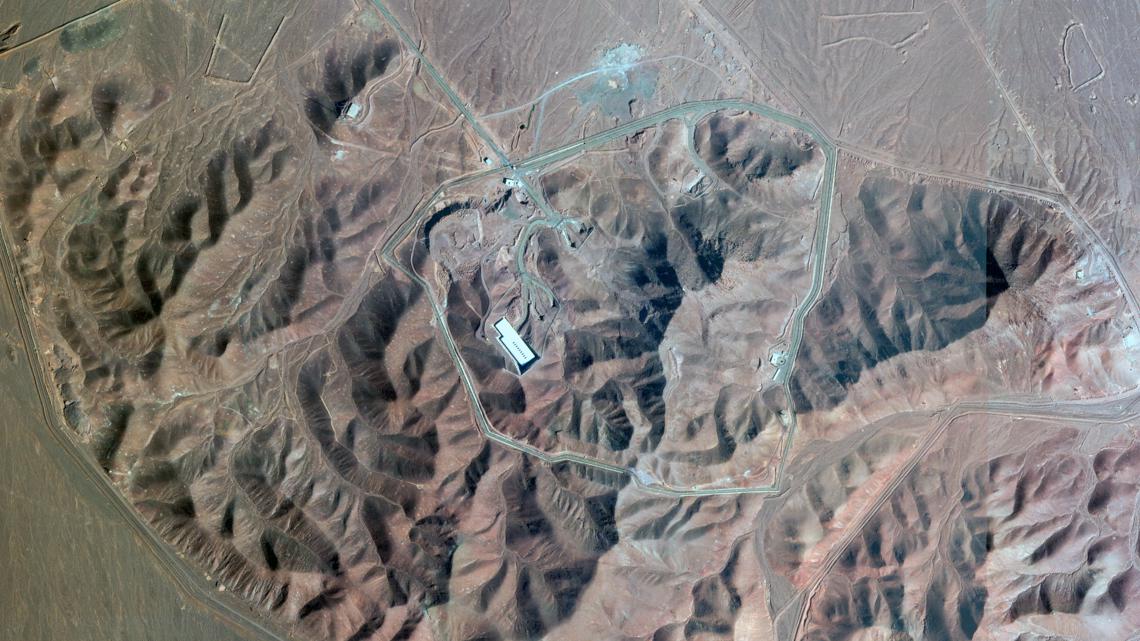
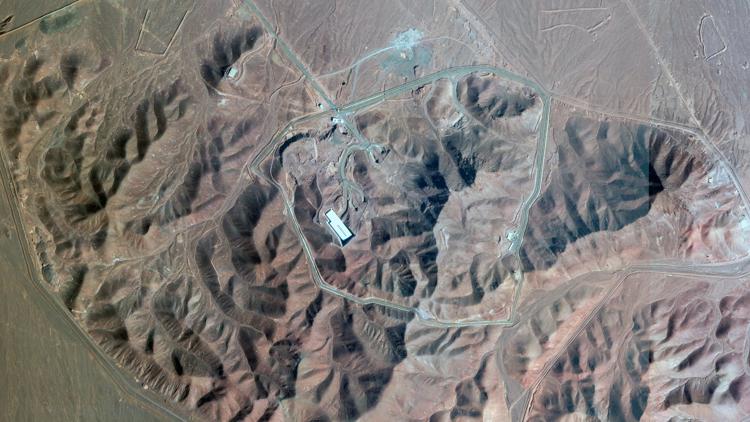
At the deeply buried Fordo uranium enrichment plant, where U.S. B-2 stealth bombers dropped several 30,000-pound bunker-buster bombs, the entrance collapsed and infrastructure was damaged, but the underground infrastructure was not destroyed, the assessment found. The people said that intelligence officials had warned of such an outcome in previous assessments ahead of the strike on Fordo.
The White House strongly pushed back on the DIA assessment, calling it “flat-out wrong.”
“The leaking of this alleged assessment is a clear attempt to demean President Trump, and discredit the brave fighter pilots who conducted a perfectly executed mission to obliterate Iran’s nuclear program,” White House press secretary Karoline Leavitt said in a statement. “Everyone knows what happens when you drop fourteen 30,000 pound bombs perfectly on their targets: total obliteration.”
The CIA and the Office of the Director of National Intelligence declined to comment on the DIA assessment. ODNI coordinates the work of the nation’s 18 intelligence agencies, including the DIA, which is the intelligence arm of the Defense Department, responsible for producing intelligence on foreign militaries and the capabilities of adversaries. The Israeli government also has not released any official assessments of the U.S. strikes.
Trump special envoy Steve Witkoff, who said he has read damage assessment reports from U.S. intelligence and other nations, reiterated Tuesday night that the strikes had deprived Iran of the ability to develop a weapon and called it outrageous that the U.S. assessment was shared with reporters.
“It’s treasonous so it ought to be investigated,” Witkoff said on Fox News Channel.
Trump has said in comments and posts on social media in recent days, including Tuesday, that the strike left the sites in Iran “totally destroyed” and that Iran will never rebuild its nuclear facilities.
Netanyahu said in a televised statement on Tuesday that, “For dozens of years I promised you that Iran would not have nuclear weapons and indeed … we brought to ruin Iran’s nuclear program.” He said the U.S. joining Israel was “historic” and thanked Trump.
The intelligence assessment was first reported by CNN on Tuesday.
Outside experts had suspected Iran had likely already hidden the core components of its nuclear program as it stared down the possibility that American bunker-buster bombs could be used on its nuclear sites.
Bulldozers and trucks visible in satellite imagery taken just days before the strikes have fueled speculation among experts that Iran may have transferred its half-ton stockpile of enriched uranium to an unknown location. And the incomplete destruction of the nuclear sites could still leave the country with the capacity to spin up weapons-grade uranium and develop a bomb.
Iran has maintained that its nuclear program is peaceful, but it has enriched significant quantities of uranium beyond the levels required for any civilian use. The U.S. and others assessed prior to the U.S. strikes that Iran’s theocratic leadership had not yet ordered the country to pursue an operational nuclear weapon, but the head of the International Atomic Energy Agency has repeatedly warned that Iran has enough enriched uranium to make several nuclear bombs should it choose to do so.
Vice President JD Vance said in a Monday interview on Fox News Channel that even if Iran is still in control of its stockpile of 408.6 kilograms (900.8 pounds) of enriched uranium, which is just short of weapons-grade, the U.S. has cut off Iran’s ability to convert it to a nuclear weapon.
“If they have 60% enriched uranium, but they don’t have the ability to enrich it to 90%, and, further, they don’t have the ability to convert that to a nuclear weapon, that is mission success. That is the obliteration of their nuclear program, which is why the president, I think, rightly is using that term,” Vance said.
Approximately 42 kilograms of 60% enriched uranium is theoretically enough to produce one atomic bomb if enriched further to 90%, according to the U.N. nuclear watchdog.
Iranian Foreign Minister Abbas Araghchi informed U.N. nuclear watchdog chief Rafael Grossi on June 13 — the day Israel launched its military campaign against Iran — that Tehran would “adopt special measures to protect our nuclear equipment and materials.”
American satellite imagery and analysis firm Maxar Technologies said its satellites photographed trucks and bulldozers at the Fordo site beginning on June 19, three days before the Americans struck.
Subsequent imagery “revealed that the tunnel entrances into the underground complex had been sealed off with dirt prior to the U.S. airstrikes,” said Stephen Wood, senior director at Maxar. “We believe that some of the trucks seen on 19 June were carrying dirt to be used as part of that operation.”
Some experts say those trucks could also have been used to move out Iran’s enriched uranium stockpile.
“It is plausible that Iran moved the material enriched to 60% out of Fordo and loaded it on a truck,” said Eric Brewer, a former U.S. intelligence analyst and now deputy vice president at the Nuclear Threat Initiative.
Iran could also have moved other equipment, including centrifuges, he said, noting that while enriched uranium, which is stored in fortified canisters, is relatively easy to transport, delicate centrifuges are more challenging to move without inflicting damage.
Apart from its enriched uranium stockpile, over the past four years Iran has produced the centrifuges key to enrichment without oversight from the U.N. nuclear watchdog.
Iran also announced on June 12 that it has built and will activate a third nuclear enrichment facility. IAEA chief Grossi said the facility was located in Isfahan, a place where Iran has several other nuclear sites. After being bombarded by both the Israelis and the Americans, it is unclear if, or how quickly, Isfahan’s facilities, including tunnels, could become operational.
But given all of the equipment and material likely still under Iran’s control, this offers Tehran “a pretty solid foundation for a reconstituted covert program and for getting a bomb,” Brewer said.
Kelsey Davenport, director for nonproliferation policy at the Arms Control Association, a nonpartisan policy center, said that “if Iran had already diverted its centrifuges,” it can “build a covert enrichment facility with a small footprint and inject the 60% gas into those centrifuges and quickly enrich to weapons grade levels.”
But Brewer also underlined that if Iran launched a covert nuclear program, it would do so at a disadvantage, having lost to Israeli and American strikes vital equipment and personnel that are crucial for turning the enriched uranium into a functional nuclear weapon.
Copyright 2025 Associated Press. All rights reserved. This material may not be published, broadcast, rewritten, or redistributed.