
Share this @internewscast.com
Photo, details of Maduro mission released
Jacqui Heinrich, a correspondent for Fox News, has unveiled fresh details about the recent U.S. mission to apprehend Venezuelan President Nicolás Maduro, along with insights on President Donald Trump’s comments regarding the operation.
People from Venezuela, living all over the world, took to the streets in protest following the capture of Maduro. His leadership was synonymous with economic turmoil and a significant migration crisis in the nation, despite its vast oil reserves.
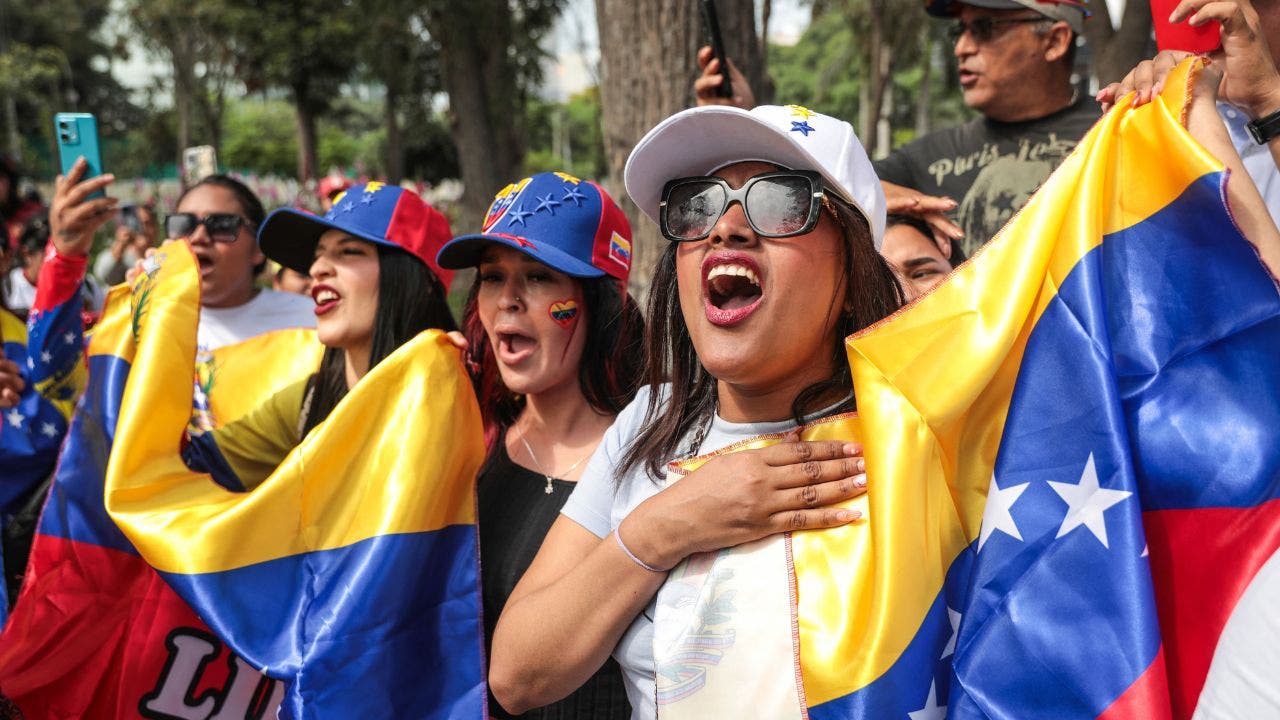
Venezuelans residing in cities such as Miami, Florida; Santiago, Chile; Lima, Peru; Quito, Ecuador; and Madrid, Spain, donned their nation’s colors and waved flags. This came just hours after President Trump revealed that Maduro and his wife had been transported out of Venezuela in a U.S. military operation conducted overnight.
In Miami, the Venezuelan community celebrated with dancing and cheers. Festivities also unfolded near President Trump’s Mar-a-Lago estate in Palm Beach, Florida. Crowds in Doral, Florida, chanted “Liberty!” as they proudly wore Venezuelan flags around their shoulders.
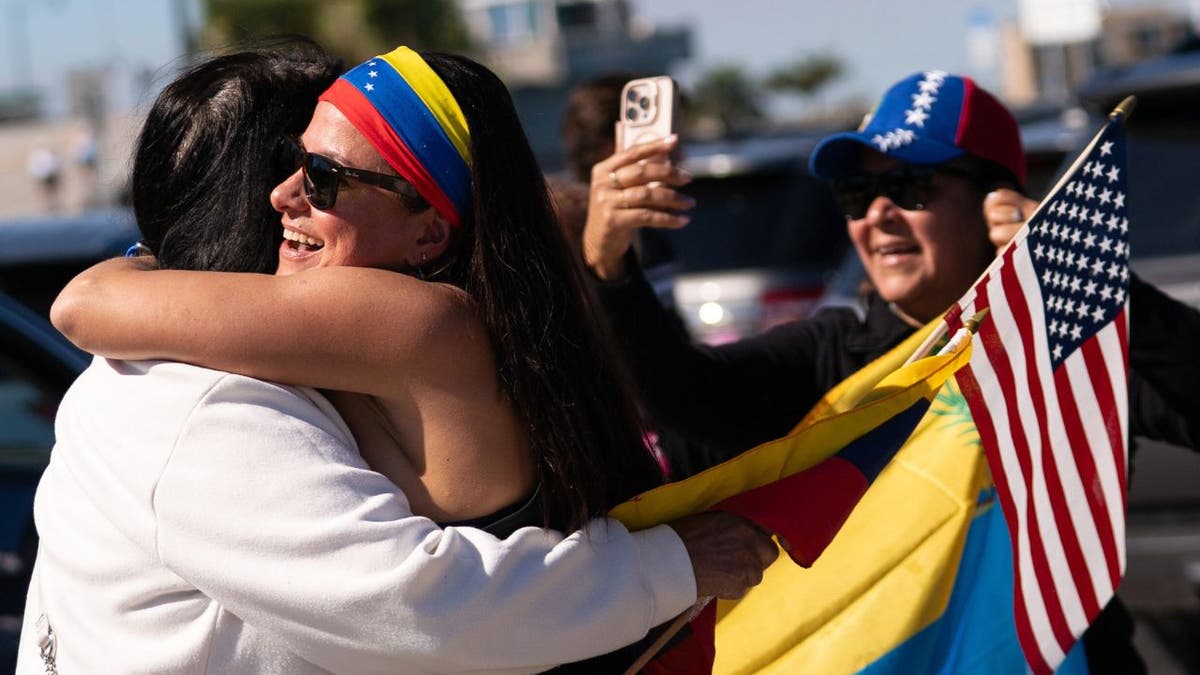
People celebrate the capture of Venezuelan President Nicolás Maduro outside Mar-a-Lago on Saturday, January 3, 2025, in Palm Beach, Florida. (AP Photo/Allison Robbert)
Outside El Arepazo, a vibrant hub of Venezuelan culture in Doral, a man held up a cardboard sign with “Libertad” boldly written in black marker. This message of freedom echoed among fellow Venezuelans who yearned for a fresh start for their homeland, as they chanted, “Liberty! Liberty! Liberty!”
“We’re like everybody — it’s a combination of feelings, of course,” Alejandra Arrieta, who came to the U.S. in 1997, told The Associated Press.
“There’s fears. There’s excitement,” he said. “There’s so many years that we’ve been waiting for this. Something had to happen in Venezuela. We all need the freedom.”
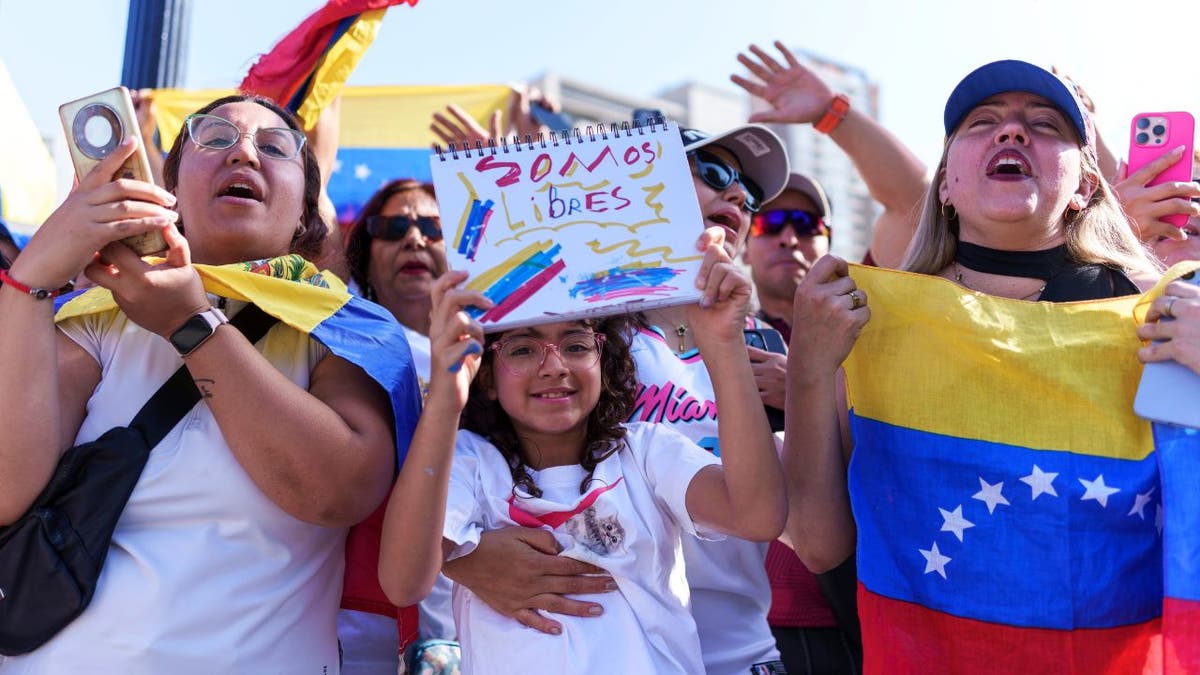
A child holds a sign reading, “Somos Libres” (“We Are Free”) during a rally in Santiago, Chile, on Jan. 3, 2026, after President Donald Trump said U.S. forces had captured Venezuelan President Nicolás Maduro following a military operation. (Sebastián Vivallo Oñate/Agencia Makro/Getty Images)
Ecstatic crowds also gathered in Santiago, Chile, where one child held a sign reading “Somos Libres,” meaning, “We Are Free.”
The demonstrations reflected the scale of Venezuela’s diaspora, which has grown dramatically during Maduro’s years in power, as millions fled what critics describe as a period of economic collapse marked by hyperinflation and widespread food shortages.
Since 2017, roughly 8 million people have fled Venezuela, making it one of the world’s largest displacement crises, according to the U.N. Refugee Agency.
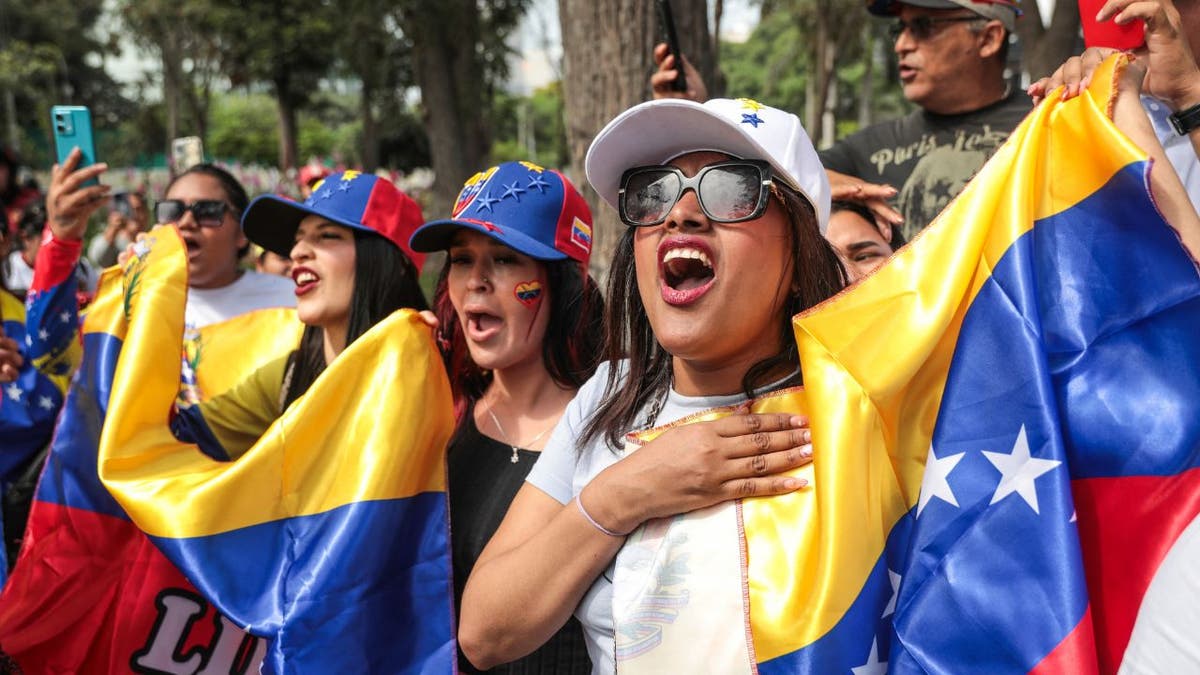
Venezuelans in Peru celebrate at Miguel de Cervantes Park near the Venezuelan Embassy in Lima on Jan. 3, 2026, after President Donald Trump said U.S. forces captured Venezuelan President Nicolás Maduro following strikes on Venezuela. (Connie France / AFP via Getty Images)
More than 6.9 million Venezuelans are currently hosted in Latin American and Caribbean countries, while hundreds of thousands more live in the United States and Europe, where diaspora communities have remained politically active and closely engaged with events back home.
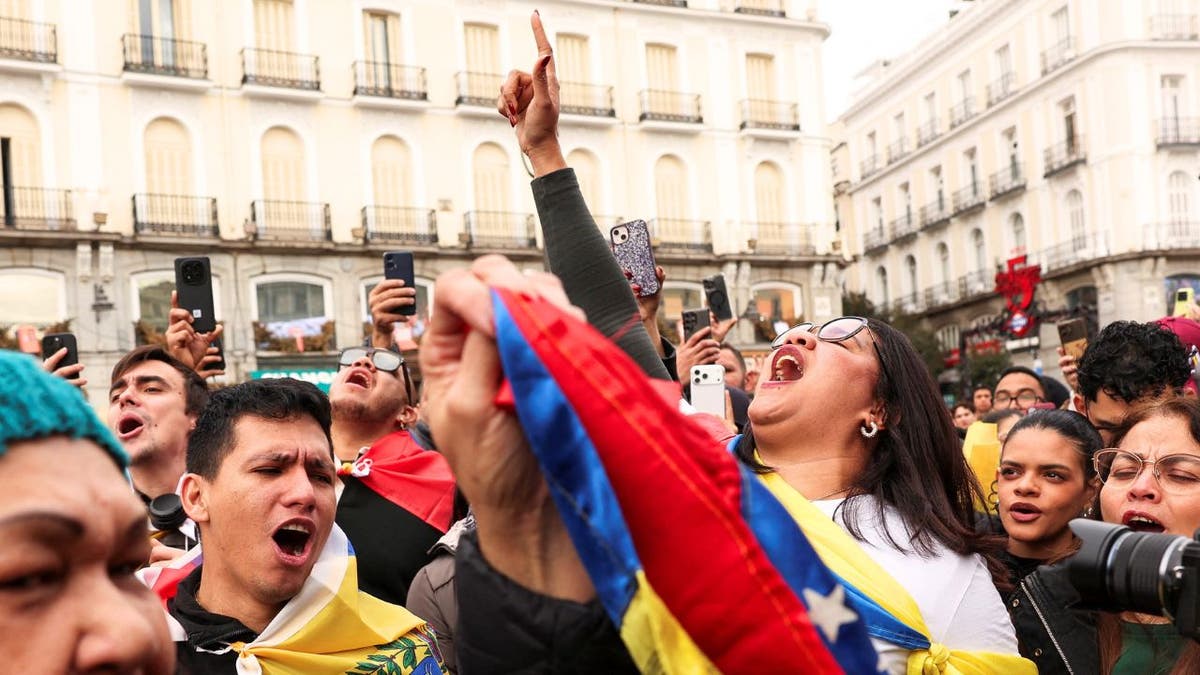
People celebrate in Madrid, Spain, on Jan. 3, 2026, after President Donald Trump said the United States had struck Venezuela and captured President Nicolás Maduro. (Reuters/Violeta Santos Moura)
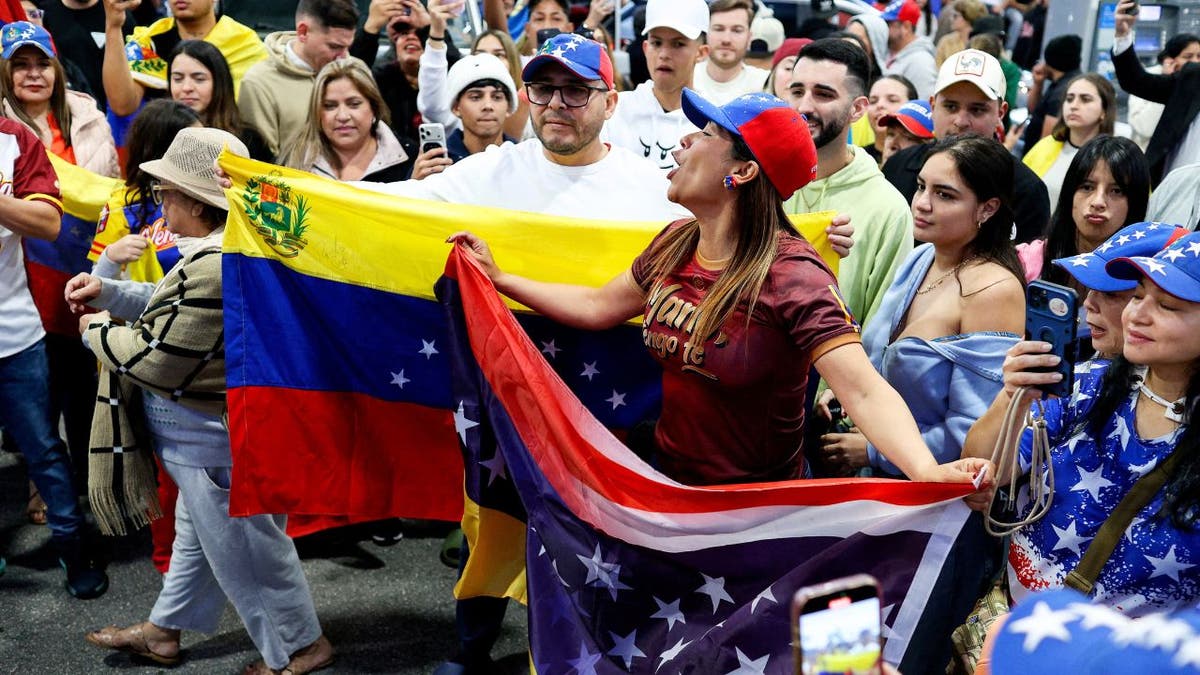
People hold Venezuelan and U.S. flags as they react in the streets of Miami, Fla., on Jan. 3, 2026, after President Donald Trump said the United States struck Venezuela and captured President Nicolás Maduro. (Reuters/Marco Bello)
Maduro has been in power since 2013, when he succeeded longtime Venezuelan leader Hugo Chávez following Chávez’s death, presiding over a period marked by economic decline, political unrest and mass migration.
Not all reactions to the U.S. action were celebratory.
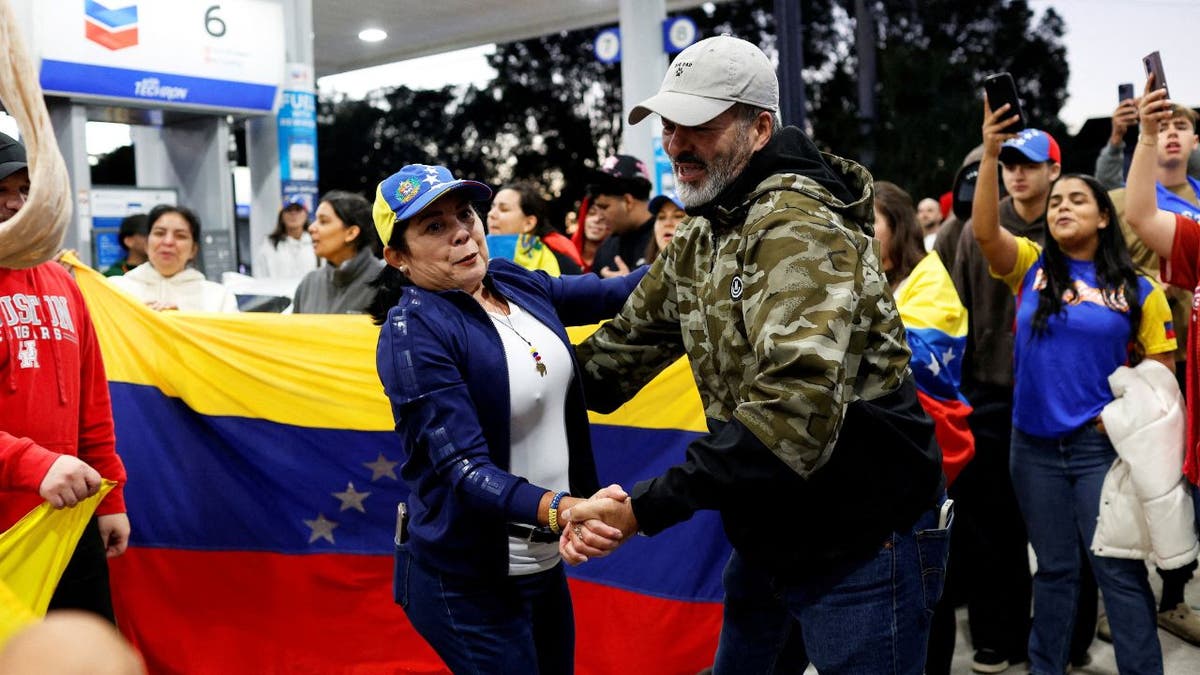
People react in the streets of Miami, Florida, on Jan. 3, 2026, after President Donald Trump said the U.S. had struck Venezuela and captured President Nicolás Maduro. (Reuters/Marco Bello)
Protests both in favor of and against the strikes have been scheduled in Buenos Aires and other cities across the region, underscoring deep divisions over Venezuela’s future and Washington’s role in the crisis.
In Greece, members of the Greek Communist Party demonstrated against Maduro’s capture.