Share this @internewscast.com
Tens of thousands of have already been reported in Australia so far this year, and with flu season around the corner, experts are concerned that many people aren’t taking the consequences seriously enough.
More than 63,000 flu cases have been reported this year, tracking above the average number of cases for the past five years.
The number of cases seen so far, combined with a persistently low for flu, have set off alarm bells in the medical community.
Earlier this year, the Royal Australian College of General Practitioners (RACGP) called for action after over 48,000 cases were reported in the first quarter of the year.

In 2024, there were 30,494 cases, and in 2023, there were 18,582 cases in the same period.
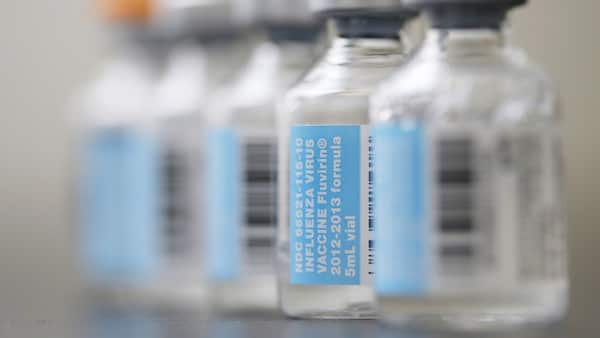
Severe 2025 flu season likely, prompting calls to get vaccinated image
RACGP president Dr Michael Wright said vaccination rates for the flu have fallen and brought attention to the most severe consequences of the illness.
“More than 1,000 deaths last year involved the flu, a 67.3 per cent increase on 2023, while more than 4200 people were admitted to hospital,” he said.
While the number of cases seen in flu seasons is difficult to predict, as Australia moves into the colder months, there will be an exponential increase in the number of cases.
Flu seasons have become harder to predict since the COVID-19 pandemic, so it’s currently unclear whether this season will continue on its record trajectory.
However, professor Julie Leask from the University of Sydney said the consequences of the flu can be serious, regardless of comparisons to previous years.

“It doesn’t necessarily need to be a record flu season for it to be important,” she said.

In January, 16 Australians died from the flu, according to the Australian Bureau of Statistics.

Impacts of the flu

The flu is typically caused by influenza A or B, but there are many subtypes and strains of these viruses, and dominant strains tend to change year to year.
The illness can cause fever and chills, sneezing, coughing, a sore throat, and gastrointestinal issues in children.
Professor Paul Griffin from the University of Queensland told SBS News that while many people believe that flu is “just like a cold”, it has huge impacts on the community and can cause severe illness.

While the flu is predominantly a respiratory infection, it can have impacts on “basically the whole body”, Griffin said.

Severe bronchitis, inflammation of the brain (known as encephalitis), heart issues like myocarditis and muscle issues such as acute viral myositis can occur in rare cases. The flu is also known to contribute to heart attacks, strokes and other cardiovascular issues.
“Obviously that’s not the most common outcome from the flu, and most people won’t require hospitalisation or get all of those things. But the unfortunate reality is enough people do that it’s a big problem,” Griffin said.

Young children, older adults, Aboriginal and Torres Strait Islander people, people with chronic medical conditions, immunocompromised people and smokers are at greater risk of severe illness or complications. But adults who don’t belong to these groups can also experience these issues.

Leask told SBS News the flu has a “personality problem” because it can be confused with other less-serious viruses.
“It’s estimated that around 3,000 people a year die from flu, whether it’s on their death certificate or there’s some other death, such as a cardiac death that flu brought on. That’s the estimate. So, it’s really quite a burdensome disease that’s underappreciated,” she said.
The flu also places a massive weight on the medical system every year, with hundreds of thousands of GP visits and thousands of hospitalisations.

“The flow-on effect of that is that people who need to seek primary care or go to hospital then struggle to get those issues addressed,” Griffin said

Why aren’t more Australians getting vaccinated?

Vaccination rates for the flu have been trending downwards in recent years.
In 2020, 13.6 per cent of people aged 15 to 50 had been vaccinated by May, according to the National Centre for Immunisation Research and Surveillance.

This year, 8.2 per cent have been vaccinated so far.

Leask said Australia’s vaccination rates for the flu are consistently “dire”, and while the majority of Australians complete childhood vaccinations, the uptake of yearly flu vaccinations is more subject to motivation and access.
In Australia, the flu shot is free for young children, pregnant women, adults aged 65 and older, Aboriginal and Torres Strait Islander people and people with certain medical conditions under the National Immunisation Program. Most others have to pay out-of-pocket for the flu shot.
Leask said vaccination rates are improved by services that remind Australians they’re due for their shots, encourage them to get one and provide services and systems that make it as convenient as possible.
People are also much more likely to receive the flu shot in a year if they have had at least one in the past two years.

“We know that flu vaccination is a habit, and once you start that habit, you tend to continue with it,” Leask said.

A doctor places a bandaid over a patient's arm

Vaccination rates for the flu have been trending downwards in Australia in recent years. Source: Getty / Witthaya Prasongsin

Myths about the flu vaccine

However, there are many prevailing myths about the flu vaccination that can also discourage people from getting the shot, Griffin said.
One issue is that many people believe they will get sick from the flu regardless of whether they have been vaccinated. While the vaccine can’t provide total coverage against infection, Griffin said there are still strong benefits to getting the shot.
“Breakthrough infections can happen relatively commonly, so you can be vaccinated and still get the flu,” Griffin said.

“But what we know is that no matter what happens when you get the flu after you’re vaccinated, it’s going to help at least a little bit in terms of reducing the severity, perhaps duration, and perhaps the ability to pass it on. There’s a whole host of benefits.”


Leask also stressed that vaccination is not just about protecting yourself — it is also about trying to ensure the safety of others in the community who may develop more severe illness.
“We need to remind people that this is not just about protecting yourself from what could be a rotten couple of weeks laid out, days of work, feeling really crook,” she said.
“If I get a flu vaccine, I’m less likely to get the flu and therefore much less likely to pass it on to my old mother, who I really don’t want to make sick from influenza because she could get really sick from it.”

For the latest from SBS News, and .
Share this @internewscast.com
You May Also Like
A man has been found alive after surviving almost four days without any food, water or supplies in rugged bushland in Tasmania.

Man Discovered Alive After Nearly Four Days Missing in Challenging Bushland Terrain

A man has been found alive after surviving almost four days without…
FBI issues new details of suspect in Nancy Guthrie case

FBI Releases Crucial Updates on Suspect in Nancy Guthrie Investigation

The FBI has unveiled new information about the suspect linked to the…

Were Kettling Tactics Employed by Police During Sydney Protest?

NSW Police have come under fire from human rights organizations and experts…

Liberals Unite: Decisive Leadership Showdown to Shape Opposition’s Future

Angus Taylor has made his appeal to the public, even though they…

Instagram CEO Stands Firm: Addresses Addiction Allegations in High-Profile Social Media Trial

Content Warning: This article discusses suicide. In a pivotal trial in California,…

Tenant Faces Rent Hike Despite Residing in Deteriorating and Hazardous Conditions

When Pat, whose name has been changed for privacy, received a notice…
Reason why COVID vaccine caused serious blood clots revealed

Groundbreaking Study Uncovers Link Between COVID Vaccine and Serious Blood Clots

The cause of rare blood clots in a COVID-19 vaccine that killed…
Police watchdog to investigate conduct of officers at Sydney protests

Police Watchdog Launches Investigation into Officer Conduct During Sydney Protests

The NSW Police Force is under scrutiny as the state’s police watchdog…
Librarian and PhD student Damien Linnane spent a decade trying to fix the prison healthcare system, only to find out he - and everyone else - was going about it the wrong way.

Debunking the Myth: Australia’s Unwritten Prison Rule Exposed

Damien Linnane, who endured 10 months of incarceration, is acutely aware of…

Angus Taylor Resigns Amid Anticipated Shake-Up in Liberal Party Leadership

Angus Taylor has stepped down from the Liberal frontbench, signaling a potential…
Angus Taylor

Angus Taylor Rises: The New Liberal Leader Ousting Sussan Ley and Shaping Australia’s Political Future

Angus Taylor has emerged victorious as the new Liberal leader after snatching…
Turkey's ruling party and opposition lawmakers clash over the appointment of Istanbul Chief Prosecutor Akin Gurlek as justice minister at the parliament in Ankara, Turkey, Wednesday, Feb. 11, 2026. (Ugur Yildirim/DIA Photo via AP)

Unprecedented Parliamentary Brawl: Politicians Exchange Blows in Chaotic Session

A massive brawl has broken out in Turkish parliament, as opposition politicians…