
Share this @internewscast.com
For months, a team of expert online investigators dedicated themselves to rescuing a 12-year-old girl ensnared by a sexual predator.
Her harrowing images and videos were being disseminated to an audience of around 400,000 on the dark web—a secluded part of the internet initially developed by the US Department of Defense to provide covert communication for its operatives.
Today, however, it serves as a virtual haven for some of the world’s most nefarious pedophiles.
This child, known as Lucy, had been featured on this menacing corner of the internet since she was just seven years old, becoming the focus of a desperate rescue mission by Homeland Security officers.
Tracking her location proved challenging, as the dark web’s anonymity, free from IP address linkage, allows predators to operate without leaving a direct trail.
Consequently, the team, led by seasoned investigator Greg Squire, had to search for clues through alternative means.
Greg’s work is at the centre of a new Storyville documentary The Darkest Web, which airs tonight on BBC Four at 10pm.
‘It’s hard to describe the fever as you look for the missing pieces of the puzzle,’ Squire says. ‘It becomes a daily weight. You have that responsibility. Pete, my partner, and I probably talked about it 100 times a day.’
They began trawling through the horrific images and videos of abuse, searching for anything which could give away Lucy’s whereabouts.

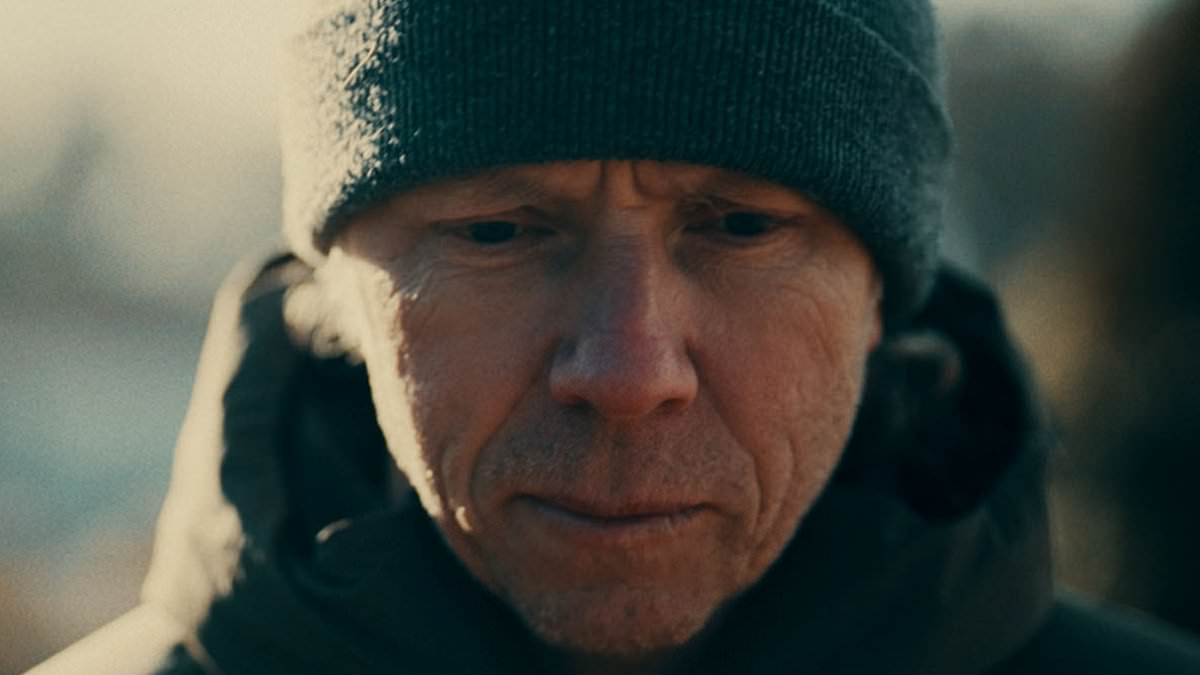
Specialist Investigator Greg Squire (pictured) and his team at Homeland Security hunt child abusers on the dark web

But their mission to find a 12-year-old girl, who agents called Lucy, had reached a dead end – until one clue led them to her
The sockets in her bedroom revealed that she was somewhere in North America, though that hardly narrowed down their search.
For nine months, Squire and his team examined everything on display in the young child’s room. The bedspread, her outfits, her stuffed toys, even water bottles left lying about, until they made a rather unlikely breakthrough.
Investigators noticed that a sofa spotted in some of the pictures was sold regionally, not nationally, limiting their search to a customer base of around 40,000 people.
Then, an exposed brick wall in the back of a photo gave them a lead.
Squire told the BBC in a new documentary: ‘I started just Googling bricks and it wasn’t too many searches before I found the Brick Industry Association. ‘The woman on the phone was awesome. She was like, “how can the brick industry help?”‘
The investigator was put in contact with John Harp, a brick expert, who revealed that the bricks in Lucy’s bedroom were in fact a ‘Flaming Almino’.
That type was manufactured in Texas, narrowing the Homeland Security’s search to just a 50-mile radius because bricks are too heavy to be transported long distances.
Having returned to the sofa customer list, Squire’s search shrunk further to a list of 50 people. And following a thorough search on Facebook, the investigators spotted a picture of Lucy.

Squire and his team were led to the girl after thoroughly examining the pictures of her posted to more than 400,000 people on the dark web

Their searches led them to believe that Lucy was living with her mother and her boyfriend – a convicted sex offender
She was living with her mother and her mother’s boyfriend – a convicted sex offender who, it turned out, had been raping the young girl for six years.
Within hours he was arrested and – at a later date – sentenced to more than 70 years in jail.
It was a harrowing case and one which Squire admits, as a father himself, took its toll, just as so many of his jobs do.
‘At that point, my kids were a bit older,’ he said. ‘And you know, that enables you to push harder. Like, “I bet if I get up at three this morning, I can surprise a predator online.”
‘But meanwhile, personally, “who’s Greg?” I don’t even know what he likes to do. All of your friends during the day, they’re criminals. All they do is talk about the most horrific things all day long.’
After his marriage ended, Squire fell into a habit of drinking to ‘numb’ himself to the atrocities he saw at his occupation, and even suffered with suicidal thoughts.
‘It’s hard when the thing that brings you so much energy and drive is also the thing that’s slowly destroying you,’ he says in the documentary. ‘It’s an honour to be a part of a team that can make a difference.’
And make a difference they do. Units such as that which Squire runs have helped to bring down some of the world’s most prolific sex offenders.
One case showed them solving the case of a kidnapped and presumed-dead seven-year-old in Russia, with a Brazilian man behind five of the world’s biggest child abuse forums on the web brought to justice.
‘It takes a little bit of courage for us to accept some hardship and watch things and really see this,’ Squire told The Guardian this week. ‘But the children that suffer at the hands of these abusers? They don’t have a choice.’

After his marriage ended, Squire (pictured) fell into a habit of drinking to ‘numb’ himself to the atrocities he saw at his occupation, and even suffered with suicidal thoughts
The work of the specialist unit of investigators across the pond is not, however, confined to the walls of their office.
Specialist child abuse units in police forces are using similar methods to track down criminals in the United Kingdom.
Talking about a case where she and her team helped to save a child aged just six from sexual abuse, Alex Romilly of Surrey Police told BBC Radio 4 this morning: ‘It’s exactly that (a puzzle). Initially we were sent a video which was only a very small clip, we had very few clues to work from.
‘That’s why collaboration is so important, because there was just a few of us around the world. We all picked apart pieces of the images to see if there was anything we could identify.
‘AI can be a help too. From saving that child (the six-year-old), it actually led us to a dark web offender in the UK. So that shows how important it is for us to collaborate to bring these children to safety and the offenders to justice.’