
Share this @internewscast.com
Anger is mounting over a last-minute decision by the Trump administration to pause the collection of student loans.
Critics argue that this move allows borrowers who don’t pay their debts to retain their full earnings, leaving others to cover the costs.
Despite pledging a departure from the student debt policies of the Biden era, the Department of Education recently revealed a pause on involuntary collections for delinquent federal student loans.
This decision temporarily halts wage garnishments and the seizure of tax refunds.
The intention is to provide borrowers additional time to evaluate their choices before new repayment options become available on July 1.
Maya MacGuineas, president of the Committee for a Responsible Federal Budget, expressed frustration, stating, “Six years post-Covid pandemic, it’s absurd that we’re reinstating so-called emergency policies through unilateral executive action.”
‘This is an incoherent political giveaway that doubles down on the debt cancellation culture of the Biden era,’ she added, warning it could cost up to $5 billion a year in lost collections and cause loan balances to swell even further.
Critics say the move unfairly rewards non-payment while punishing Americans who either paid off their loans or never went to college at all.

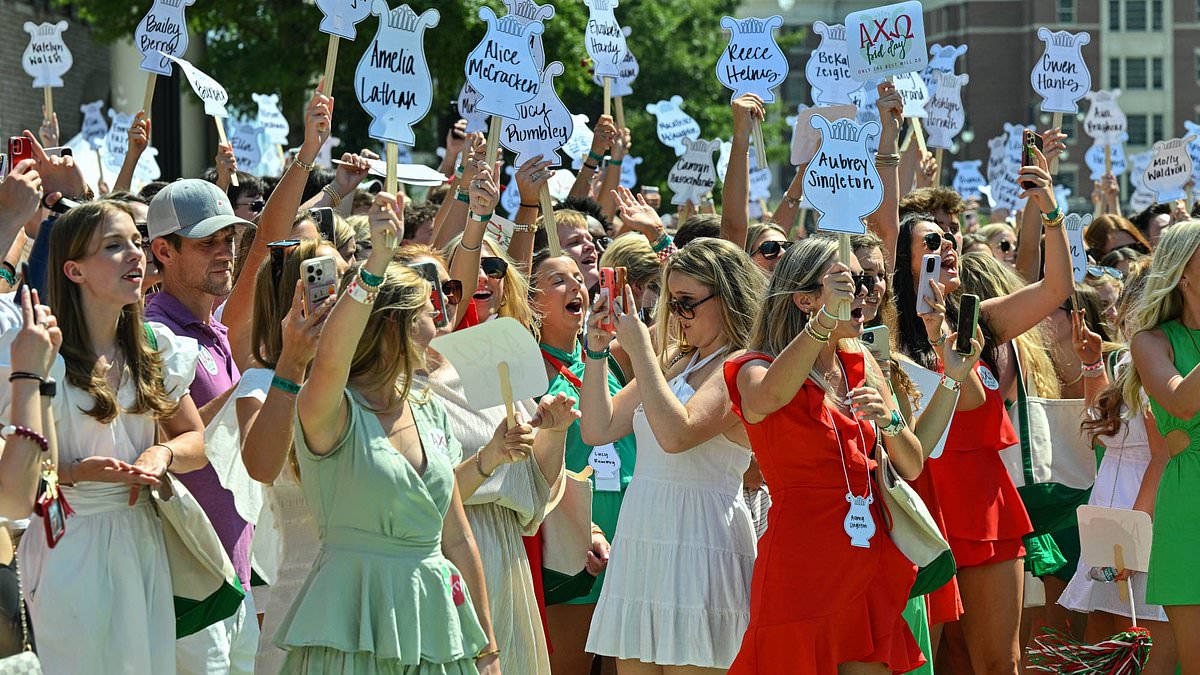
Freshmen rush toward their sororities during Bid Day at the University of Alabama in 2023. Millions of Americans who borrowed to attend college now face continued uncertainty over when student loan repayments and collections will resume
The Education Department defended the move, blaming the previous administration for what it called a ‘broken student loan system.’
Under Secretary of Education Nicholas Kent said the department is temporarily stopping wage garnishments and tax refund seizures while it rewrites the student loan system, arguing collections will be fairer once the changes are in place.
It is a sharp U-turn from the hardline stance by the Trump administration soon after President Donald Trump returned to power in January 2025.
In April that year, the Education Department warned that more than five million Americans with defaulted loans would face wage garnishment starting in May.
That was delayed but the scheme was due to start again this month – before the latest delay.
Backlash to the pause mirrors outrage seen late in Biden’s presidency, when billions of dollars in student debt were wiped away through executive actions that repeatedly ran into legal and political resistance.
‘The fact that most Americans don’t have a college degree may also mean that many resist loan forgiveness because student debt is not their problem and so forgiveness does not appear to directly benefit them,’ Devin Singh, an associate professor of religion at Dartmouth College, said at the time back in 2024.
This week, Singh told Daily Mail: ‘Given that this administration, like those before it, appears to put the interests of banks before average citizens, all taxpayers should be concerned about this situation.’

The Trump administration has held off on punishing delinquent student debt holders without updating

US President Joe Biden speaks at an event in Madison, Wisconsin, in April 2024, after unveiling an alternative student-debt relief plan that aimed to forgive loans for up to 26 million Americans
Critics also point to a generational divide fueling the anger..
‘There’s a generational gap,’ according to Charlie Eaton, associate professor of sociology at the University of California, Merced.
‘A lot of older Americans didn’t have to borrow to go to college.’
Meanwhile, supporters of student loan forgiveness welcomed the recent news from the Department of Education about the pause.
‘This is a critical step toward fairness and stability for borrowers who have been pushed to the brink, all because they wanted an education,’ Wisdom Cole, senior advocacy director at the NAACP, said in a statement.